English
 Español
Categories
Contacts
Heavy Duty Home Elevator with 15 m Travel
Product Details:
Brand Name
YIMEISITE
Place of Origin
China
Certification
ISO 9001
Payment & Shipping Terms:
Minimum Order Quantity
1
Price
USD 20,000-30,000 per set
Packaging Details
Export non-fumigation wood box
Delivery Time
45 days
Payment Terms
TT or LC at sight
Supply Ability
5 sets
| Travel Height: | Up to 15 M | Drive System: | Screw Drive |
| Type: | Elevator | Safety Features: | Emergency Stop, Overload Protection, Safety Gear |
| Door Opening: | Center Or Side Opening | Control System: | Microprocessor-based |
| Maintenance: | Low Maintenance | Installation: | Indoor Or Outdoor |
| Highlight: | Home Elevator,Screw Drive Residential Lift,Heavy Duty Home Elevator | ||
Product Description
Heavy duty home elevator - screw drive, 15 m travel, indoor or outdoor
A heavy duty home elevator is a home lift bought for the load it has to move, the height it has to cover and the place it has to stand. This model is a screw drive lift, published with up to 15 m of travel, 2 to 10 stops and a running speed of 0.15 m/s, and published for indoor or outdoor installation.
Most enquiries arrive with two questions attached: how much can it carry, and can it be fitted without rebuilding the house. The first has a precise answer here, and part of that answer is that this page publishes no load rating of its own. The second is answered by the geometry of the building, and section 8 sets out the three checks that decide it.
- 15 mpublished travel height, end to end
- 2-10stops published for this model
- 0.15m/s published running speed
- Screwdrive system, not rope traction
- In / outpublished for indoor or outdoor siting
Start hereSection 1 sorts your building into fits, fits after one item is settled, or needs a different machine. Section 5 lists every figure this page publishes and names its source.
1. Is a heavy duty home elevator right for your house?
Buying a lift for a house is a different exercise from buying one for an office. The building is fixed, the floors are finished, and the machine has to be carried in through whatever opening already exists. A heavy duty home elevator trades speed for carrying capacity, and that trade only works when the house can accept the machine at all.
The published list for this model is short enough to read in one pass. Travel is published as up to 15 m and the stop count as 2 to 10. Drive is a screw drive, running speed is 0.15 m/s, and control is microprocessor-based. Doors are automatic with a centre or side opening, maintenance is described as low, and installation is published for indoor or outdoor positions. Safety devices named on the specification are an emergency stop, overload protection and safety gear. The parameter table beside this article names the certification for this model.
One machine under several names
Households and contractors reach this page under different phrases. A heavy duty home elevator, a heavy duty screw lift for home, an outdoor heavy duty home lift and a screw drive home lift all describe the same arrangement in this range, and this page treats them as one machine. The wording changes what people type into a search box; it does not change the guide rails, the drive or the drawing.
The three questions that sort an enquiry
Three questions separate a project that can be quoted next week from one that needs a survey first. How much travel does the house really need between the lowest and the highest landing? Where can the machine stand, and is that position inside the building or outside it? And what has to be carried, since a lift bought for a wheelchair and a lift bought for building materials are drawn differently even when they look identical in a photograph.
StraightforwardThe published envelope fits
- Total travel lands inside the published 15 m, and between 2 and 10 stops are served with a clear route to each landing.
- The machine can stand inside the house or on a sheltered outside wall, on structure that can carry it without a new foundation.
- A supply can be taken to the machine position, and the route in takes the largest part without dismantling a wall.
- No certified load or speed figure is needed before the order, or the needed figures can be confirmed from the approved drawing.
ConditionalThe project fits after one item is settled
- Travel is close to the published 15 m, so floor-to-floor heights have to be measured rather than estimated from the storey count.
- An exposed outdoor position means rain, wind and standing water have to be designed for before the frame is fixed.
- Nothing can be built to a load figure until the drawing states one in writing.
- An occupied building means the route in for the guide sections and the car has to be planned around a stair, a doorway or a gate.
Wrong machineUse a different arrangement
- More than 15 m of travel or more than 10 stops takes the project outside this model, because those are the published limits.
- A certified load, a certified speed, a fire rating or a seismic qualification is needed, and none of them is published here.
- An exposed position with no protection and no safe way to service it rules this arrangement out.
The fastest way to move an enquiry forward is to send three things: the floor-to-floor heights, a photograph of the position the machine would stand in, and a note of what has to be carried. Those three answer the travel, the siting and the load questions in a single exchange, and the full list is in section 13.
What this page does not publish
The gaps matter as much as the figures. This page publishes no rated load, no certified speed, no seismic or fire qualification, and no statement about what happens during a power failure. Where a project needs any of those, they have to be answered in writing for that project.
2. What heavy duty means in this market
The phrase heavy duty is used loosely in the home lift market, and a buyer who takes it at face value can end up with a machine that carries less than expected. Our own review of the first page of search results for this phrase on 19 September 2026 found established suppliers describing heavy duty home lifts at roughly 180 kg to 635 kg, or 400 lb to 1,400 lb. That is a reasonable load for a person with luggage or a wheelchair user, and it is not what most households mean by heavy duty.
The screw drive range on this site takes the same phrase further, and the two sister pages linked in section 13 publish their own figures. Those figures belong to those models rather than to this one, and the bars below show the size of the gap rather than claiming a rating for this page.
How to read the bars
The scale runs to 5,000 kg, so the retail figure of 635 kg is the short bar on the left: the top of the market's heavy duty band sits at about an eighth of what this site's screw drive range publishes. A buyer who needs to move stone, tiles or a mobility scooter is shopping in a different category from one comparing residential brochures. What this page adds is travel and siting, with published travel of 15 m, stops from 2 to 10, and indoor or outdoor installation.
Read the bars as market context and nothing more. If your project needs a stated load, the figure has to be written on the approved drawing for your machine. Treat any load figure quoted from a webpage as a question to be confirmed, not as a specification to be assumed.
3. How a screw drive carries a 15 m travel
Most home lifts people have seen run on ropes. A screw drive works on a different principle, and the difference explains what this machine is good at and why its published speed is modest. A threaded screw stands vertically beside the car. A nut travels up and down that screw, the car is attached to the nut, and the load is carried by a steel column in compression rather than by ropes over a sheave.
That arrangement changes what the building has to provide. There is no rope set to re-tension, because the drive lives at the machine position rather than in a plant room. What the building provides instead is a base that can take the loads the screw passes into it, and a shaft or enclosure that keeps the guide rails plumb over the full travel. Both are drawing decisions, and both are cheap before the frame is fixed.
Where the speed trade shows up
The published running speed for this model is 0.15 m/s from the specification note on this page. A screw drive is a positive, mechanical drive, and the figure reflects a machine built for control and load holding rather than speed. Households rarely regret it; what they notice instead is that the car holds its position when it stops.
What 15 m of travel means in a house
Fifteen metres is easy to underestimate on a drawing. At a typical storey height of about 3 m, the published travel of this model reaches roughly five levels, which on a house usually means a basement or garden level, ground, and three upper floors. A house with generous ceiling heights reaches that limit with fewer storeys. Measure floor to floor, never by counting windows.
What 0.15 m/s means in practice
At the published speed of 0.15 m/s, a full 15 m trip takes about 100 seconds. That is the honest way to read the figure. It is a calm ride for a household lift and a poor fit for anyone who wants a fast shuttle between two floors all day. Where speed matters more than load, a traction machine is the right conversation; where load and control matter more than speed, this drive is the one to look at.
Where the screw changes a specification
Two items in a tender change when the drive is a screw. The first is the base: the load reaches the building through the machine position rather than through a plant room, so the floor or footing under the lift has to be checked by somebody who can see the structure. The second is alignment, because a screw and its nut work best when the guides stay true over the whole run, which is why a shaft that is plumb and square is worth more here than on a rope machine.
Everything else follows the drawing. Where the machine stands, how the landings are formed, what the doors open onto and where the supply terminates are settled once on paper and then built. An overview of how a screw drive carries the car is worth reading before a site meeting, because it explains why the base and the alignment come up in every conversation.
One number to carry into the survey: published travel is 15 m and the published stop count is 2 to 10. If your house needs either pushed, this is the wrong model, and finding that out before a deposit is much cheaper than after.
4. Choosing a load tier before you order
This page publishes no rated load, so it cannot answer the load question with a figure of its own. What it can do is set out what each tier asks of a project. Work through the four tabs in order of what your project has to move rather than what looks impressive, because the tier you choose changes the base, the route and the door clear opening long before the machine. The figures come from the sister models linked in section 13.
Tier 1 - 0 kg, the bottom of the screw drive range
The tier for a household lift that also carries a wheelchair, a mobility scooter or a delivery of shopping. It is the smallest published figure in the screw drive range on this site, and where most family enquiries belong.
Prepare a base check at the machine position and a clear opening wide enough for the widest item. Confirm the load your project will be built to, in writing, because this page publishes none.
Tier 2 - 0 kg, a working household lift
A tonne is where the lift starts to double as a small goods lift: furniture, boxes, garden equipment, a pallet of tiles split across trips. The machine grows with the tier, so the base and the guide loads grow with it.
Plan the access route first, since a heavier machine usually means a larger car and heavier parts to carry in. Ask for the base loads for the tier you are pricing and settle them with whoever signs off the structure.
Tier 3 - 0 kg, approaching small commercial duty
Two tonnes is a build specified by a contractor rather than by a family, often for a warehouse, a workshop or a large mixed-use house. Load holding and control matter more here than speed.
Expect the base to need a designed footing rather than a thickened slab, and the door opening to be treated as a goods opening. Confirm in writing what the destination requires before the order.
Tier 4 - 0 kg, the top of the published range
Five tonnes is the ceiling published on this site's heavy duty screw drive model, and a different kind of project. At this level the machine is one item in a building design, and the lift drawing arrives after the structural grid rather than before it.
Move the load conversation to the front of the project. Ask for the base loads, the guide fixing loads and the clear opening, and put all three in front of the structural engineer while the design can still change.
The tabs carry figures published on the sister models, not on this page. Treat them as the range you are shopping in, and the written load on your approved drawing as the specification you will hold.
5. The specification this page publishes
Every figure below comes from this page's own material, and the third column names which part of it. A figure from the parameter table is a standing specification. A figure from the specification note is worth confirming against your drawing before it goes into a contract. Switch the units if you work in feet and inches: the metric values are the published ones and the imperial figures are rounded conversions.
| Item | Published value | Where it comes from |
|---|---|---|
| Drive system | Screw drive | Page specification list - Drive System |
| Maximum travel | 15 m49 ft 3 in | Page specification list - Travel Height |
| Number of stops | 2 to 10 stops | Specification note - confirm on the drawing |
| Running speed | 0.15 m/s30 ft/min | Specification note - confirm on the drawing |
| Control system | Microprocessor-based | Page specification list - Control System |
| Door opening | Centre opening or side opening | Page specification list - Door Opening |
| Door operation | Automatic | Specification note - confirm on the drawing |
| Maintenance | Described as low maintenance | Page specification list - Maintenance |
| Installation position | Indoor or outdoor | Page specification list - Installation |
| Safety devices | Emergency stop, overload protection, safety gear | Page specification list - Safety Features |
| Certification | ISO 9001 | Parameter table beside this article - Certification |
| Warranty line | 1 year | Specification note - confirm on the drawing |
| Rated load | Not published on this page | Settle in writing for your project; see section 4 |
What is published, and what is not
Read the table as a list of what can be quoted safely and what cannot. Travel, stops, drive, speed, control, door arrangement, maintenance wording, installation position and the named safety devices are published here. The certification named in the parameter table is a quality management certification about how the product is made, not how a machine performs on a particular site.
Three items are missing and none of them can be filled in from this page. There is no rated load. There is no certified speed, so the published figure is a working figure rather than a third-party performance figure. And there is no statement about power failure behaviour or automatic rescue, so a project that needs one has to ask rather than assume.
Commercial terms stay on the parameter table beside this article rather than being repeated here: minimum order quantity, price band, payment terms, supply ability, delivery time and packaging are all listed there. Section 13 covers what to send so those terms can be quoted against your project.
6. Indoor and outdoor positions
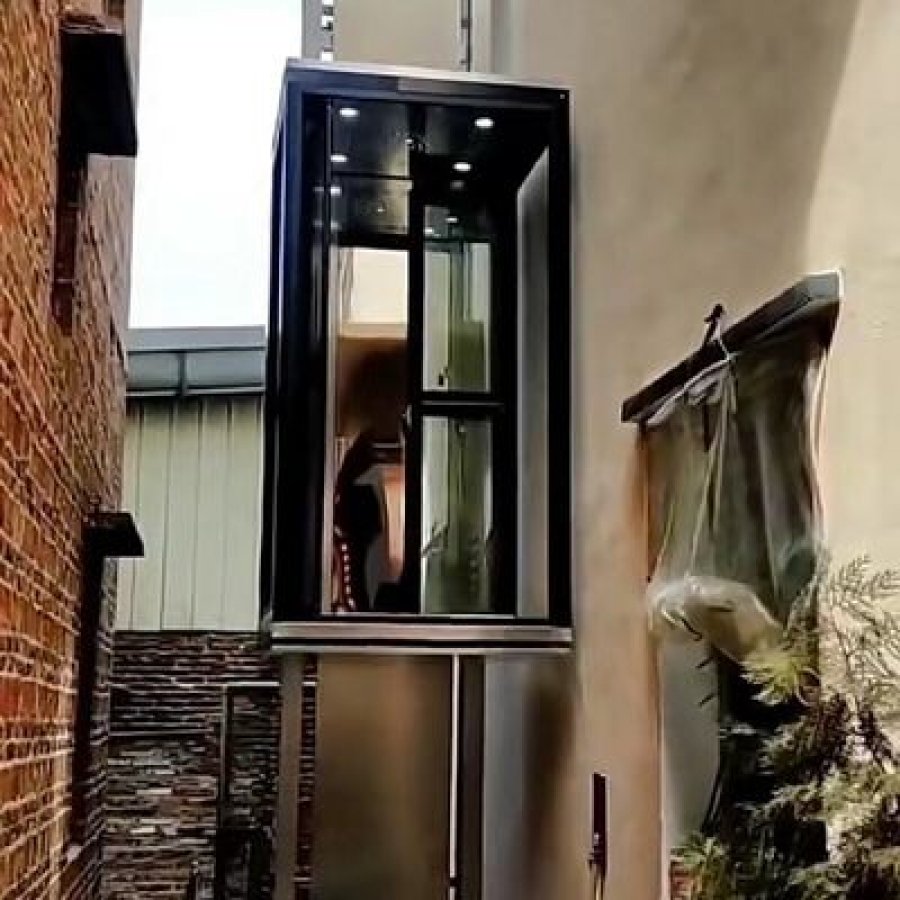
Installation is published for indoor or outdoor positions, which is unusual among home lifts and is one of the reasons this machine appears in garden and terrace projects. The two positions are not interchangeable in practice, and what changes is the work around the machine rather than the machine itself: weather protection, drainage, fixing, access and cleaning all change when the lift steps outside the walls.
Indoor shaft
The simplest version of the project. An internal enclosure is protected from weather, so the finish and the door gear are not exposed to rain. The planning question is where the shaft can pass through the floors without cutting a room in half.
Watch the top landing here rather than the base, because an internal shaft usually has a ceiling or roof structure above it and that is where the headroom is decided.
Outdoor, sheltered
A wall under an overhang or in a recess is an outdoor position with most of the advantages of an indoor one. Rain rarely reaches the door gear, and a technician can work without a ladder. This is the outdoor arrangement that suits most houses.
Plan the base so water cannot sit against the machine position, and keep the access route clear of planting that will grow into it.
Outdoor, exposed
A free-standing enclosure on an open elevation is the hardest version of the job. Wind loads, driving rain, standing water at the base and long-term corrosion all have to be designed for rather than discovered.
Ask for the exposure to be stated in the design, and agree a cleaning and inspection rhythm at the same time, because an exposed shaft ages faster than a sheltered one.
What stays the same
Travel, stops, drive, speed, control, door arrangement and the named safety devices belong to the machine and do not change with the position. Only the enclosure around them changes.
Whichever position you choose, send a photograph from outside as well as inside. The outside view shows exposure and access, and it is the one photograph that changes a quotation the most.
7. Checking your own site conditions
Before a survey is booked, most of what matters about the position can be answered with a phone camera and a tape measure. Pick the description closest to your project and the list underneath sets out what to look at. None of it replaces the survey; all of it makes the survey shorter.
Inside the house
An internal position is decided by structure and headroom. Photograph the top landing from below, because that is where an internal shaft usually runs out of height, and photograph the floor the machine would stand on.
- Measure floor to floor at the actual position, not in the middle of the room.
- Note what sits above the top landing: ceiling build-up, a beam, ducting, a water tank or a roof structure.
- Check where the widest part of the machine could be carried in, including the turn at the bottom of a staircase.
- Mark where the electrical supply can be terminated near the machine position.
Sheltered outdoor wall
A recess, an overhang or a covered side passage keeps most weather off the enclosure. Photograph the position straight on and from the garden, so the exposure is visible rather than described.
- Check that rain falling on the roof or the wall above cannot run down onto the enclosure.
- Look at the ground at the base and decide where water goes when it rains hard.
- Confirm a technician can stand and work at the base without a ladder or a harness.
- Decide what will grow near the base over the next ten years, and keep the access path clear of it.
Exposed outdoor position
An open elevation needs the most thought. Photograph the position from three angles, including the direction the prevailing weather arrives from if you know it.
- Record how the enclosure would be fixed to the building or to its own foundation.
- Plan drainage at the base so water cannot stand against the machine.
- Decide whether the enclosure needs shading or screening, and whether either affects the view out.
- Agree who cleans the glazing and how they will reach every panel safely.
- Ask for the exposure to be written into the design rather than left to the installer.
Whichever panel applies, the deliverable is the same three items: heights, a photograph of the position, and a note of what has to be carried.
8. What the building has to provide
Three checks decide whether a quotation can be priced at all, and all three can be done before anyone visits: the travel the house needs, the headroom at the top stop, and the base under the machine. A project that answers all three can be quoted quickly. One that answers two usually stalls while somebody finds a tape measure.
Who supplies what
Retrofit projects run smoothly when both sides of this list are written down on day one. The lift arrives as a set: the drive, the guide system, the car, the doors, the control system and the named safety devices. The building supplies the space around it, the supply to the machine position and the access to install and service it.
Supplied with the lift
The screw drive, the guide rails and fixings, the car and its automatic doors, the microprocessor-based control system, the emergency stop, the overload protection and the safety gear. The arrangement at the machine position is part of the delivered design.
Supplied by the building
A sound, level base at the machine position, and clear headroom at the top stop. A shaft or enclosure kept plumb over the full travel, an electrical supply terminated near the machine, and an access route that lets the parts arrive and a technician work afterwards.
How the installation runs
Once the survey is confirmed and the drawing approved, the sequence is mechanical and short. Prepare the base. Fix the guide rails and set the drive at the machine position. Fit the car and the doors, make the electrical connection, then run the checks before handover. On an occupied house the work stays at the lift position rather than spreading through the rooms.
What delays these projects
Two items delay a home lift more than anything else. A base that needs a structural solution after the machine has been ordered is the first. An enclosure built by another contractor to dimensions that differ from the lift drawing is the second. Both are avoided the same way: settle the base and the enclosure dimensions before production starts, and send the drawing to be checked against the machine.
Two numbers and three photographs get a project to a firm answer. The numbers are the total travel and the headroom at the top stop. The photographs are the base, the top landing and the route in.
9. Car, doors and the photograph on this page
Door arrangement is the part of the specification a household actually lives with, and the part most often left to the last minute. Automatic doors with a centre opening or a side opening are two different demands on the wall beside the landing.
A centre opening splits the doorway into two leaves that meet in the middle and part to both sides. A side opening takes the leaf or leaves to one side. Neither is better in the abstract. The choice is decided by how much wall is free at each landing, where a person has to stand while the doors move, and whether the door travels into a tight corridor.
Four door decisions worth settling early
Clear opening
Measure the widest thing that has to pass through the doorway, not the average person. A wheelchair user with a chair and a bag needs more room than the chair's own width, and a household planning to move furniture should say so at enquiry.
Where people stand
A landing has to hold the doors and a person at the same time. On a narrow corridor that decides the arrangement on its own, because a leaf travelling into the walking line is a nuisance on every trip for the life of the lift.
Landing protection
The published safety devices include safety gear and an emergency stop, and the door operator on an automatic door carries its own detection. Ask what happens if something blocks the doorway, and make sure the answer covers children and pets rather than adults alone.
Which landings are served
Between 2 and 10 stops are published for this model, and leaving one out is a drawing decision rather than a saving to make later.
The photograph on this page
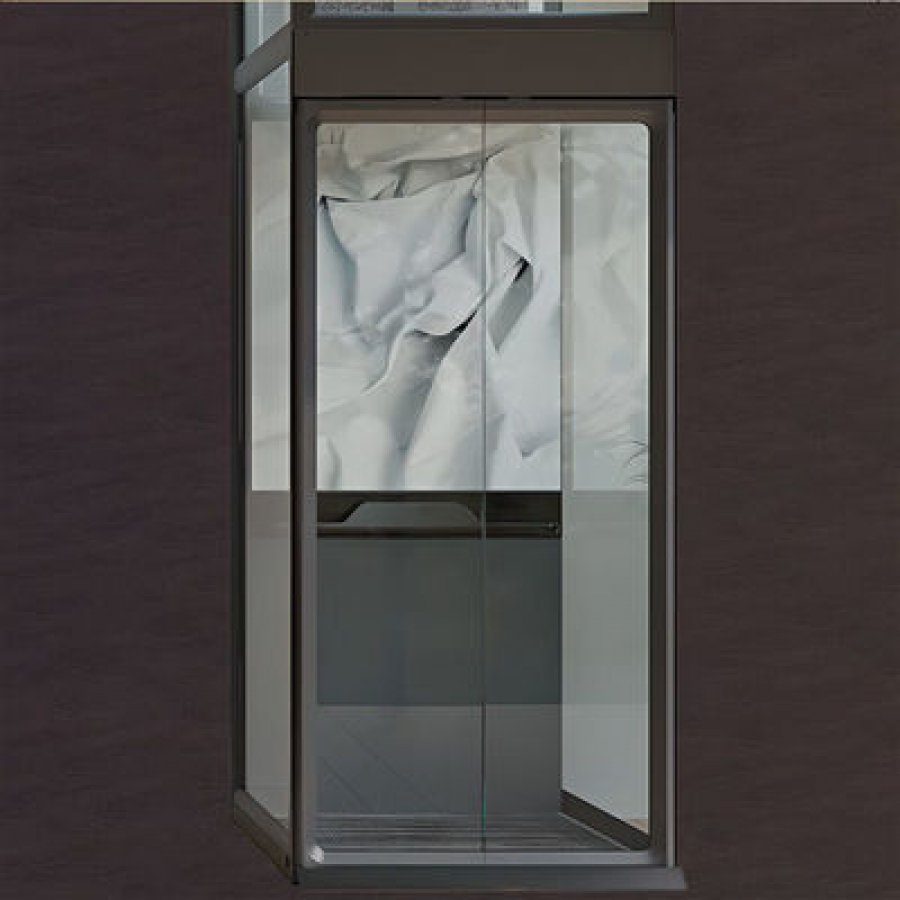
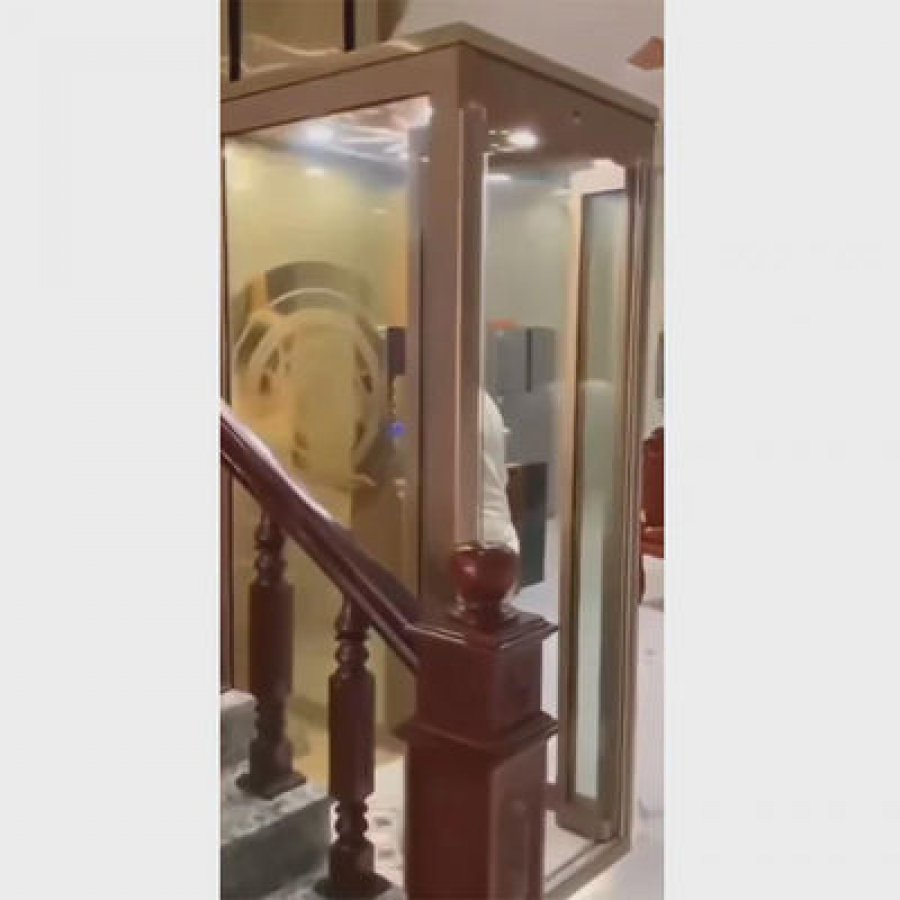
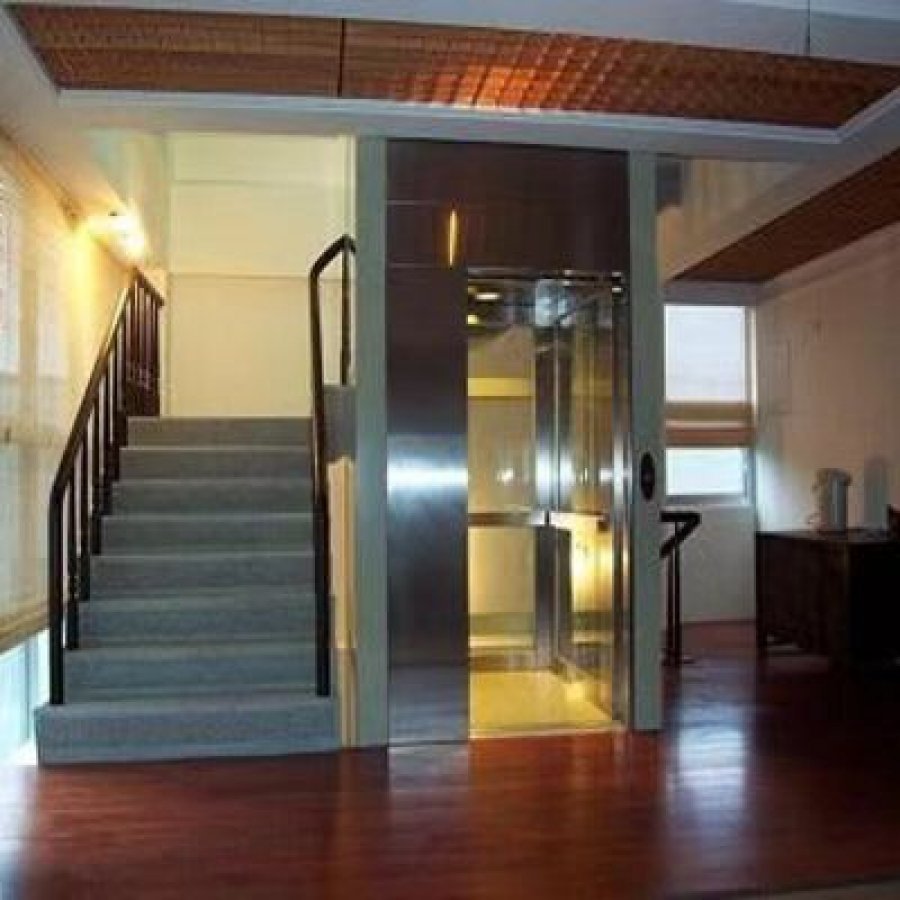
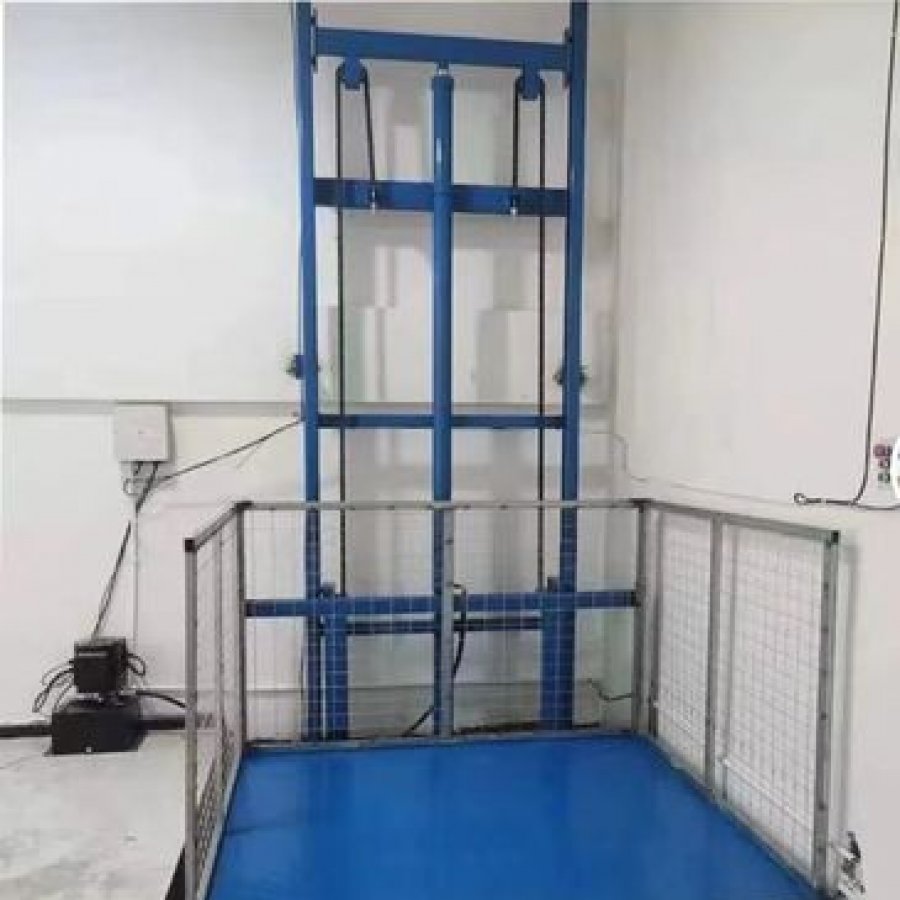
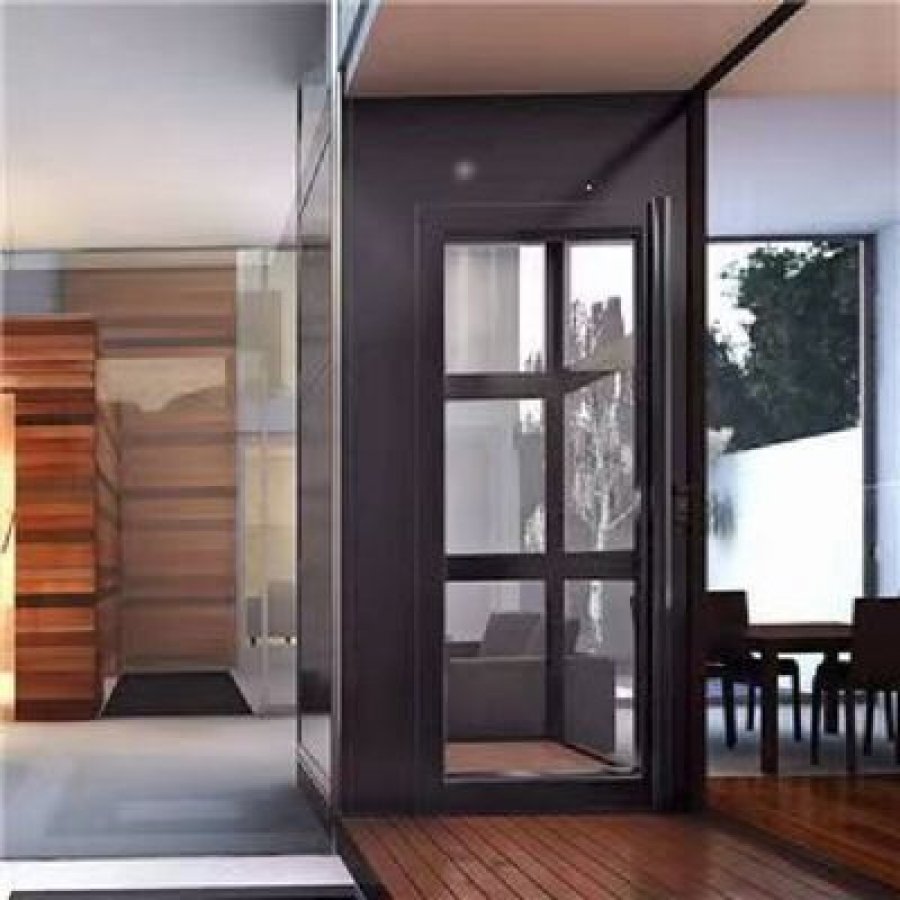
An honest note about pictures. This page carries one product photograph of this model. The diagrams in sections 3 and 9 are drawings produced to explain the arrangement, and the thumbnails in the similar products strip belong to other models. If you need photographs of a finished installation, ask before the order rather than after it.
10. Safety devices and handover
The safety position published for this model is short, and it is worth reading exactly as written rather than expanding it by assumption. Three devices are named on the page specification list: an emergency stop, overload protection and safety gear. Control is microprocessor-based and the doors are automatic. The certification named in the parameter table is a quality management certification, and it says nothing about the verified performance of a particular machine.
Nothing else in the safety column is published here. There is no certified load, no certified speed, no fire rating and no seismic qualification, and this article claims none of them. Where a project needs one of those, it has to be answered in writing for the destination rather than inferred from a page of this kind.
Named on this page
Emergency stop, overload protection and safety gear, from the page specification list. A microprocessor-based control system and automatic doors complete the published control arrangement. Those items are the safety content of this page and nothing more is claimed.
Not published - ask, do not assume
A certified load, a certified speed, a fire rating, a seismic qualification, automatic rescue on power failure and standby power are all absent from this model's published material. If your project or your local approval needs any of them, raise them at enquiry and ask for a written answer.
What an emergency stop is for
An emergency stop takes the machine out of service when a person decides something is wrong: a lift that sounds or moves differently, a door that will not close, or somebody in the way. Pressed in that situation it is the right response, and every adult in the house should know where the button is before the first ride.
It is not a way to stop the car between floors for convenience, and it is not a substitute for the service line. A lift left stopped with people inside is a rescue, and a rescue takes longer than the fault that caused it. Three habits keep this simple: the button stays pressed until a technician releases it, nobody opens a door or reaches into the shaft, and the service number lives within arm's reach of the lift.
Overload protection and safety gear
Overload protection watches what the car is carrying and prevents a journey the machine should not make. On a heavy duty lift this matters more than on a domestic passenger lift, because the loads people expect to move are not always what the drawing anticipated. Safety gear is the mechanical backup that holds the car if it moves when it should not.
Neither device is a licence to overload the machine, and neither removes the need for a written load figure. Treat the published devices as the last line of defence and the drawing as the first.
Handover: twelve items worth recording
Most disagreements after an installation are about what was agreed rather than about what was built. The handover visit is the moment to settle that, and the list below takes about twenty minutes. Tick the items as they are confirmed and keep the list with the machine documents.
0 / 12 ready
Four items are most often missing from a home lift handover: the built-to drawing revision, the load and speed in writing, what happens on a power failure, and who looks after the enclosure. Ask for all four on the day the machine is handed over.
11. Service, spares and the warranty line
Any lift is a machine with parts that wear, and a home lift is serviced less often than a commercial one because it makes fewer trips. That makes the arrangement around the machine more important than its reputation. Who answers when it stops, how quickly they arrive, and whether the parts that stop a lift are available locally decide how the next fifteen years feel.
Start from what this page publishes. The specification note carries a one-year warranty line and the parameter table lists the commercial terms of supply. Write both down accurately on the quotation, including what the warranty covers and what it excludes, because a term that names parts but not labour is read differently by the two parties at the first claim.
The one-year warranty line
A one-year term is a normal starting point for a made-to-order lift, and it is most useful when it is specific. Ask which components it covers, whether travel and labour are included, and what voids it. A short warranty with a clear scope beats a long one nobody can interpret.
What the household checks
Three habits cover most of it. Listen for a change in the sound of the drive, because a mechanical fault usually announces itself first. Look at the machine position for oil, water or loose fixings. Keep the door tracks and the enclosure clear, since grit in a track wears the door operator rather than the track.
What a service visit covers
A normal visit works through the same list in the same order. The screw and the nut, the guide rails and shoes, the door operator and its detection, the control system and the connections, then the emergency stop, the overload protection and the safety gear. Ask for a short written record each time.
Spares worth planning for
Few parts stop a screw drive lift completely, but the ones that do are worth a conversation: the control board, the door operator and the drive nut. If any has to come from overseas, a household can be without its lift for weeks.
Three things to settle in writing
First, the warranty term together with its exclusions, so nobody argues about interpretation later. Second, the service interval and what the first visit includes, so a small fault is found before it becomes a stopped lift. Third, the response arrangement when the lift stops with somebody inside.
The published warranty line on this model is a one-year term from the specification note. Confirm it on the quotation for your project, and ask about spare part lead times in the same conversation, because those matter more than the length of the warranty.
12. Common questions about heavy duty home lifts
The questions below are the ones that arrive most often on enquiries for this model. Where this page publishes a figure, the answer quotes it. Where the page is silent, the answer says so rather than filling the gap with a guess.
How much can this lift carry?
This page publishes no rated load, so no figure can be quoted from it. The screw drive range on this site includes sister models published at 500 kg to 5,000 kg, and those figures belong to those models. Your own load has to be stated on the approved drawing before the machine is built.
Can it be installed outdoors?
Yes. Installation is published for indoor or outdoor positions, and that is one of the reasons this model appears in garden and terrace projects. Outdoors changes the work around the machine rather than the machine itself: exposure, drainage, fixing, cleaning and service access all have to be designed. Section 7 sorts the three outdoor situations.
How fast does it travel?
The published running speed is 0.15 m/s, which works out at roughly 100 seconds for a full 15 m trip. That is a deliberate trade for a machine built to hold and carry load rather than to shuttle quickly. If speed is the priority, a traction lift is the better conversation.
What power supply does it need?
This page publishes no electrical supply figure, so the answer has to come from the drawing for your project rather than from this page. What you can prepare now is a route for a cable to the machine position and a note of what is currently available, and the installing electrician sizes the protective device.
What does the building have to provide?
A sound, level base at the position where the machine stands, and clear headroom at the top landing. A shaft or enclosure kept plumb and square over the full travel, and an access route that lets the parts arrive and a technician work afterwards. Section 8 sets out the three checks that answer this before a survey is booked.
Can it be fitted in a house that is already finished?
Often, yes, and this is where the published width of the range helps: 2 to 10 stops and up to 15 m of travel cover a lot of finished houses. The limiting items are usually the route in for the guide sections and the car, the headroom at the top stop, and whether the floor under the machine position can take the load. All three are answerable from photographs and a tape measure.
Is it suitable for a wheelchair or a mobility scooter?
A home lift at this scale is a common answer for a household with limited mobility, and the published door arrangements - centre opening or side opening, automatic operation - are the parts that matter most. What still has to be settled is the clear opening at each landing and the load the machine is built to, both from your drawing.
What happens if the power fails?
This page publishes no power failure behaviour, and no automatic rescue or standby power is listed for this model. Treat it as a question to be answered in writing rather than assumed in either direction. Raise it at enquiry and it can be answered for your specification and your destination.
Is the machine certified?
The parameter table beside this article names a quality management certification, which covers how the product is made rather than how a particular machine performs on a particular site. This page publishes no product level certification, no fire rating and no seismic qualification, and this article claims none of them.
13. What to send for a quotation
A made-to-order lift is priced from the building rather than from a catalogue, so the enquiry that gets a firm answer quickly is the one that arrives with the building attached. The list below is what we work through. Anything you cannot answer is still worth sending as a gap, because a missing dimension we can ask about is faster than a complete set of guesses.
0 / 12 ready
What happens after you send it
We check the travel against the published 15 m, the stops against the published 2 to 10, and the position against the base and the access route. You get back an arrangement drawing to approve, a question, or a plain statement that the building does not suit this model.
Where to look next
Three pages go deeper on the choices this one raises. The screw driven elevator range compares drive options across the range. The screw drive home elevator page publishes a small footprint model at 500 kg to 5,000 kg, and the heavy duty screw drive elevator page publishes a 5,000 kg machine. Those two are the source of the range figures in sections 2 and 4, and the pages to read if the load matters more to you than the travel.
Two of the thirteen sections decide most projects: section 1 tells you whether the building fits the published envelope, and section 5 lists every figure this page publishes together with the source of each one. Everything between them is detail that follows from those two answers.
Planning a heavy duty home elevator?
Send the floor-to-floor heights, the clear height at the top stop and a photograph of the position, and the answer comes back against your building.
Send your survey dataWant to Know more details about this product
Similar Products