English
 Español
Categories
Contacts
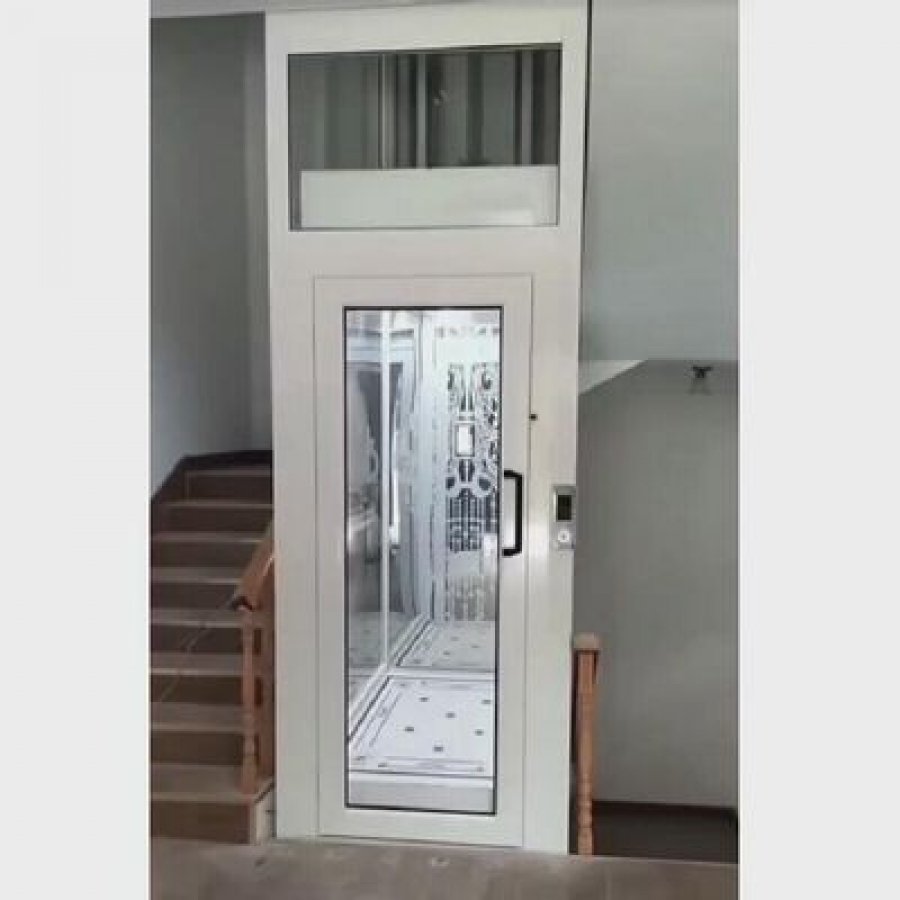
Slim MRL Backpack Traction Lift | 400 kg, Up to 30 m
Product Details:
Brand Name
YIMEISITE
Place of Origin
China
Payment & Shipping Terms:
Minimum Order Quantity
1 set
Price
USD 10,000-20,000 per set
Payment Terms
T/T,L/C
Supply Ability
10 sets
Delivery Time
45 working days
Packaging Details
Export non-fumigation wood box.
| Drive Type: | Gearless | Capacity: | 400 kg |
| Power Supply: | 220V, 50Hz, Single phase | Door Type: | Automatic |
| Interior Design: | Customizable | Door Opening: | Center Opening |
| Warranty: | 1 year | Control System: | Microprocessor |
| Safety Features: | Emergency Stop Button, Overload Protection, Door Interlocks | Speed: | 0.6 m/s |
| Operating Panel: | Touch Screen | Model: | Gen2 |
| Travel Height: | Up to 30m | ||
| Highlight: | slim back electric traction elevator,slim back elevator without machine room,backpack type electric traction elevator | ||
Product Description
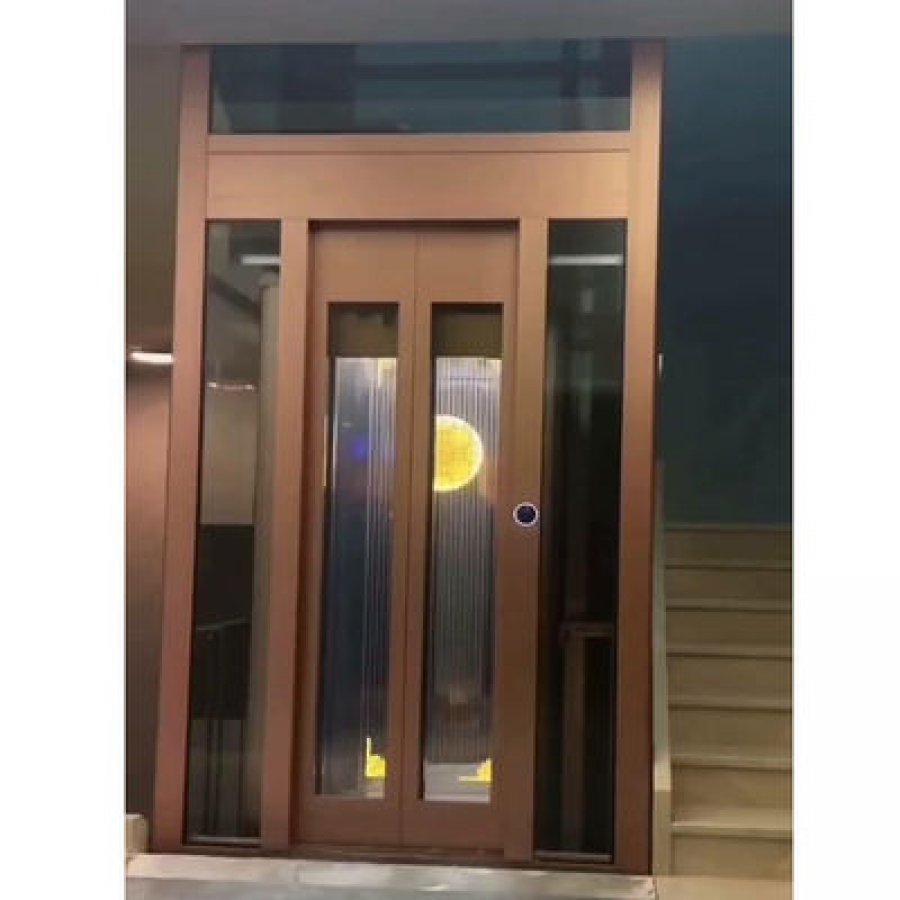
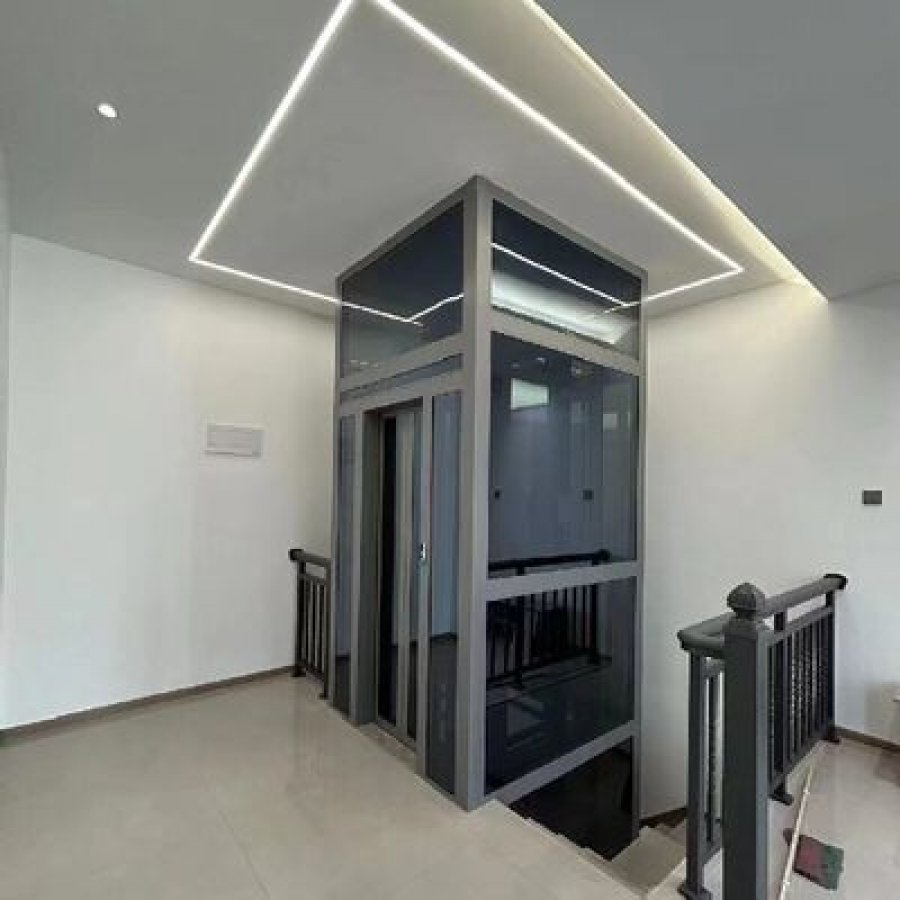
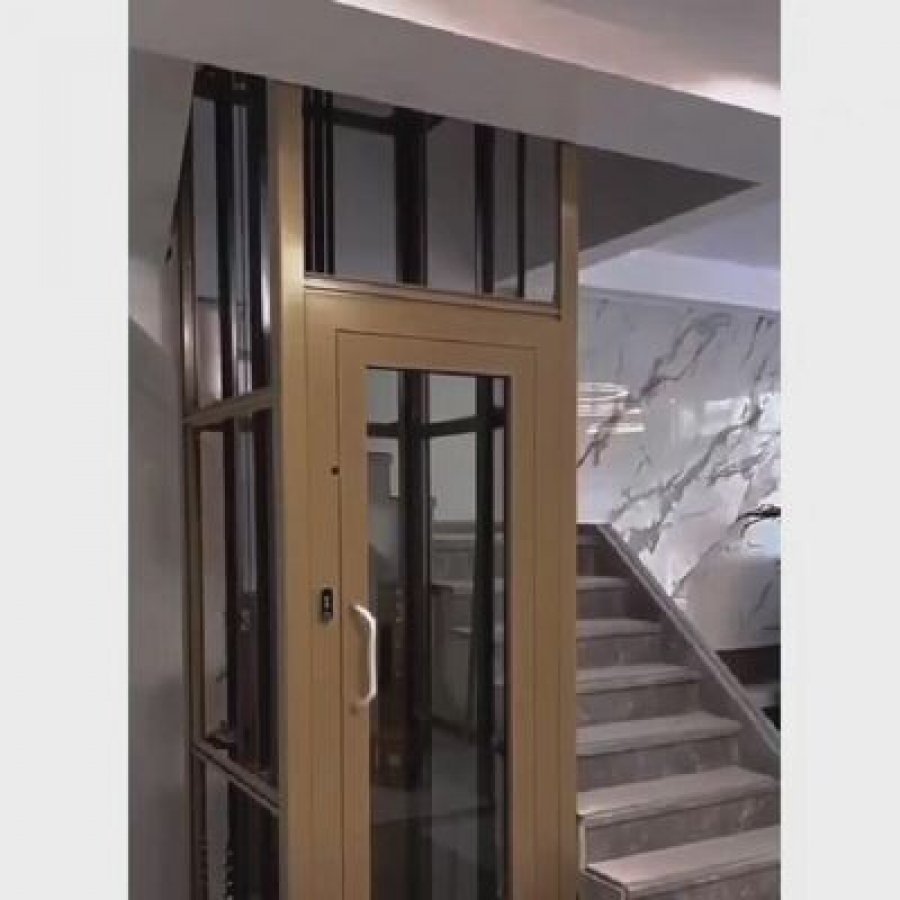
Slim MRL backpack traction lift · 400 kg · up to 30 m travel
A traction lift that fits where a machine room would not
This page covers one specific machine: a gearless traction lift whose host is bolted to a backpack frame behind the guide rails, so nothing is lifted onto the roof and no plant room is built beside the shaft. That arrangement is what decides whether your building can take it.
If you are comparing suppliers, the useful question is not whether a home traction lift exists in this size. It is where the machine goes, how much clear shaft it needs, and what has to be true about the building before you order. Most of what you will read explains what a traction lift is, or compares traction with hydraulic. Very little publishes the host envelope and the shaft clear dimensions that decide a retrofit. A slim home elevator that removes the plant room also removes the drawing most suppliers work from, so this page starts with the geometry and puts the marketing last.
The machine this page describes
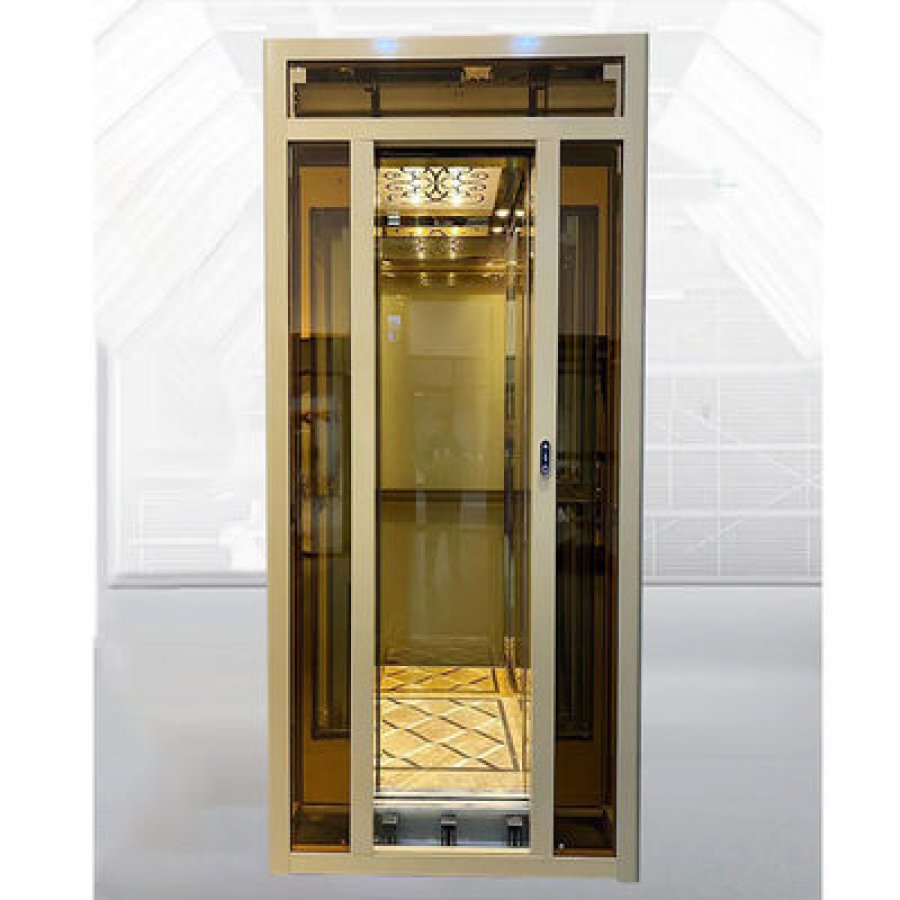
Your enquiry will be priced against these specifications: gearless traction drive, 400 kg rated capacity, 0.6 m/s rated speed and a 220 V 50 Hz single-phase supply. The same table gives automatic centre-opening doors, microprocessor control with a touch-screen car operating panel, and travel of up to 30 m. Those figures come from the specification table on this page. Anything not listed there is treated as a project variable and flagged as such below rather than filled in with a plausible-looking number.
Fit check: three questions, three outcomes
Retrofit enquiries fail for three reasons, and only three. The building has no usable vertical space, the structure cannot carry the loads the machine and travelling mass impose, or the shaft is too tight around the rails once the door and its frame are counted. Work through the questions below before you send drawings.
1 Is there a clear vertical run you can dedicate to a shaft — through floors, not through a staircase void?
2 Can the floor and roof framing around that run take concentrated loads and a small penetration for the rope and traction sheave?
3 Is there single-phase 220 V available at the shaft, with room for the controller cabinet beside the lowest landing?
All three answers are yes — this is the right drive
A slim backpack traction lift is normally the best fit. The machine rides on the shaft instead of a plant room, and travel up to 30 m stays inside the working range of a gearless machine. Single-phase supply keeps a three-phase upgrade off the critical path. The remaining work is dimensional, and the shaft layout comes back as a drawing.
Two measurements decide this one
Most buildings land in the middle: the vertical run exists, but its clear width and the headroom above the top landing are unconfirmed. Those two figures decide whether the host and the guide rails fit. Photograph the shaft from the lowest floor up, note the clear width and the ceiling height above the highest landing, and we can answer without guessing.
This is probably not the right machine — check the other drives
If there is no vertical run to dedicate, or the framing cannot take a suspended load, a rope-suspended traction lift is the wrong first choice. A screw-driven platform lift takes far less headroom, and a hydraulic drive runs on a jack instead of a suspended mass. Send your floor-to-floor heights and a photograph of the space and we will point you at the drive that fits.
Outcome changes as you answer; nothing is submitted anywhere. The same three questions are on the printable survey sheet at the bottom of this page.
How a backpack MRL traction lift is arranged
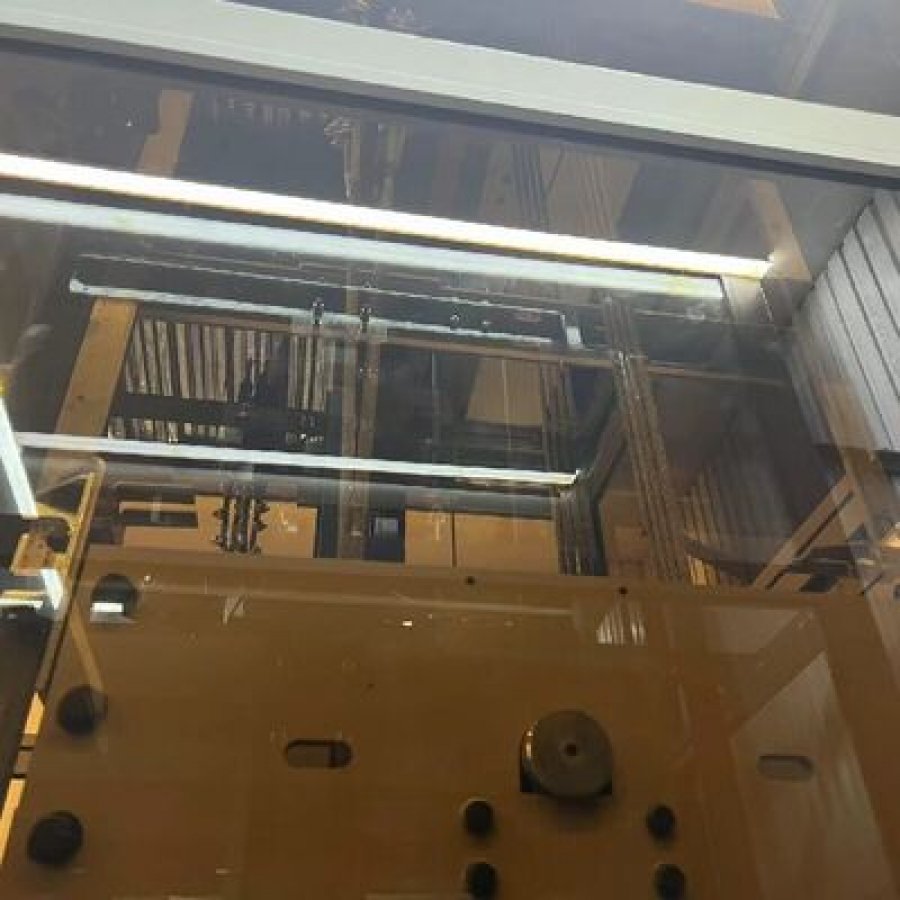
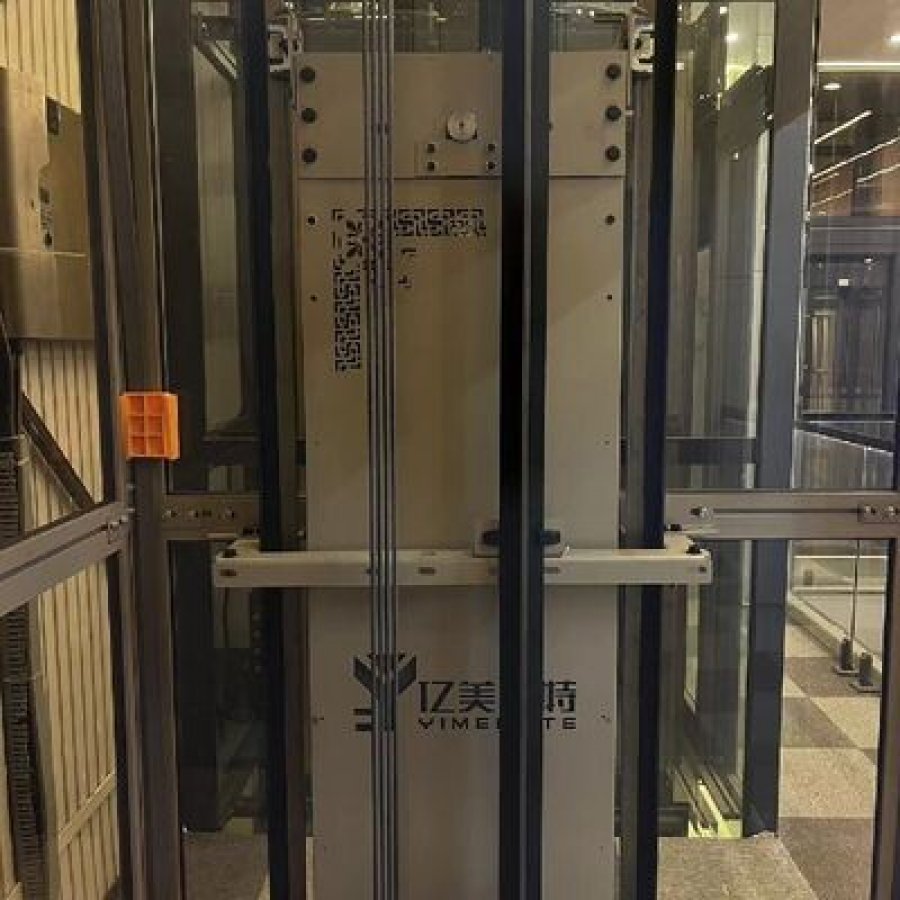
A conventional traction lift puts the machine in a room above the shaft. In a machine room less arrangement it moves onto the shaft itself, and in a backpack arrangement it moves onto the car. The host frame — sheave, motor, brake and the deflection that guides the rope — is bolted to the rear of the car sling, behind the guide rails rather than above or beside them. The car therefore carries its own drive, and the shaft only has to be tall enough for the car and its travel.
Two structural consequences follow. The load path changes: the suspended mass is carried through the guide rails into the shaft structure instead of through a machine-room slab, so the fixing points behind the rails have to be solid. And the car becomes deeper, because the host sits behind it. A buyer who sees the same machine listed as a backpack elevator is looking at exactly this host position. That is the trade the layout makes — cabin depth for a machine room — which is why it suits a narrow plan but not a shallow one.
MRL
Machine room less. The traction machine is mounted on the shaft equipment instead of a dedicated plant room. For a building owner this removes a room from the plan and removes the roof or top-floor slab penetration that a machine room needs. For the installer it moves the work into the shaft, which is why the shaft clear dimensions become the first thing to measure.
Backpack host
The host frame sits behind the car, bolted to the sling, and travels with it. The car is therefore deeper front to back than an equivalent hydraulic car, and the guide rail fixing points take the drive reaction. Where cab depth is tight, look at our slim traction elevator for villas, which places the machine differently in the same footprint family.
Counterweight
A traction lift balances the car against a counterweight running in the same shaft, which is what keeps the motor small enough to run on a single-phase supply. The counterweight needs its own clear lane, so shaft width is shared three ways: car, counterweight, and the clearance the sliding door needs to open.
What the mechanism means in practice
The car carries the host, so its weight is higher than in a hydraulic installation and the guide rails are loaded differently. Rail brackets therefore want to land on solid structure — a beam, a ring beam or a cast wall — not on a single-skin partition. On a retrofit, that detail decides whether the existing structure is usable or needs strengthening.
The drive is gearless and electrically braked, so there is no hydraulic oil, no jack and no tank. Nothing has to be emptied or refilled at service. What remains to be maintained is the rope, the sheave, the brake and the door operator — items a service partner can reach from the shaft and the landings.
With the machine mounted on the car rather than the roof, the headroom above the shaft is governed by the car, the sling and the top of the rails. That is the biggest single reason a slim backpack lift goes into a house where a machine-room lift cannot, and it is why the top landing must be measured rather than estimated.
Key specifications, on one screen
Everything below is taken from this product page's own specification table. Nothing is inferred from a similar model and nothing is rounded up to look better. If a figure you need is missing from the table, it is missing from the source as well.
| Item | Specification | Specification (imperial) | Where it comes from |
|---|---|---|---|
| Drive system | Gearless traction, machine room less | Gearless traction, machine room less | Page specification table — Drive Type: Gearless |
| Rated capacity | 400 kg | 881.8 lb | Page specification table — Capacity: 400 kg |
| Rated speed | 0.6 m/s | 118 ft/min | Page specification table — Speed: 0.6 m/s |
| Travel | Up to 30 m | Up to 98.4 ft | Page specification table — Travel Height: Up to 30 m |
| Power supply | 220 V, 50 Hz, single phase | 220 V, 50 Hz, single phase | Page specification table — Power Supply |
| Door type | Automatic, centre opening | Automatic, centre opening | Page specification table — Door Type / Door Opening |
| Control system | Microprocessor control | Microprocessor control | Page specification table — Control System |
| Car operating panel | Touch screen | Touch screen | Page specification table — Operating Panel |
| Model reference | Gen2 | Gen2 | Page specification table — Model |
| Safety devices | Emergency stop button, overload protection, door interlocks | Emergency stop button, overload protection, door interlocks | Page specification table — Safety Features |
| Interior | Customizable | Customizable | Page specification table — Interior Design |
| Warranty | 1 year | 1 year | Page specification table — Warranty |
Imperial values are direct conversions of the metric figures in the same row (1 kg = 2.20462 lb, 1 m = 3.28084 ft, 1 m/s = 196.85 ft/min). They are a convenience, not a second specification: where a contract needs one system of units, use the metric column, which is what the specification table states.
What the specification table does not state
The table above gives capacity, speed, travel, supply, doors, control, safety devices, interior and warranty. It does not state shaft clear width or depth, pit depth, headroom, cabin clear size, door clear opening or a maintenance interval. Those figures decide a retrofit, and because the page does not publish them we will not invent them. Send your shaft dimensions and the landing layout, and the drawing comes back before any order.
Missing a figure you need? Contact our engineers.
One more thing worth stating plainly: the specification table on this page carries no certification row and names no standard. Where a project needs certification documents, tell us which approval your building authority wants and the documents are checked against that list before shipping — but the declarations are not made here, because the page does not carry them.
Shaft clear dimensions and the headroom over the top landing
Two measurements decide most slim backpack projects: the clear internal width and depth of the shaft, and the headroom above the top landing. The machine room less layout removes a room, but it does not remove the need for space inside the shaft — the car, the host behind it, the counterweight lane and the sliding door all compete for the same box.
Three checks before you order anything
Measure, do not estimate. A tape measure against the clear faces of the shaft, taken at the lowest and highest levels, is worth more than a floor plan, because plans rarely show finishes, insulation or a later-built partition. Work through the three checks below and use the counter to keep track of what is still open.
Shaft readiness checks
Answered: 0 of 3
Why headroom is the one people get wrong
In a machine-room lift the headroom question is answered by the room above. In a machine room less lift it moves into the shaft, and it is answered by the car height, the sling and the top of the rails, plus whatever the counterweight needs to overrun. A shaft that looks generous in plan can still fail on headroom, particularly in a converted building where the top floor sits under a sloped roof.
The practical test is simple: stand at the top landing and look up. A flat soffit with usable fixing points and enough clear height for a car plus its sling is workable. If the soffit slopes, or a duct or beam crosses the shaft, note where it crosses and at what height — that note is often what changes the design from a standard layout to a shortened car.
Width, depth and door opening are one decision
Clear width is shared between the car front, the counterweight lane and the door. Asking for a wider door in the same shaft narrows the counterweight lane, and asking for a deeper car pushes the host further back. That is why the enquiry asks for the door clear opening you actually want rather than only the shaft size: the two are negotiated together, and the answer is a drawing rather than a table.
If the space is shaped so that no rectangular shaft fits — a corner, a curve, a gallery void — say so and send a photograph. Where the plan is genuinely constrained, one of our other drives is usually a better answer than forcing a slim backpack layout into a box it was not designed for.
Single-phase supply and a touch-screen car panel
The specification table gives the supply as 220 V, 50 Hz, single phase. In a house that is usually already present, which is why this configuration is popular in converted buildings: the three-phase upgrade another drive might need is not on the critical path. It does not follow that the lift can be plugged into a nearby socket. A lift is a fixed machine with its own circuit, protective device and isolator.
What the supply figure does tell you
- Machine designed around a single-phase 220 V, 50 Hz feed, so a property with no three-phase service is not automatically excluded.
- Controller cabinet positioned out of the car's travel path and reachable for service — typically beside the lowest landing.
- Lift circuit kept dedicated and protected on its own, not shared with socket circuits, lighting or a workshop load.
What the supply figure does not tell you
- The cable size and the rating of the protective device. Those follow from the installation and are signed off by the electrician on site.
- Whether the incoming supply to the building is adequate once the lift is added to the existing load.
- Whether the local network frequency is 50 Hz. A 60 Hz market is a different specification, not a different cable.
Send your site's voltage and frequency to Contact our engineers. and the electrical schedule is confirmed against your supply.
What a touch screen changes for the user
A touch screen replaces the engraved button plate with a display. In a domestic lift that means three practical things. Floor labels can be written the way the family actually names the floors rather than as numbers alone. A service message or an out-of-service state can be shown on the panel instead of being discovered by pressing buttons. And the trip control can be grouped with the alarm and emergency stop buttons so a passenger who has never used the lift can read the panel at a glance.
Two design points are worth settling before the car is built. The emergency stop and the alarm stay as physical controls independent of the screen: if the display fails or the car loses power, those two buttons still have to work. And the panel height should be set for the shortest regular user of the lift, not for an average adult — a panel comfortable for a standing adult can be out of reach from a wheelchair or a walking frame.
Controller, isolator and the space beside the lowest landing
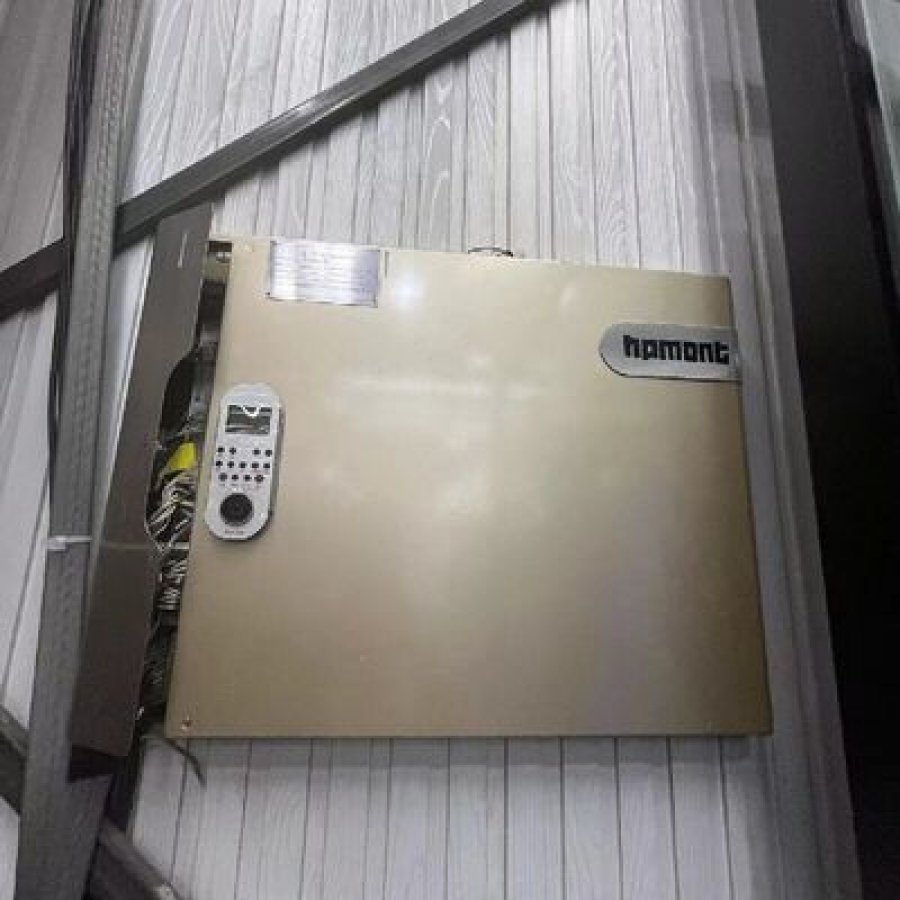
Machine room less does not mean control room less. The controller cabinet is a real box with a real footprint. It wants to live where an engineer can open it and work on it — normally at the lowest landing, in a cupboard or a recess, outside the travel path of the car. Plan that space with the shaft, because finding a home for the cabinet later is the most common late change on a retrofit.
Alongside the cabinet you need an isolator that can be locked off, labelled and reached without entering the shaft. If the building is rented or shared, agree who holds the key, because that detail decides how quickly a service visit can start.
Backpack traction against hydraulic and screw-driven drives
The three drives sold for houses are not better or worse in the abstract; they fail in different places. A traction lift fails when there is no vertical run or no structure to hang it from. A hydraulic lift fails when there is nowhere to put the jack, the tank and the oil. A screw-driven platform fails when the load and travel asked for exceed what a screw column should be asked to do. Choosing between them is a question about your building, not about a specification sheet.
| What you are comparing | Slim backpack traction lift | Hydraulic drive | Screw-driven platform |
|---|---|---|---|
| How the car is moved | Rope over a gearless sheave, balanced by a counterweight | A jack pushes the car from below | A rotating screw column carries the platform along itself |
| Where the drive lives | On the car, behind the guide rails | In a plant space beside or below the shaft, with the tank | Along the guide column, inside the shaft envelope |
| What that costs you in the building | No machine room; headroom and rail fixing points inside the shaft have to be right | Space for jack, tank and oil, and a path for the pipework | The smallest footprint of the three, and the least headroom |
| Electrical supply on this page | 220 V, 50 Hz, single phase — no three-phase upgrade required for the machine as specified | Confirmed per project against the site supply | Confirmed per project against the site supply |
| Ride character | Gearless traction: no oil, no jack, smooth start and stop under microprocessor control | Oil-driven travel has its own character; ask us for a ride sample from an installed unit | Direct mechanical travel; the platform follows the column |
| What is maintained | Rope, sheave, brake, door operator and controls | Oil condition, seals and the power unit, as well as the doors | The screw column and its lubrication, and the platform running gear |
| Best fit | A building with a usable vertical run and the headroom to use it | A building with no run worth suspending a car in, and room for a plant space | A tight plan where footprint matters more than speed |
Only the backpack traction column describes the machine on this page, and every figure in it comes from this page's specification table. The other two columns describe drive types in general terms so you can see the trade; the specifications of our hydraulic and screw-driven ranges live on their own pages.
The trade the backpack layout makes
Compare the second and third columns and the bargain is visible. The backpack layout removes the machine room and keeps the smoothness of a rope-driven lift, and in exchange it takes car depth. On a plan that is generous front to back and tight side to side, that is a good trade. On a plan that is short front to back and wide, it is the wrong one, and the same family places the machine differently.
Hydraulic and screw-driven drives make the opposite trade. They buy compactness and headroom tolerance, and they pay either with a plant space and oil, or with a direct mechanical drive that behaves differently underfoot. Neither is a compromise machine; both answer a different constraint.
Where this drive usually wins
- A house or small commercial building with three or more floors and a genuine vertical run.
- Any building where a plant room at the top would eat a usable room, or where the roof cannot be penetrated.
- Properties with single-phase power where bringing in a three-phase supply would dominate the project.
- Projects that want a longer travel than a jack or a screw column is usually asked to serve.
If more than one of those does not describe your building, treat this page as background and look at our hydraulic home elevator and screw-driven elevator ranges instead. Choosing the right drive at the enquiry stage saves more money than any later negotiation.
If a brief asks for a traction home lift without saying which machine should carry it, this is usually what is meant: a rope-driven car with the host on the car, no plant room and single-phase power. The full product range lists every drive we build, and the residential traction elevator range shows where this model sits among the others.
Safety devices, and what to check before handover
The specification table lists three safety devices on this machine: an emergency stop button, overload protection and door interlocks. Three items can read as a short list, so it is worth saying what each one does at the machine, and what remains the installer's and the owner's responsibility.
Emergency stop
A hard control that removes drive power immediately and holds the machine stopped. On this page it is listed in the car; the same function is normally repeated at the controller so an engineer can stop the machine before working on it. It is a stop, not a brake release: the car stays where it is, and a deliberate sequence is needed to bring it back into service.
Overload protection
Detects that the car is carrying more than it is rated for — on this machine, more than 400 kg — and prevents the trip from starting. The point is to protect the rope, the sheave and the brake from a load they were not sized for, and to stop a car being used as a goods hoist by accident. It also protects the passenger, because an overloaded car is a car with less margin.
Door interlocks
Physically prevent the car from moving unless every landing door and the car door are closed and locked. This is the device that stops the lift being used with a door held open, and it is the one most often defeated by well-meaning improvisation during building work. It should be tested at handover, and any bypass found during a service visit should be treated as a defect rather than a convenience.
Beyond those three, this page carries no certification row and names no standard. That is a statement about the page, not about the machine: where a project needs approval documents, tell us which authority is approving the installation and the documentation is checked against that list before shipping. Do not assume from silence that a document exists, and do not assume it does not — ask.
Handover checks worth doing yourself
Whether or not your contract includes an independent inspection, these are the checks a building owner can see for themselves, and each one takes a minute. Tick them off as the installer works through the handover.
Acceptance walk-through
Answered: 0 of 6
Installation sequence on a retrofit project
A lift added to an existing house follows a different sequence from a lift built into a new one. In a new build the shaft is drawn first and everything else follows. In a retrofit the building sets the constraints and the design fits around them, which means the first two steps below carry most of the risk and deserve most of the attention.
-
Survey the space and take the two measurements
Clear shaft width and depth, and clear headroom over the top landing, measured rather than read from a plan. Photograph the run from the lowest level upwards, note where any beam or duct crosses, and record the floor-to-floor heights for each stop. This is the step where an enquiry either becomes a design or gets redirected to a different drive, and it costs nothing but an hour with a tape measure.
-
Layout drawing and a quotation against it
The dimensional layout comes back as a drawing: car position, host position behind the car, counterweight lane, door opening and the controller cabinet location. Price is quoted against that drawing rather than against a generic model name, which is why two quotations for "a 400 kg home lift" can differ without either supplier being wrong. Expect the drawing to change once after the site visit; that is normal.
-
Manufacture and pre-dispatch checks
Once the drawing is signed off, the machine is built to it. The specification quotes a delivery time of 45 working days; treat that as the window that starts at sign-off, not at the first email. Any approval document your authority requires should be settled during this window rather than after the crate is on the water.
-
Site preparation and shaft work
While the machine is being built, the building side is prepared: the opening is formed, the rail fixing surfaces are made good, the lift circuit and isolator are installed, and the door frames are set. Most retrofit delays happen here rather than in the factory, and most are structural — a partition that looked solid turning out not to carry a bracket. If the shaft work is done before the crate is booked, the installation itself becomes predictable.
-
Installation, testing and handover
The machine is assembled, wired, levelled and run through its tests, then handed over against the acceptance list in the section above. The headroom available over the top landing, the door interlock behaviour at every floor and the overload signal should all be demonstrated rather than described. Ask for the demonstration, and write down the date: it becomes the start of the one-year warranty.
What to prepare before the crate arrives
- A route for the crate from the delivery vehicle to the shaft. A slim backpack lift is compact for a lift, but it is still a crate with a machine in it, and a 900 mm doorway on the only route is a real problem.
- Power, light and a working area at the shaft for the installation team, plus a safe edge at every opening once the floor is cut.
If any of the five steps is unclear, send the measurements you have and the ones you are missing. Working out what is missing before the drawings start is the cheapest engineering in the project, and it beats quoting against assumptions. Contact our engineers with your floor heights and photographs.
Maintenance, and what the one-year warranty covers
The specification table gives a warranty of 1 year. It does not state a recommended service interval, so this page does not invent one: the schedule depends on trips per day, the environment (dust, humidity, salt air, animal hair) and what your local inspector expects. Ask us or your service partner, and set the interval from that answer.
What is warrantied
The machine as supplied, for one year from handover. Keep the handover record with its date, because that date is what the warranty is counted from — not the order date and not the shipping date.
What falls outside it
Damage from water ingress, building work carried out inside the shaft, a bypassed door interlock, or a lift circuit altered after handover. These are the four causes we see most often, and all four are avoidable.
What a service visit covers
Rope and sheave condition, brake setting and lining, door operation and the interlock at every landing, the control panel's fault log, and the running smoothness of the car. A visit that does not include all five is not a service, it is a call-out.
What the owner can do
Keep the shaft and the landing thresholds clear, do not use the lift as a goods hoist beyond its rated capacity, and report any change in noise or stopping position immediately rather than waiting for the next visit.
Why a gearless traction lift is maintained differently
There is no oil to change and no jack to reseal, because the machine is rope-driven and electrically braked. The things that wear are the rope, the sheave, the brake and the door mechanism, and the thing that detects a drift early is the control system's own fault log. That changes the shape of maintenance rather than removing it: fewer consumables, but the brake and the rope still need a trained eye at intervals, and the door interlock still has to be tested rather than assumed.
Two habits make a domestic lift last longer than its warranty. Keep a written record of every visit, with the date and what was found — a fault six months after a service is far easier to trace against a written history than against memory. And report a change the first time you notice it: a car that stops slightly low, or a door that takes a moment longer to close, is usually an adjustment, and left for a year it is a repair.
Spares and support after the warranty
Wear parts are the rope, the brake lining, the door rollers and the landing door hardware. When you order, ask which of these are standard components and which are specific to the model, and get the answer in writing: that single question decides how quickly the lift can be repaired in year four. Contact our engineers if anything on this page needs confirming against your project, including the warranty terms that apply to your order.
Questions buyers ask before ordering a slim backpack lift
Twelve questions, answered against this page's own specification table. Where the page has no figure, the answer says so.
What does "backpack" mean on a traction lift?
It describes where the machine sits. Instead of standing in a room above the shaft, the host frame — sheave, motor, brake and rope deflection — is bolted to the back of the car sling and travels with the car. The benefit is that no plant room is built and no roof is penetrated. The cost is car depth: the host occupies space that a hydraulic car would use as cabin.
Can a traction lift really work without a machine room?
Yes — that is the point of a machine room less, or MRL, arrangement. The room is not removed by magic; the machine is relocated onto the shaft equipment. What has to be true instead is that the guide rails are solidly fixed and the shaft has enough headroom for the car, the sling and the top of the rails.
Does it need three-phase power?
Not as specified on this page. The specification table gives 220 V, 50 Hz, single phase, which is the usual domestic supply in many markets and the reason this drive is often chosen for conversions. It still needs its own circuit, its own protective device and a lockable isolator, installed by a qualified electrician. Send your site's voltage and frequency and we confirm the schedule against it.
How much shaft space does it need?
This page does not publish shaft clear width or depth, so any number here would be invented. What can be said is how the space is shared: the car, the counterweight lane, the host behind the car and the door opening all come out of the same box. Send the clear width and depth, the headroom over the top landing and the door opening you want, and the layout comes back as a drawing.
What is the maximum travel?
Up to 30 m, the figure in the specification table on this page. That covers the great majority of houses and small commercial buildings, and it is one reason a rope-driven drive is chosen over a jack or a screw column on taller domestic projects. The number of stops is a separate decision from the travel, and both belong in the enquiry.
How fast is 0.6 m/s in everyday terms?
The rated speed here is 0.6 m/s, about 118 ft/min. In practice the car covers roughly three metres in five seconds once up to speed, with a little more allowed for acceleration and levelling. That is a comfortable domestic pace: fast enough that waiting is not the experience, slow enough that the ride does not feel like machinery.
Can it be installed in an existing house?
That is the case the backpack layout was developed for. Establish the vertical run and the headroom above the top landing first, because a retrofit shaft usually has to work around structure that is already there. If your building has neither, tell us and we will point you at a hydraulic or screw-driven drive rather than force this one. Our residential traction elevator range shows the other models in the same family.
Does it need a pit?
This page does not state a pit depth, so no figure is claimed here. A traction lift needs an overrun at the bottom of the shaft for the car and the counterweight, and how that is provided is settled with the shaft drawing. If your floor cannot be cut at all, say so at the enquiry stage — it changes the drive choice before it changes the price.
What doors does it come with?
The specification table gives automatic doors with centre opening, and the clear opening is agreed as part of the shaft layout because it competes for width with the counterweight lane. People who expect the doors to be the slowest part of the trip are usually surprised: on a domestic lift, the door is often the largest single determinant of how quick the whole journey feels.
Is it quieter than a hydraulic lift?
This page does not publish a noise figure, so no decibel claim is made here. In general terms, a gearless traction machine has no power unit and no oil flow, and it carries the machine on the car rather than in a plant space. Where quietness matters, ask for a recorded ride or visit an installed unit — more useful than comparing website claims, ours included.
What does the warranty cover, and for how long?
One year, as stated in the specification table. It runs from handover, so keep the handover record with its date, and it covers the machine as supplied. It does not cover damage from water ingress, from building work inside the shaft, from a bypassed door interlock, or from a lift circuit altered after handover. Ask for the written terms that apply to your order, because the order terms are what govern.
Can you supply certification documents?
Tell us which authority is approving the installation and which documents it asks for, and we will confirm the list for that project. This page carries no certification row and names no standard, so nothing here should be read as a certification claim. Where a project needs paperwork, it is settled during the manufacturing window rather than after dispatch.
What to send us for an accurate quotation
A quotation for a slim backpack traction lift is only as good as the dimensions behind it. The checklist below is the shortest set of answers that lets us price the machine you need rather than a generic model.
Quotation checklist
Answered: 0 of 9
How the order runs
Minimum order quantity is 1 set, supply ability is 10 sets, payment terms are T/T or L/C, and the quoted delivery time is 45 working days. The machine ships in an export non-fumigation wood box, which matters in markets that reject fumigated packing. Price sits in the specification table beside this text rather than here, and it is quoted against the drawing rather than against a model name.
Three things tighten a quotation further, and all three are free. Say which market the lift is going to, because destination rules change what documentation travels with the crate. Say whether the shaft already exists or is still to be built, because a lift designed into a new shaft uses the space more efficiently than one designed around an old one. And say who is installing it, because that changes what has to be in the box, on the pallet and in the manual.
Two tools: unit conversion and a printable survey sheet
Both tools exist because the same two mistakes recur on every international enquiry: a drawing in millimetres read as inches, and a survey that reaches us with three of the nine answers missing. Neither tool changes a specification; one converts units, the other helps you write the answers down.
Metric ↔ imperial converter
Conversions use 1 mm = 0.0393701 in, 1 m = 3.28084 ft and 1 kg = 2.20462 lb, rounded to two decimals. Type in either box and the other follows. These are unit conversions only — they do not turn your opening into a specification, and the drawing is still what we work from.
Printable site survey sheet — slim backpack traction lift
Print this page or tick the boxes on screen. Ten answers are enough for a first review; anything you cannot answer is worth marking "unknown" rather than estimating.
Answered: 0 of 10
The short version
A slim backpack traction lift is the right machine when three things are true: a vertical run you can dedicate to a shaft, structure that can carry the car and its host, and real headroom over the top landing. When those hold, this drive gives you a 400 kg car at 0.6 m/s, up to 30 m of travel, automatic centre-opening doors, a touch-screen panel, a one-year warranty and a single-phase 220 V supply. No machine room, no roof penetration.
When they are not true, the honest answer is a different drive, and this page says so in three places rather than pretending otherwise. Send the measurements you have; where a figure is missing we will say it is missing and tell you which measurement closes it, because an invented figure is a defect waiting to be built.
Keep reading: residential traction elevator range · slim traction elevator for villas · gearless traction for villas · all products
Send your shaft measurements
Travel, stops, clear width, clear depth and headroom — five figures and we can tell you whether this drive fits.
Want to Know more details about this product
Similar Products