English
 Español
Categories
Contacts
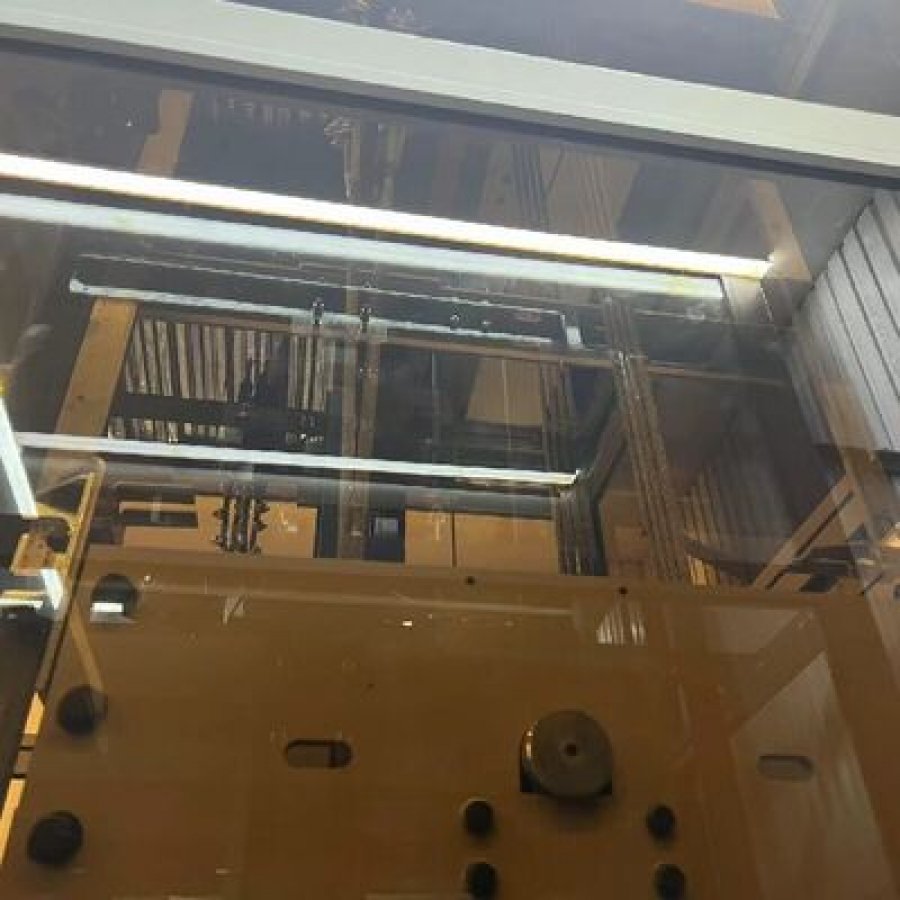
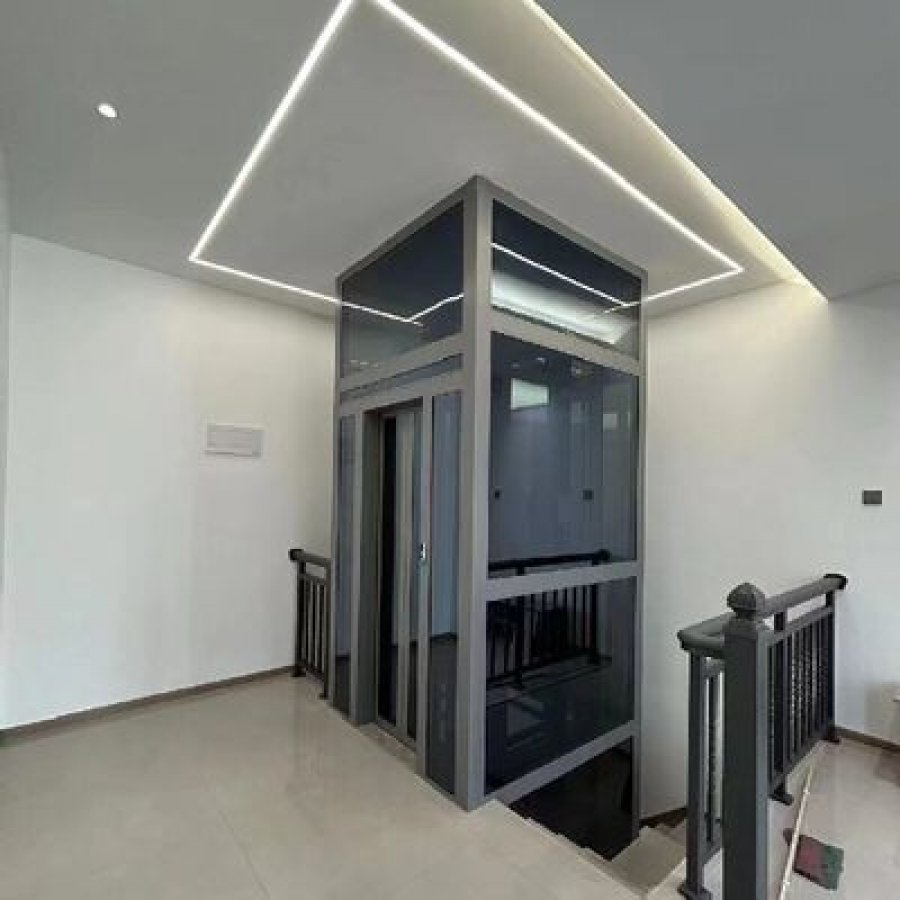
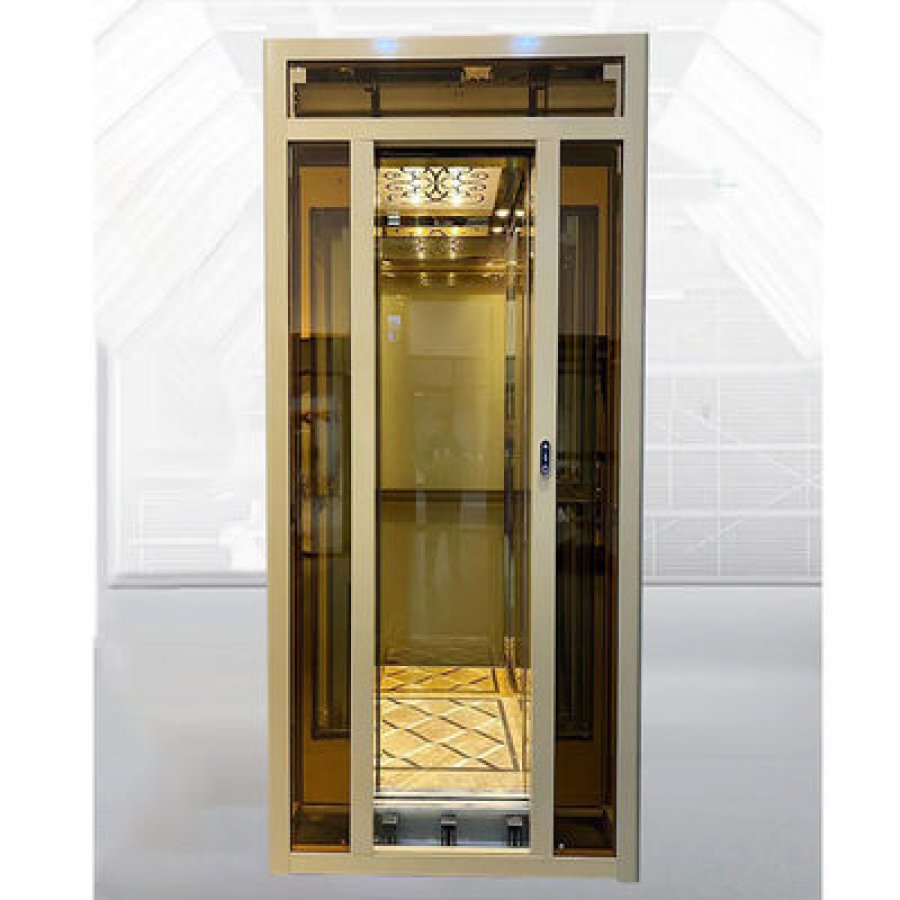
Noise-Reduced Gearless Rope Traction Elevator for Villas & Multi-Storey Homes
Product Details:
Brand Name
YIMEISITE
Place of Origin
China
Payment & Shipping Terms:
Minimum Order Quantity
1 set
Price
USD 10,000-20,000 per set
Payment Terms
T/T,L/C
Supply Ability
10 sets per month
Delivery Time
45 working days
Packaging Details
Export non-fumigation wood box
| Travel Height: | Up To 30 M | Type: | Home Elevator |
| Door System: | Automatic Sliding Doors | Drive System: | Gearless Traction |
| Warranty: | 1 Year | Speed: | 0.6 M/s |
| Capacity: | 400-1000 Kg | Noise Level: | Less Than 60 DB |
| Highlight: | gearless home elevator,sliding doors home elevator,sliding doors gearless traction elevator | ||
Product Description
Reduced gearless rope traction · 400–1,000 kg · up to 30 m · under 60 dB
A home lift you stop hearing after the first week
This page is about a reduced gearless rope traction elevator for villas and multi-storey homes: no gearbox, a permanent-magnet synchronous motor driven by VVVF control, steel ropes over a traction sheave, and a quoted running noise below 60 dB. Those four facts decide whether the lift suits your house.
Most pages stop at the principle: no gearbox, fewer wearing parts, quieter than a geared machine. True, but not actionable. A buyer needs to know which measurements in their own building decide the answer, what the noise figure refers to, and which parts of the installation they still control.
The machine this page describes
The specification block gives the rated load as 400–1,000 kg in four steps — 400, 630, 800 and 1,000 kg — a rated speed of 0.6 m/s, and a maximum travel of 30 m, roughly 8 to 10 stops in ordinary floor-to-floor heights. The drive is gearless traction, the doors automatic sliding, the noise level less than 60 dB, and the warranty one year. Doors are quoted in glass, stainless steel or wood veneer with side or through entrances, and the car carries microprocessor control, an emergency stop button, overload protection and light-curtain sensors. Supply is 220 V or 380 V, 50/60 Hz, ambient range 0–40 °C, and cabin sizes are made to order.
Fit check: three questions, three outcomes
A gearless traction lift is not the right answer for every house, and the buildings where it fails are not random. They fail for one of three reasons: the headroom above the top landing was never measured; the load exceeds what the drive and shaft were sized for; or the noise promise was made about the wrong part of the system.
1 Is the run between two and ten stops, with a machine space available at the top of the shaft rather than a separate plant room?
2 Does the load you need sit inside 400–1,000 kg — a wheelchair plus a helper, a stretcher, furniture, luggage — rather than goods traffic measured in tonnes?
3 Will the shaft sit beside a bedroom wall or a shared party wall, so that a figure quoted in decibels has to be backed by where the machine is mounted and how the rails are fixed?
All three answers are yes — this drive fits the building
A gearless traction machine with a rope drive is the ordinary answer for this shape of project. The travel is inside the 30 m rating, the load is inside the four rated steps, and the noise question is one of mounting and rail fixing rather than luck. What remains is dimensional: shaft sizes, headroom, pit depth and the machine position, all of which come back as a drawing before manufacture.
Two measurements decide this one
Most houses land here: the shape of the project is right, but the headroom above the top landing and the clear shaft width have not been confirmed, and those two figures decide whether the machine and the car fit. Measure the clear width and depth at every floor, note the height from the top landing floor to the underside of the slab above, and photograph the shaft from the bottom upwards.
This is probably the wrong machine — check the other drives
Some buildings are wrong for this drive. If the lift must move pallets or building materials, or the rise is far beyond 30 m, a gearless rope machine asks you to pay for a compact lift you cannot use. The same is true where no space exists for a machine above the shaft. A screw-driven lift needs no machine headroom and no deep pit; a hydraulic drive carries heavier loads over short rises. Send the heights and the intended use and we will name the drive that fits.
The result changes as you answer. Nothing is submitted and no data leaves the page. The same three questions are set out again on the printable survey sheet in the last section.
How a gearless rope drive keeps the ride quiet
Noise in a home lift comes from four places, in order of importance: the machine, the way it is fixed to the building, the guide system the car runs on, and the door operator. A gearless drive removes one of the four almost completely, which is why it is the starting point for a quiet installation.
What the drive removes
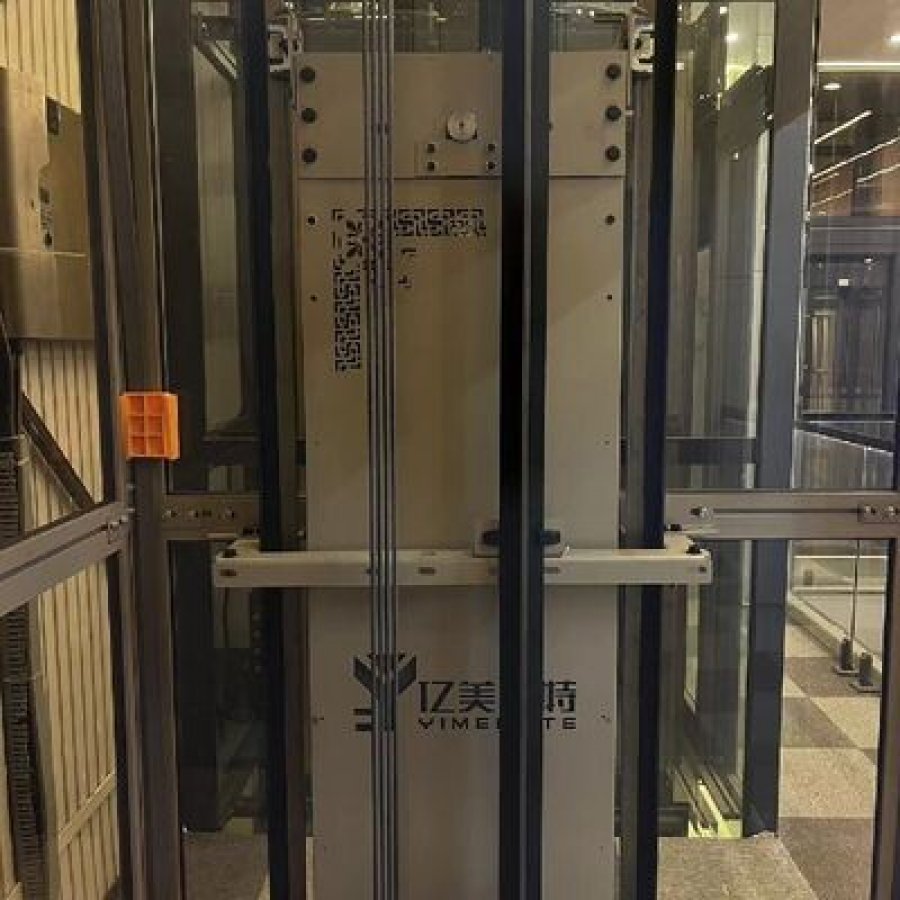
A geared machine puts a worm gearbox between the motor and the sheave. Gears mesh under load, oil is churned, and a second rotating mass has to be mounted, aligned and lubricated. A gearless machine couples a permanent-magnet synchronous motor directly to the sheave, so the only rotating assembly is the motor and the sheave it carries — fewer meshing surfaces, less high-frequency noise, less to wear.
The motor is then fed by a VVVF controller — variable voltage, variable frequency — which ramps the machine up to 0.6 m/s and back down instead of switching it on at full speed. On a vvvf home elevator that ramp is the whole point: start and stop are where the audible disturbance sits, because that is when the brake releases and sets. A soft ramp is worth more to the bedroom next door than a lower steady-state figure.
Gearless machine
A permanent-magnet synchronous motor with the sheave mounted directly on its shaft. No gearbox means no gear mesh to generate noise and no oil to change. Being compact, it is fixed at the top of the shaft instead of in a plant room.
Rope drive
The car hangs from steel ropes passing over the sheave, with a counterweight on the other side. Friction between sheave and rope carries the load, hence the name traction. Rope number and diameter belong to the model's design, not to the site, and appear on the approval drawing.
VVVF control
Variable voltage, variable frequency. The controller raises the supply frequency gradually, so the car accelerates into its 0.6 m/s rated speed and decelerates out of it. The same controller handles the emergency stop and overload logic and reports faults to the cabinet.
The three things you can still control on site
The drive is fixed by the model you buy. The building side of the noise question is not, and that is where complaints start.
Where the machine is fixed
A machine bolted to a stiff slab transmits less vibration than one on a light partition. If the shaft backs onto a bedroom, the slab, the fixings and the pads matter more than the model number.
How the rails are fixed
Rails are the second loudest part of a lift. Bracketed to a rigid wall and shimmed so the car does not rub, they behave very differently from rails hung on thin cladding.
Where the door operator sits
The door operators run on every trip, more often than the machine. A door that closes on an obstruction and re-opens makes a noise you cannot tune out later, so the curtain and closing force are set at commissioning.
Specifications and what each figure changes
A specification table is only useful if you know which line constrains your design. Each rated value below is set against the part of the project it decides; the right-hand column is the consequence, not a second set of numbers.
| Parameter | Rated value | What it decides |
|---|---|---|
| Rated capacity | 400 / 630 / 800 / 1,000 kg882 / 1,389 / 1,764 / 2,205 lb | Whether the car carries a wheelchair and a helper, a stretcher, or the furniture. Pick the step above the worst realistic load, not the average one. |
| Rated speed | 0.6 m/s118 ft/min | How long a trip takes. In a house of two to four floors the ramp matters more than the top speed. |
| Travel height | Up to 30 mUp to 98 ft | The maximum floor-to-floor total the model is rated for, roughly 8 to 10 stops in ordinary residential floor heights. |
| Drive system | Gearless traction, VVVF | Removes the gearbox and the plant room, and puts the noise question on the mountings. |
| Door system | Automatic sliding doors | Centre or side opening, side or through entrance. A through car changes the shaft width and the landing layout. |
| Rope drive | Steel ropes over a traction sheave | Sets the rope layout and counterweight position, both on the approval drawing before manufacture. |
| Power supply | 220 V or 380 V, 50/60 Hz | Whether the house can run the lift from single phase, or a three-phase feed has to be brought in. |
| Noise level | Less than 60 dB | The machine's rated running level; the quiet-rating section covers what it does not promise. |
| Operating temperature | 0–40 °C | Whether the shaft or machine space needs ventilation or heating. |
| Control | Microprocessor control, emergency stop, overload protection, light-curtain sensors | The devices that stop the car safely and keep the doors from closing on a person; set at commissioning. |
| Certification | ISO 9001, CE, EAC | The quality-system and market-access documents this model ships under. |
| Warranty | 12 months | The period covered after commissioning, against the maintenance routine below. |
Reading the table the way a buyer should
Three of the twelve lines decide most projects. Travel height tells you whether the model is in the running at all: a ten-storey building is not this machine. Rated capacity tells you which load step to buy — think about the heaviest single object that will ever go in the car, then take the step above it. Power supply most often sends a project back to the electrician, because three-phase means a different cable and a different distribution board slot.
What the table deliberately does not say
Two things are missing, and they are missing on purpose. The first is a fixed cabin size: this model is built with a cabin matched to the shaft you have, so a single number would be misleading. The second is a decibel figure measured inside a bedroom, because that depends on the wall, the distance and the fixings in your house rather than on the machine.
The commercial terms for this model — brand, origin, minimum order, payment, supply ability, delivery time and packing — sit in the specification block at the top of this page and are not repeated here. If a dimension or a document is in neither place, ask rather than assume; Contact our engineers.
What “less than 60 dB” does and does not promise
Anyone shopping for a silent home elevator meets a figure like this one. Here the running noise is quoted as less than 60 dB: a rating for the machine at its rated speed, measured as a sound level rather than a vibration level. It is useful because it is a number at all; plenty of home lifts are sold without one. It is not, however, the level you hear from a bedroom, and treating it as one is how quiet-lift disputes start.
The figure holds when
- The machine is bolted to a stiff slab above the shaft, with the pads the drawing specifies.
- Rails are bracketed to a rigid wall and the shoes set so the car does not scrape.
- Door operators are adjusted at commissioning, not left at factory settings.
- The shaft has a solid wall between it and any bedroom.
All four are decided by the installation, not by the catalogue, which is why they appear on the survey and handover sheets.
Where the figure will not hold
- A machine mounted on a light timber partition or an unbraced partition wall.
- Rails on long unsupported brackets, or out of alignment so the shoes rub.
- A shaft against a bedroom with no separating wall, where vibration reaches the room through the slab.
- A door track or sill not cleaned since installation.
None of these are faults of the drive, and all are reasons a good drive can still be heard in a finished house.
Three reference levels, so the number means something
Decibels are logarithmic, which is why a difference of ten feels roughly twice as loud. As a rough guide: a quiet bedroom at night sits in the low thirties, a refrigerator hums at about 40 dB, ordinary conversation is around 60 dB, and a vacuum cleaner is 70 dB and above. A machine rated below 60 dB sits in the range of a household appliance heard from a metre or two away — quiet enough to live above, not silent.
The second half of the promise is the speed ramp. At 0.6 m/s the ride is short, but what anyone notices is the start and the stop: the machine spinning up, the brake lifting, the car settling. VVVF control shapes that ramp, so ask for the acceleration and deceleration values rather than assuming the drive is gentle because it is gearless.
How to verify the quiet claim on your own project
Ask for the figure to be verified at commissioning, in writing, with a method attached. A workable check is short. Run the car loaded and empty between the two floors nearest the sensitive room, with a sound-level meter held at a fixed point in that room. Record the highest reading for each trip with the door closed. It is not a laboratory measurement, but it is taken where you care about it and can be repeated a year later.
Two smaller checks catch most of the avoidable noise. Listen at the top landing as the car rises past it: a scraping or rhythmic sound there is guide shoes or rails, not the drive. Then listen with the doors stationary and the car parked — any hum at rest is a control or brake setting, and it should not be there.
Power supply and door system
Two decisions belong to the house rather than the lift: the electrical supply to the machine, and the doors the car and landings are built with. Both are cheap to fix at the drawing stage and expensive later.
Choosing between a 220 V and a 380 V supply
This model is quoted for 220 V or 380 V, 50/60 Hz. The choice is not about which is better; it is about what the building already has and how far the supply has to travel.
Single-phase, 220 V
The usual choice in a finished house: the supply is already there and the run to the machine is short. It suits the lower load steps and keeps the work inside the existing distribution board, subject to the electrician confirming spare capacity and a dedicated circuit.
Three-phase, 380 V
Common in new buildings, at the top load step, or where the machine is far from the incoming supply. It needs a three-phase feed and a cable route, so it is agreed with the electrician and the builder, not with the lift supplier alone.
Three things belong in the electrical scope and are easy to forget: a dedicated circuit with its own protection and an isolator that can be locked off. Route the cable clear of the shaft and the door openings. Confirm the supply before the shaft is closed up; a cable fitted later usually means cutting.
Automatic sliding doors: what changes at each landing
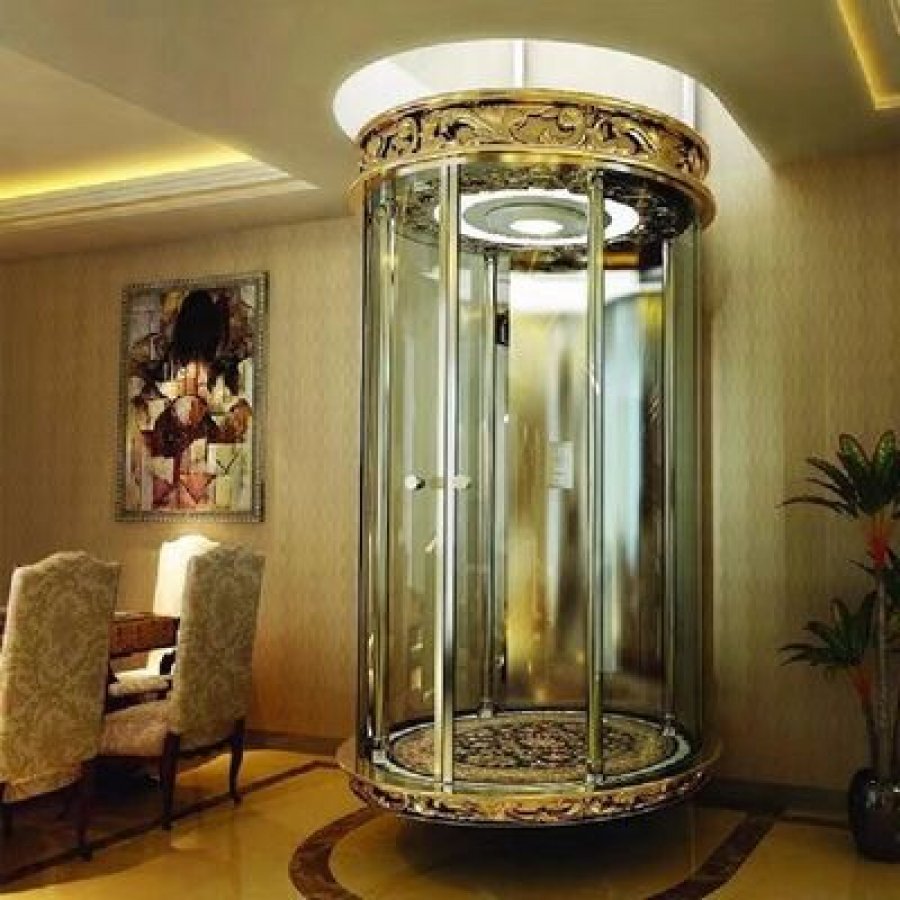
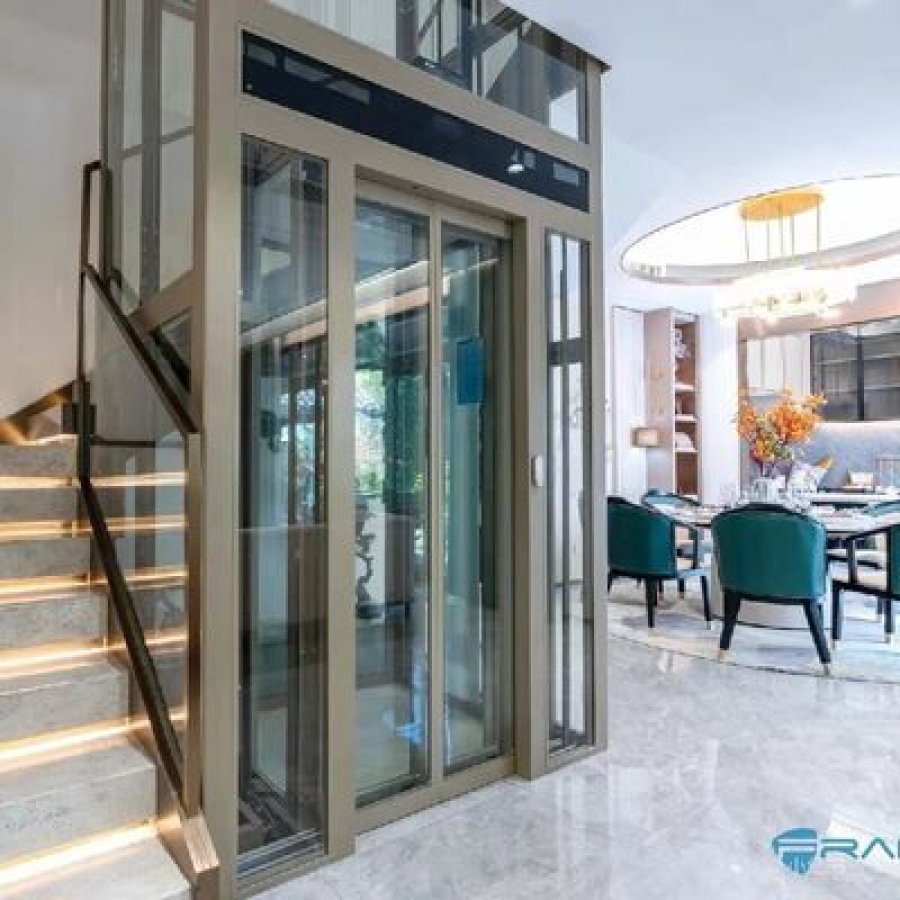
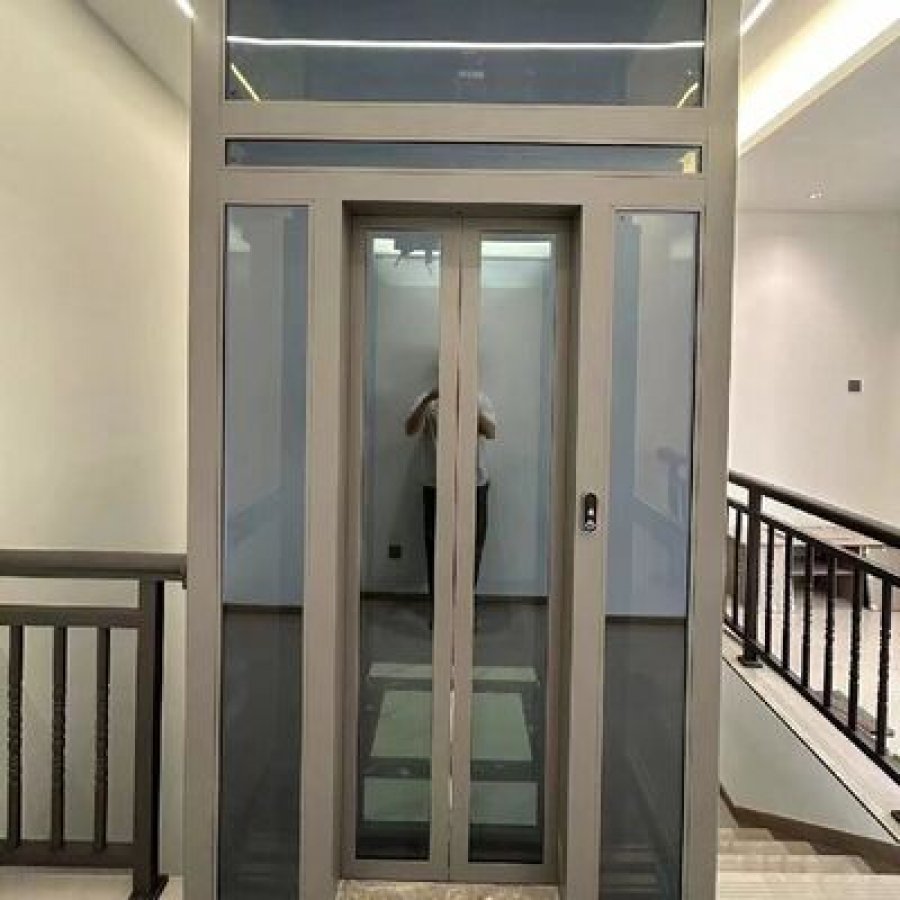
The door system is automatic sliding, in centre or side opening, glass, stainless steel or wood veneer, with side or through entrances. These are not decoration. A through car — doors on opposite faces, entered at one side and left at the other — is what makes a small lift practical on a narrow plan, and it changes the shaft width and every landing.
Centre opening
Two panels part from the middle, giving the widest clear opening for a given shaft width. Choose it when the landing is symmetrical and nobody needs to walk through the car.
Side opening
Both panels travel to one side, freeing the wall beside the door for the call button and keeping the opening clear of a corridor.
Through entrance
Doors on two opposite faces. On narrow plans this removes the need for a turning space in front of the lift, at the cost of a wider shaft.
The safety devices in the door line
The doors carry light-curtain sensors: anything crossing the opening while the panels close reverses them. This is the device that keeps a hand or a walking frame from being caught, and the one most often blamed for odd door behaviour. A curtain that is misaligned, dusty or too sensitive re-opens on a passing shadow; one that is too blunt defeats the protection. Both are put right at commissioning and checked at every service.
Which drive to choose, and when this one is the wrong answer
Three drives cover almost every residential lift: gearless rope traction, hydraulic and screw driven. They are not grades of one product; each solves a different constraint. This page describes the first, so it is worth being plain about where the others win.
| Question | Gearless rope traction (this model) | Hydraulic | Screw driven |
|---|---|---|---|
| Best suited to | Longer residential runs and multi-storey houses | Short rises and heavy loads | Long runs where a jack cylinder or a machine room is impossible |
| Space above the shaft | A machine fixed at the top of the shaft, no separate plant room | No machine above, but a cylinder and power unit at the bottom | No machine above and no cylinder, so headroom can be minimal |
| Speed | 0.6 m/s118 ft/min | Typically slower over the same rise | Typically slower than traction over the same rise |
| Ride feel | Roped car with counterweight, ramped by VVVF control | The cylinder sets the general feel of the ride | The nut travelling on the screw sets the feel of the ride |
| Main noise risk | Machine mounting, rail alignment, door operator | Power unit and valve noise, often near the lowest floor | Drive nut and screw, and the rails the car runs on |
| Load range on this page | 400–1,000 kg882–2,205 lb | Chosen by the cylinder and the structure, not by this table | Chosen by the screw and the structure, not by this table |
| Building change | A machine fixing at the top of the shaft, plus a single-phase or three-phase feed | Power unit position, oil containment and cylinder pit | Screw and nut fixings, minimal headroom and pit |
| Choose it when | The shaft takes a machine above it and the ride should be quiet | The rise is short and the load heavy | No room for a machine, a cylinder or a deep pit |
The three questions that decide it
Is there space above the shaft? The machine is fixed at the top of the shaft. If there is no slab or beam there and none can be added, this drive stops being an option before any other question matters. The traction elevator range is worth reading only if a machine position exists.
How long is the run? Travel reaches 30 m98 ft, covering villas and multi-storey houses comfortably. Beyond that the machine is outside its rating and a different product is the honest answer.
What happens if the power fails? The car is held by the drive and the brake, and the emergency stop and controller logic bring it to a controlled halt. If the building needs a passenger brought to a landing without human help after a mains failure, that is a separate automatic-rescue feature and has to be specified rather than assumed.
Where the other drives win
A hydraulic lift wins where the load is heavy and the rise short: a garage, a workshop, a two-storey house moving a car or pallet. Its limits sit in the cylinder, the oil and the pit; its noise sits in a power unit at the bottom of the building.
A screw-driven lift wins where a machine above the shaft is impossible and the pit must be shallow. It is the quieter, self-locking answer for awkward buildings, and a slower ride, because the car travels at the speed of the nut on the screw.
As a villa traction elevator, this model wins where the building is a house of several floors, the load is a household load, and the priority is a quiet ride with a small machine at the top of the shaft. For an office building, a geared traction machine is often more economical, because quiet behaviour matters less where nobody sleeps above the shaft.
Safety devices and what the certification marks cover
The safety devices on this model are listed with the specification: microprocessor control, an emergency stop button, overload protection and light-curtain sensors at the doors. Here is what each does, and what the three certification marks cover — because “CE marked” and “safe” are not the same sentence.
What each device does
Emergency stop button
A stop control that brings the car to a controlled halt and holds it there. It is for emergencies, not for parking the lift, and its position and labelling appear on the approval drawing.
Overload protection
Detects a load beyond the rated capacity and prevents the trip from starting. It protects the drive and the ropes, and tells passengers why the lift is not moving instead of leaving them pressing the button.
Light-curtain door sensors
An infrared curtain across the door opening; anything crossing it while the panels close reverses them. Setting it is a commissioning task: too sensitive and the doors re-open on a shadow, too blunt and the protection is nominal.
Microprocessor control
It sequences the run, shapes the VVVF ramp, monitors the safety inputs and reports faults. It also logs what happened, which is why a fault code is worth photographing before anyone resets anything.
Beyond these four, the remaining safety provisions belong to the machine design and the installation standard applied in your market, and are set out in the approval drawing. This page does not list devices it cannot show you in a document, because a safety claim without a drawing behind it is worth nothing on site.
What the three marks cover
ISO 9001
A quality-management certification for the manufacturing organisation: a documented process for design, purchasing, production and inspection. It is not a statement about any single lift.
CE and EAC
Market-access markings for the European Economic Area and the Eurasian customs union. They indicate the product is placed on those markets with the required conformity documentation, copies of which accompany the shipment; ask for them with the quotation if a permit needs them.
None of the three marks replaces the local requirement where the lift is installed. Most markets require the installation itself to be inspected or accepted by a competent body — a site process involving the installer, the owner and the local authority that no factory certificate can cover. Confirm that route before the shaft is built; it is the one item here that can stop a finished lift being handed over.
Handover checks worth writing into the contract
The list below is what should be demonstrated on site before the lift is accepted, and it appears again on the printable sheet at the end of this page. It is written as things you can watch being done rather than things you take on trust.
Commissioning and handover checks
Ticked: 0 of 10
Installation, in the order it actually happens
A residential lift is installed in two halves. The first belongs to the building: shaft, machine position, electrical feed. The second belongs to the lift: machine, rails, car, doors, and the commissioning that turns a collection of parts into a quiet ride. Getting the first half wrong makes the second expensive, so the sequence starts before the crate is ordered.
-
Survey the shaft and fix the machine position
Measure the clear shaft size at every floor, the height above the top landing and the pit depth below. Confirm where the machine will be fixed and whether the slab or beam there can carry it, and note anything within a metre of the shaft that must stay clear.
-
Agree the drawing before manufacture
The approval drawing fixes the shaft size, car dimensions, door layout and machine position. Nothing should be produced until it is signed; these are not dimensions that can be adjusted on site without new parts.
-
Build the shaft and form the openings
The shaft goes up to the machine position in blockwork, steel or a self-supporting frame, and the landing openings are formed to the door layout. Any wall backing onto a bedroom is worth building solid now rather than after handover.
-
Bring the electrical supply to the machine space
Install the dedicated circuit, isolator and cable route, sized for the 220 V or 380 V supply agreed at design stage. Leave the machine space lit and reachable; a service visit that cannot see the controller is wasted.
-
Fix the machine and the rails
The machine is bolted down on its pads, the rails are bracketed up the shaft and aligned, and the rope drive and counterweight go in to the drawing. This stage decides the noise behaviour of the finished lift, so brackets and alignment are worth checking rather than assuming.
-
Install the car, the doors and the electrics
The car is assembled in the shaft, the landing and car door operators are fitted and wired, and the control cabinet is connected. Door alignment here decides how often the light curtain is called on later.
-
Commission, test and hand over
Set the VVVF ramp and the levelling, adjust the door operators and curtain sensitivity, test the emergency stop and overload device, then run the handover checks from the previous section in front of the owner. The commissioning record and maintenance schedule are part of the handover, not extras.
What the building has to provide before the lift arrives
Four things are needed, and all are cheaper to arrange while the building is open. The shaft must be the agreed clear size with the machine position formed, and the openings must match the door layout. The machine space needs a supply with an isolator, plus a dry, lit space for the controller. If the shaft is outdoors or unheated, note the quoted ambient range of 0–40 °C — below that the space needs heating, not a different lift.
The installation team needs access to the shaft and every landing, the electrical supply live and tested, and one decision made in advance: who inspects and accepts the finished installation. In most markets that acceptance comes from a competent body after installation, and the paperwork is easier to assemble if the shaft dimensions and machine position were signed off before production.
Service, warranty and the things that actually wear
This model is supplied with a 12-month warranty from commissioning. It covers the equipment; it cannot cover the handful of items that wear with use. Knowing which those are makes the difference between a lift that stays quiet for ten years and one that gets noisy in the second.
Door track and sill
Car and landing door tracks collect grit, plaster dust and hair. A dirty track makes the panels drag, and a dragging panel is the commonest cause of a light curtain that keeps re-opening. Cleaning it is the cheapest task on the lift.
Guide shoes and rails
Guide shoes are designed to wear rather than damage the rail. When they wear, the car feels loose and the ride picks up a rhythmic sound; the cure is a new set of shoes and a rail alignment check, not a change of drive.
Light-curtain lenses
The sensor lenses sit in the door line and collect dust. Wiping them at each service keeps the curtain working at its set sensitivity instead of being re-adjusted to compensate.
Machine fixings and pads
Bolts relax over the first months of running. A machine slightly loose on its pads becomes louder without any component failing, so the fixings are re-checked at the first service and every service after.
Ropes and sheave
Ropes stretch a little in service and are watched for tension and surface condition rather than replaced on a fixed date. This is a job for a competent technician, and one reason a maintenance contract beats a call-out arrangement.
Controller and fault log
The controller logs the faults it has seen. Reading that log at each service turns intermittent problems — a door that re-opens occasionally, a landing that levels slowly — into a record you can act on.
What a service visit should consist of
A useful routine covers six things. Clean and lubricate the door mechanism, and check the light curtain. Inspect the guide shoes and rail alignment. Check the machine fixings, pads, ropes and sheave. Test the levelling at every landing, read the fault log, and record it all in a written report with the next visit dated. A service that stops at “the lift runs and the doors open” has skipped the items most likely to make it noisy later.
Warranty, and what sits outside it
The 12-month warranty runs from commissioning and covers the equipment supplied. Two things sit outside any warranty of this kind, both within the owner's control: damage from water or building work inside the shaft after handover, and wear items — guide shoes and door rollers above all. Both are cheap at a scheduled service and expensive when ignored until the lift stops. Spare parts and support come through the market where the lift was sold, so settle before purchase who maintains it locally.
Questions buyers ask before ordering
The questions that come back most often on projects of this shape, answered from this model's specification rather than the category in general.
What exactly is a reduced gearless rope traction elevator?
A lift whose car hangs on steel ropes over a traction sheave, driven by a machine with no gearbox between motor and sheave. The “reduced” refers to the noise behaviour that follows from removing that gearbox and shaping the speed with VVVF control. On this model the speed is 0.6 m/s and the rated running noise below 60 dB.
Will I hear it from the bedroom next to the shaft?
That depends on more than the machine. The quoted figure of less than 60 dB is the machine's rated running level; what reaches a bedroom depends on whether the shaft wall is solid, the distance from the machine, and how the machine and rails are fixed. A machine on a stiff slab with bracketed rails behind a solid wall is a very different experience from the same machine on a light partition. Tell us which room is closest to the shaft and it becomes a design input.
Does it need a machine room?
No. The gearless machine is compact enough to be fixed at the top of the shaft, so there is no separate plant room. That is what makes the drive suitable for a house with no room to spare above the lift. The building has to provide a slab or beam there able to carry the machine, confirmed at survey.
How far can it travel, and how many stops is that?
Up to 30 m, which in ordinary residential floor heights works out at roughly 8 to 10 stops — a villa, a duplex or a multi-storey house comfortably. Taller than that and this model is outside its rating; send the floor-to-floor heights and we will say so rather than stretch the specification.
Which capacity should I choose?
The model is rated at 400, 630, 800 or 1,000 kg. A wheelchair with an attendant, a stretcher, or moving furniture are the loads to design around, and the usual advice is to take the step above the heaviest realistic load rather than the average daily one. Capacity is also a shaft and cabin decision, settled with the car size on the approval drawing.
Can it run from a single-phase supply?
The model is quoted for 220 V or 380 V, 50/60 Hz, so single-phase is within specification for the lower load steps, subject to the electrician confirming a dedicated circuit and spare capacity. At the top load step, or with a long run from the incoming supply, three-phase is usual. Settle it before the shaft is closed up; the cable route is building work.
What is the difference between this and a geared traction lift?
A geared machine puts a worm gearbox between motor and sheave; a gearless machine couples the motor directly to the sheave. Fewer moving parts, less to lubricate, less mechanical noise. Geared machines stay the economical choice for commercial buildings where quiet behaviour matters less.
How long does delivery take?
The commercial terms give 45 working days, counted from the agreed approval drawing rather than from the enquiry. Finish the drawing stage quickly if the site programme is tight; installation on site is separate.
What does the warranty cover, and what maintenance is needed?
A 12-month warranty from commissioning, covering the equipment supplied. Maintenance is the routine in the previous section: door tracks and light curtain, guide shoes and rails, machine fixings and ropes, levelling, and the fault log, recorded in writing. Wear items such as guide shoes and door rollers are replaced at service rather than covered by warranty.
What to send for a quotation
A quotation for a lift is only as good as the drawing behind it, so the enquiry is really a list of measurements and decisions. Send the items below and the reply can be a firm proposal rather than a range.
Enquiry checklist
Ready to send: 0 of 10
The count above is a convenience for your own file; nothing on this page is sent anywhere. The specification block at the top of this page carries the commercial terms for this model — minimum order, price band, payment terms, supply ability, delivery time and packing. Read them there, because they are maintained in one place.
Quick unit converter for drawings
=
=
=
Reference points: 30 m is about 98 ft; 630 kg is about 1,389 lb; 1,600 mm is about 63 in. Type in either field and the other side updates.
What happens after you send the drawings
The shaft is checked against the machine and the car, the travel height against the 30 m rating, the supply against the 220 V or 380 V options, and the door layout against the landings. You get a drawing showing car, shaft, machine position and doors, plus the commercial terms and delivery time. Sign it and the order goes into production; the approval drawing is what everything is built against.
Send the shaft dimensions and floor heights
We will check them against the 30 m travel rating, the 400–1,000 kg load steps and the 220 V / 380 V supply, then come back with a drawing and a firm proposal.
Printable site survey sheet
The sheet below is the short version of everything this page asks you to measure before an order is placed: the load, the shaft, the supply and the noise question. Print it, fill it in on site and send it with the drawings; the full dimensional set is confirmed later on the approval drawing.
Site survey sheet — reduced gearless rope traction elevator
Fill in on site and photograph the shaft from the lowest landing upwards. Only ticked items are counted; nothing is transmitted from this page.
Completed: 0 of 10
What this page cannot tell you yet
Three things belong to your project rather than the model: the exact shaft and cabin dimensions for your plan, the measured noise level in the room beside the shaft, and the local inspection route the installation has to satisfy. All three are settled with drawings and with the market you build in.
Send the survey sheet and we will answer against your building rather than against a generic case.
Related reading in this range
Still choosing between drives? The residential traction elevator range covers the models that take a machine above the shaft; the screw-driven and hydraulic ranges solve the buildings where there is no space above it. For a commercial project, the geared traction model is usually the more economical choice.
Keep this sheet with the shaft drawings. If a dimension changes on site after the survey, tell us before production rather than after delivery — the approval drawing is the document everything is built against.
Want to Know more details about this product
Similar Products