English
 Español
Categories
Contacts
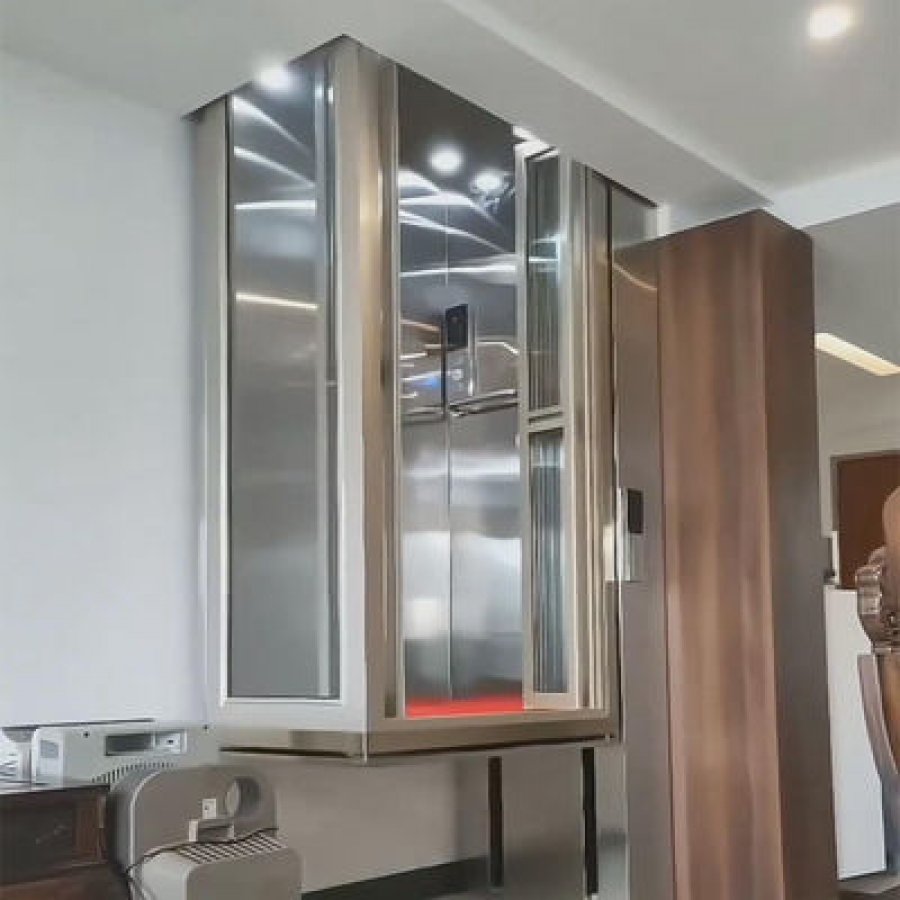
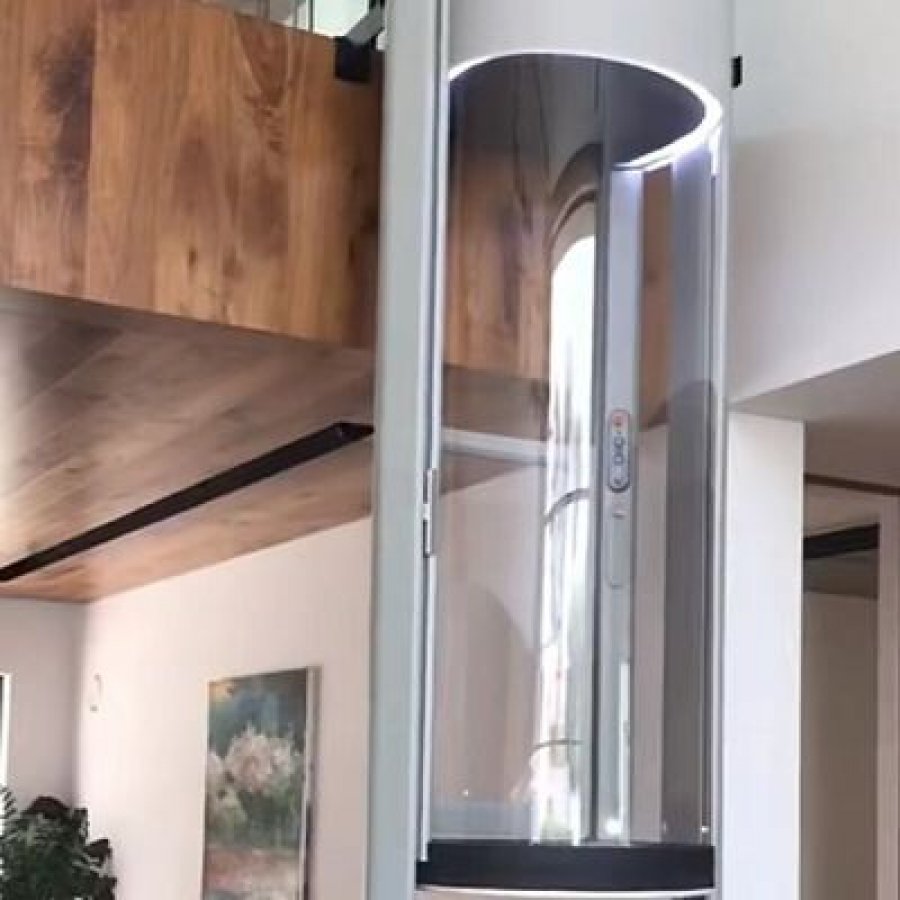
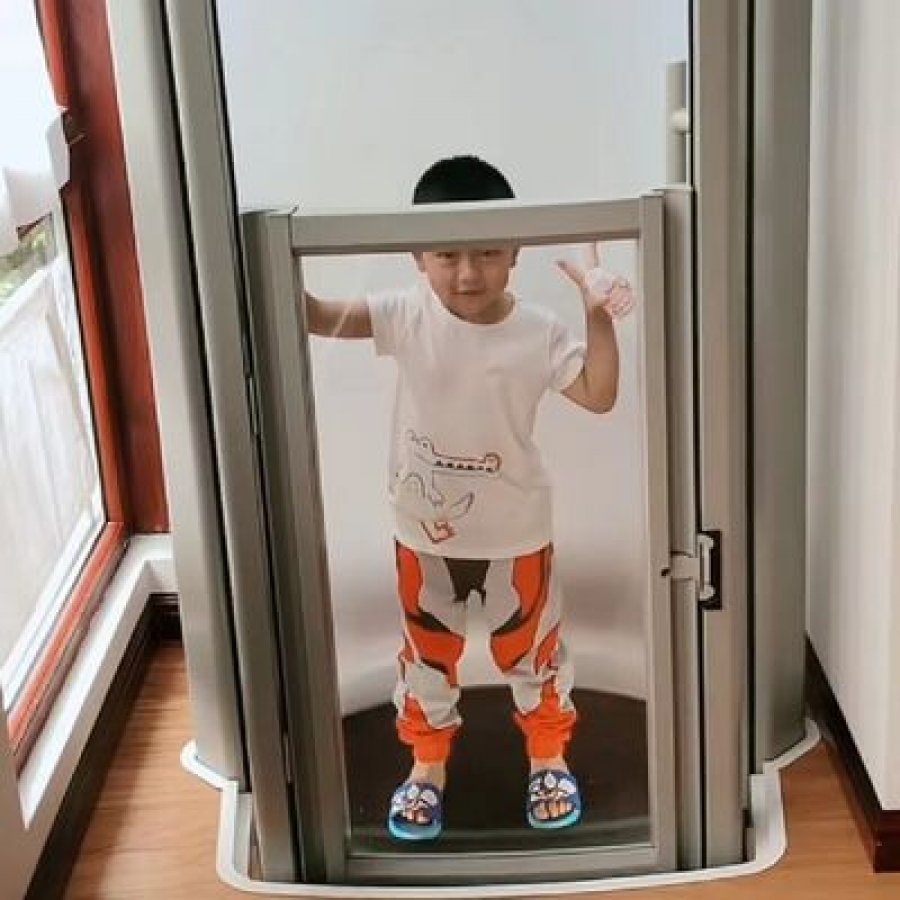
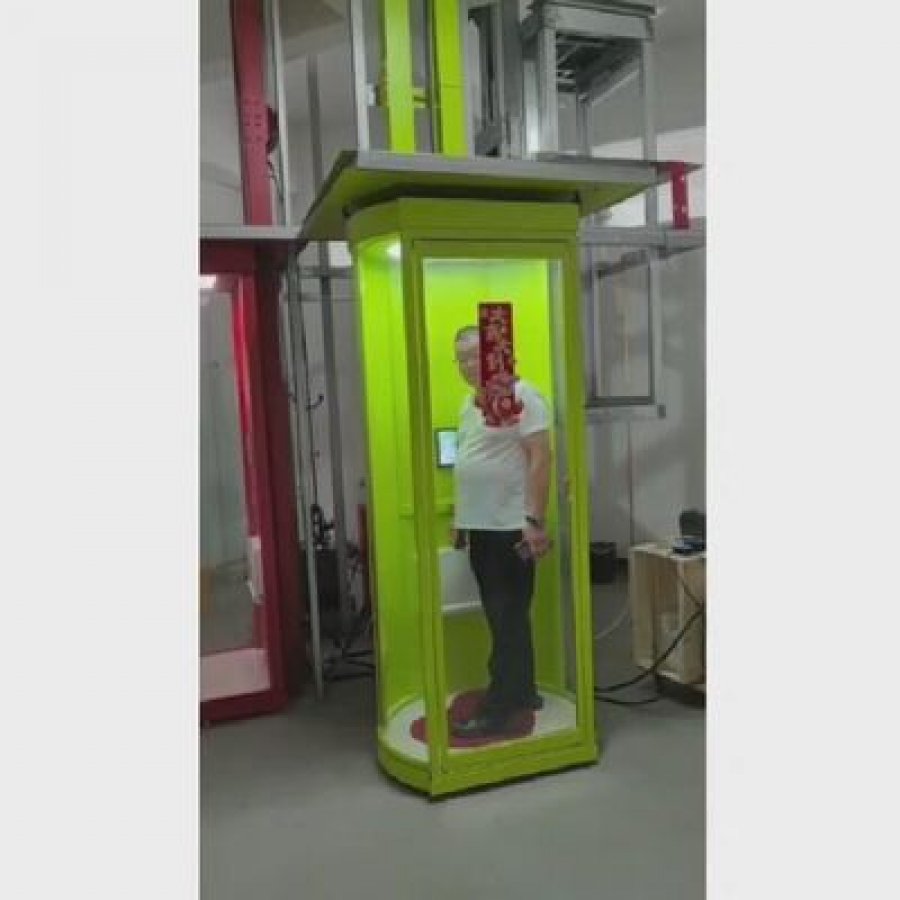
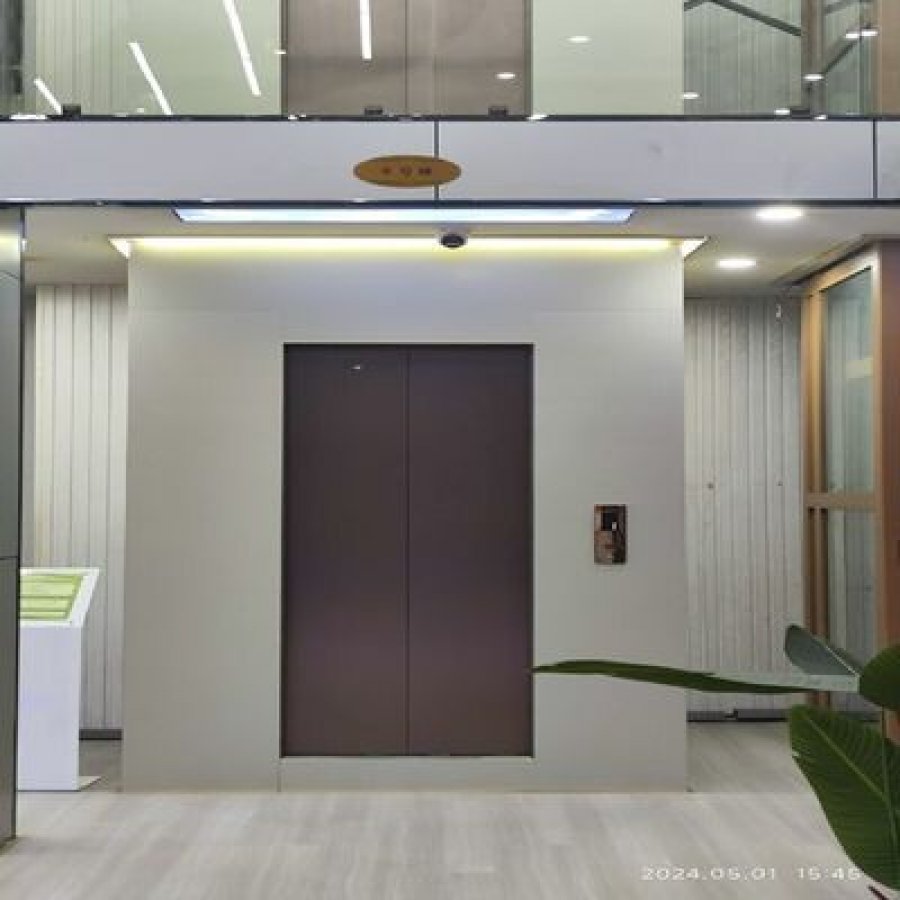
Home Glass Elevator | Quiet Hydraulic Lift for Modern Houses
Product Details:
Brand Name
YIMEISITE
Certification
ISO 9001 ISO 14001 UDEM
Place of Origin
China
Payment & Shipping Terms:
Minimum Order Quantity
1 Set
Price
USD 4,000-10,000 per set
Payment Terms
T/T,L/C
Supply Ability
20 Sets Per Month
Delivery Time
20 Working Days
Packaging Details
Export Non-Fumigation Wood Box
Product Description
A home glass elevator that puts the lift on show — and the two things that decide whether you still like it in year three
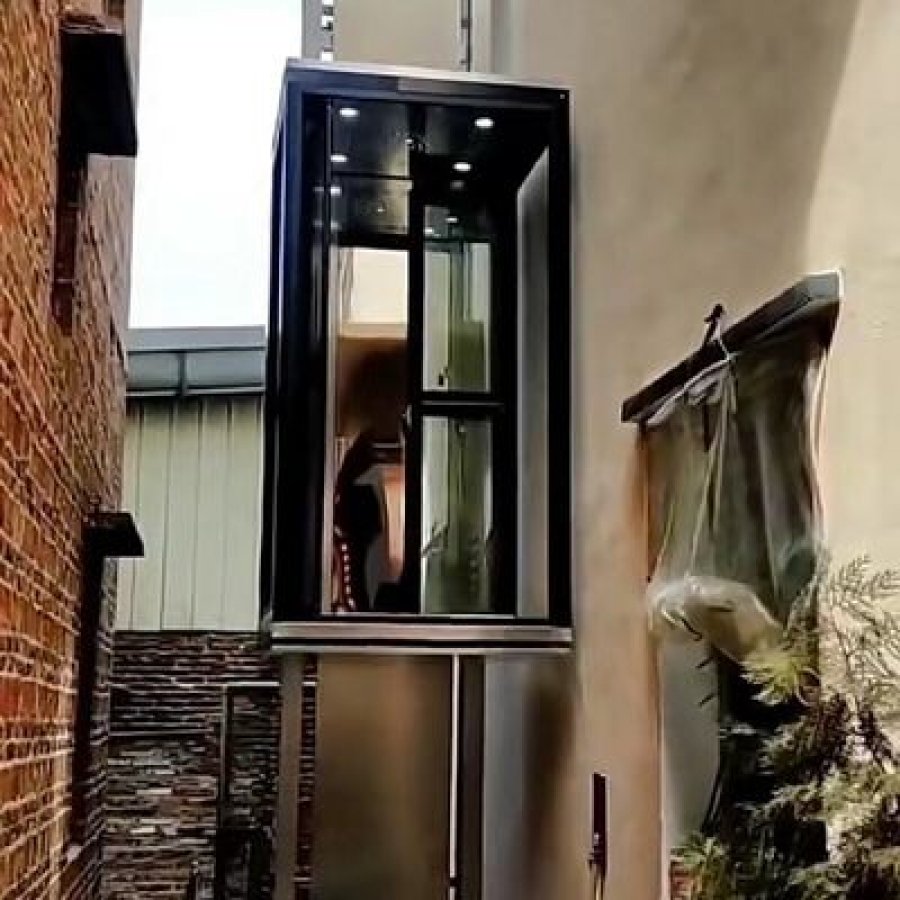
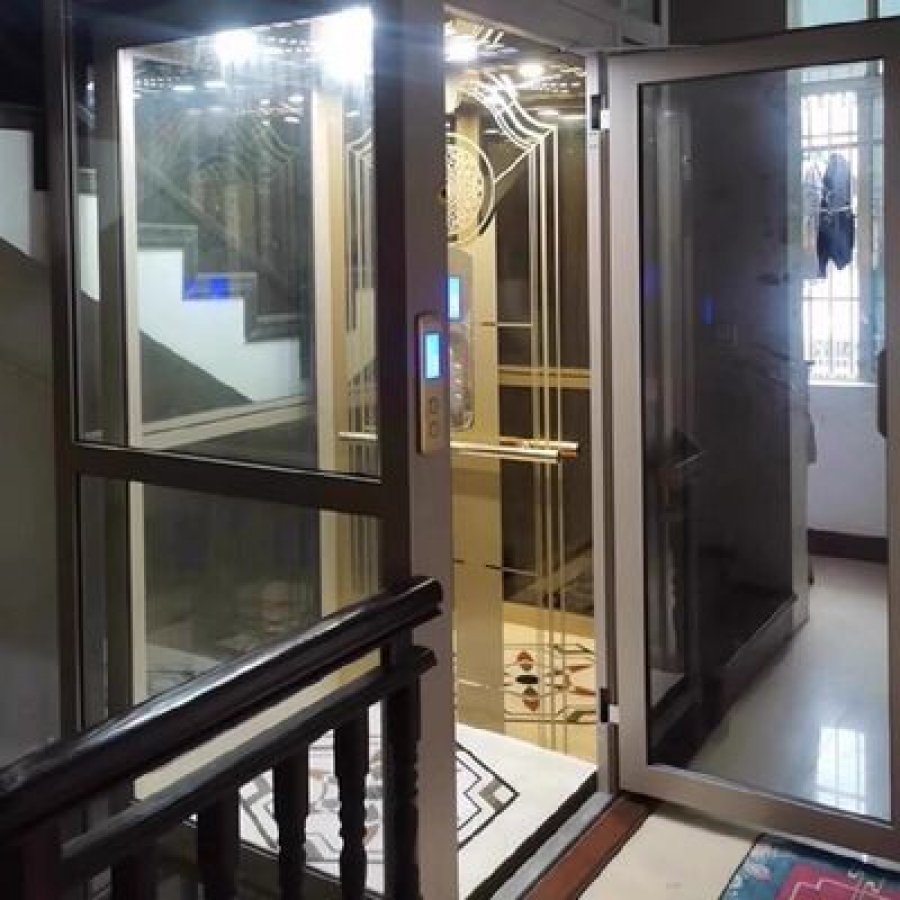
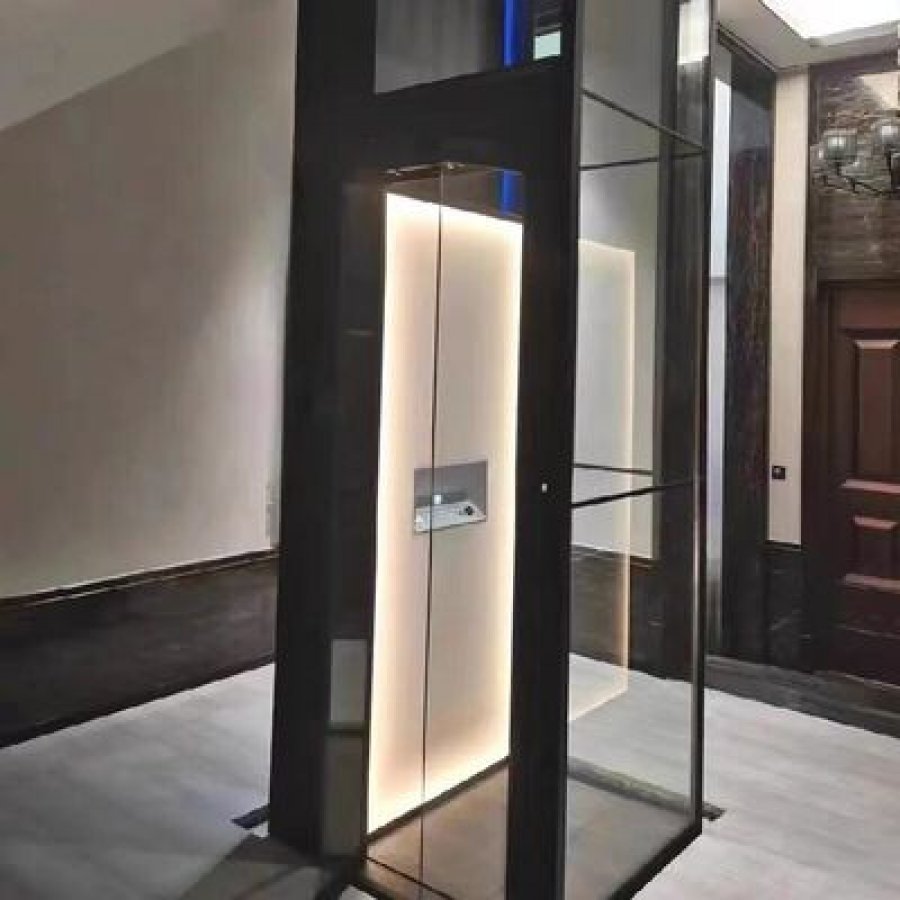
Glass brings most buyers to this type of lift, and leaves a fair number disappointed. A home glass elevator puts the car, the frame, the travel path and the wall behind it on display. The naked cabin elevator look — an uncluttered glazed car with no solid panels to hide behind — works only when the shaft, the floor structure and the sight line from the living space have been thought through first.
This page covers a hydraulic glass home elevator for houses: a minimalist glass cabin on a slender shaft, specified for ultra-low noise. It is quoted under the brand YIMEISITE at USD 4,000–10,000 per set. Certification is ISO 9001, ISO 14001 and UDEM, the minimum order is one set, payment is by T/T or L/C, and delivery is 20 working days — all printed on this page. Whatever is not printed here is left for our engineers to confirm below rather than guessed.
The short version
- What it is: a hydraulic home lift with a minimalist glass cabin — the “naked cabin” look — for villas, townhouses and modern houses that want the lift visible rather than boxed in.
- Why hydraulic on a glass car: no machine room above the shaft, so the top of a glazed enclosure stays clean; it is also the drive behind the ultra-low-noise claim on this sheet.
- Fixed on this sheet: hydraulic drive, minimalist glass cabin, slender shaft, ultra-low noise, brand YIMEISITE, origin China, ISO 9001 / ISO 14001 / UDEM, USD 4,000–10,000 per set, MOQ 1 set, T/T or L/C, 20 sets per month, 20 working days, export non-fumigation wood box.
- Still open, and worth settling before you compare prices: rated load, travel, stop count, car and shaft dimensions, and the power supply at the house. Also the glass build-up (thickness, lamination, tempering), the measured sound level, and the warranty term. Contact our engineers.
1. Is a glass home elevator the right lift for your house?
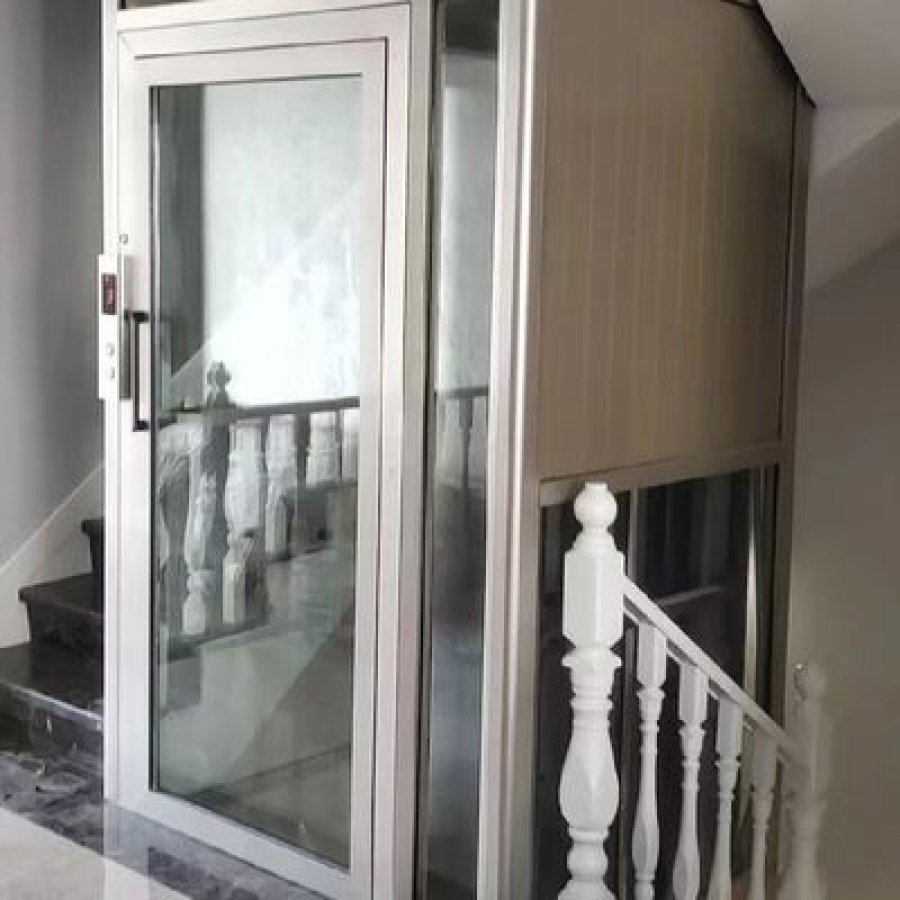
A glass home elevator is a residential lift whose car — and often the shaft around it — is glazed instead of panelled. You ride inside a glass box in the middle of the house, or on its outside wall, and the building keeps the view it had before the lift arrived.
That decision has structural consequences. A glass car weighs more than a plain one, because the enclosure that would normally be sheet steel or laminate is laminated glass. Panels need edge support along their full height, so the frame has to be stiffer than a panel-and-rail car would need. And because nothing is hidden, every fixing, track and joint stays visible for the life of the installation.
None of that makes glass a bad choice. It makes it a choice worth making early, with the floor plan and the structure in hand. Run through the items below before you ask for a price: they are the same items a supplier will ask you about.
Suitable
- Villas, townhouses and modern houses where the lift may be seen — a stair void, a hallway, a light well or an external wall
- Projects that want daylight kept in a stairwell, and a lift that reads as part of the interior rather than a service cupboard
- Houses where a machine room cannot be built above the shaft — where a hydraulic drive suits the design
- Owners who accept what glass asks: regular cleaning, tracked hardware, and a shaft interior that stays tidy because it is on display
- New builds and retrofits where a slender shaft can be threaded into an existing plan. Contact our engineers with your floor plan.
Not suitable
- Houses where the lift must be invisible behind a solid enclosure — a panelled car costs less and weighs less
- Landings with no view worth keeping, where you pay for transparency nobody sees
- Sites where nobody will clean the glass on both faces, or where the shaft has to double as a store
- Exposed outdoor positions with driven rain, sand or salt, unless the glazing and frame finish are specified for it. Contact our engineers.
- Installations where the floor structure cannot be confirmed as adequate for the car, the guides and the load path. Contact our engineers.
Ask our engineers
- Car and shaft dimensions, and the clear door opening at each landing. Contact our engineers.
- Rated load, travel and number of stops for your house. Contact our engineers.
- The glass build-up: panel thickness, whether it is laminated, and the interlayer type. Contact our engineers.
- Power supply at the house — single-phase or three-phase, and the voltage available at the lift position. Contact our engineers.
- Measured sound level at the nearest bedroom wall, rather than a claim of “ultra-low noise”. Contact our engineers.
- Warranty term, the exclusions, and which local approval route applies in your market. Contact our engineers.
One decision sits above all of these: how much of the lift you want to see. A car with three glazed sides in the middle of a stairwell reads very differently from a car with one glazed face set into a wall. Both are sold as “glass elevators”, and the difference in structure, cost and privacy is large. Fix the number of glazed faces first.
2. What a glass cabin asks of the shaft, the floor and the frame
Every lift transfers load into the building. A glass lift does it with less material around the car, so the load path matters more, not less. This section lays out what to check before a shaft is drawn — and it should be drawn around a glass car rather than adapted from a panelled one.
The shaft in section
A shaft for a glass car is a vertical channel with three jobs: carry the car, keep the travel path clear, and hold the glazing at its edges. The drawing below shows the four loads that decide the section. The car load travels down the guides into the pit and the floor below. The frame carries the panel weight and the wind pressure on any external face. The guides take the lateral load, which is greatest when the car is loaded on one side. The landing doors take their own weight plus the force of being pushed.
Schematic, not a construction drawing. Every value on it has to be fixed from your own shaft and floor structure before manufacture.
Five checks before the shaft is drawn
- Where the load lands. Car and payload travel down the guides into the pit and the slab below; the glazing and its frame hang on the shaft structure. Trace both paths to something structural — on a retrofit that usually means opening a floor or ceiling to look.
- What is above the top landing. A hydraulic lift needs no machine room over the shaft, so the top of a glazed enclosure stays clear. The travel still has to finish with the clearance the lift needs above the highest floor served. Contact our engineers.
- What is below the lowest landing. Where the cylinder sits, and whether it is buried or mounted at floor level, decides how much work happens below the lowest stop and how much ground floor is lost. Contact our engineers.
- How the glass is held. Panels need continuous or closely spaced edge support. A frame stiff enough for a solid car can flex under a glass one, and flex appears as movement between panels or a rattle that an open cabin cannot hide.
- What is behind the glass. An open car exposes the shaft interior: rails, cylinder, fixings and the back of the landing doors. None of it can be left rough, and it cannot be boxed in later without blocking the view.
3. The specification on this page, in detail
The table reproduces the parameters printed on this product page, in the same wording, plus the technical points the same page carries. Nothing has been added. Where a value buyers ask for every day is not printed here — load, travel, stops, dimensions, power, glass build-up, sound level — the row is left for our engineers to confirm rather than filled with an estimate.
| Item | Value on this page | What it means when you specify |
|---|---|---|
| Product | Glass hydraulic home elevator | Drive and cabin type stay fixed across configurations; almost everything else changes. |
| Drive system | Hydraulic | No machine room above the shaft; smooth travel. The cylinder arrangement affects the floor below. |
| Cabin design | Minimalist glass (“naked cabin”) | An uncluttered glazed car. Glazed faces, frame and car floor are the visible variables. |
| Key feature | Slender shaft, ultra-low noise | Claims about the assembly: check both against a drawing and a measured sound level. Contact our engineers. |
| Application | Residential, domestic, houses | A domestic lift, not a public passenger lift. That shapes the standards route. |
| Safety | Compliant with international standards | Ask for the clause list and certificate behind it, and match it to your local route. Contact our engineers. |
| Certification | ISO 9001, ISO 14001, UDEM | Certification held by the manufacturer. Not the same as a national lift approval in your market. |
| Brand / origin | YIMEISITE / China | Matters for documentation, spare parts and the declared country of manufacture. |
| Rated load | Contact our engineers. | Not printed here. Ask for the load table: glass adds weight to the car, which eats payload. |
| Travel and stops | Contact our engineers. | Set by the floors served and clearance above the top and below the bottom landing. |
| Car and shaft dimensions | Contact our engineers. | Not printed here. These are the numbers a builder needs, and they drive the drawing. |
| Power supply | Contact our engineers. | Not printed here. Single- and three-phase options exist across this range. |
| Glass build-up | Contact our engineers. | Not printed here. Ask for the glazing specification before comparing quotes. |
| Sound level | Contact our engineers. | A description, not a figure. Ask for a measured value at a stated position. |
| Minimum order quantity | 1 set | One lift is a full order, so a private house can buy direct. |
| Price | USD 4,000–10,000 per set | The lift itself at this page’s specification level. Site work and installation are separate. |
| Payment terms | T/T, L/C | Both are standard for this order size. L/C costs more in bank charges and takes longer. |
| Supply ability | 20 sets per month | Relevant if you are specifying several houses at once, or scheduling with other trades. |
| Delivery time | 20 working days | From order confirmation and approved drawing. Excludes shipping, customs and site work. |
| Packaging | Export non-fumigation wood box | Fumigation-free crating, which most destinations accept without a timber quarantine hold. |
| Warranty | Contact our engineers. | Not printed here. Fix the term, the exclusions and spare-part supply before the order. |
Read the table as a list of things to close out, not as a finished brief. The numbers that decide whether the lift fits your building sit in the rows above, and most of them come back from your own site survey.
4. Privacy: four ways to keep a glass cabin liveable
Privacy is the part of a glass lift that is decided too late. A glazed car in a stairwell works beautifully in daylight and becomes a lit display case at night, because a bright interior behind clear glass is visible from outside while the outside world disappears. The four options below solve that without giving up the reason you chose glass. They can be combined, and most finished projects use two.
Option 1
Applied film
A film on one face of the panel, from light diffusion to a frosted finish, and it can be fitted to selected panels only — the ones facing a neighbour or a street — so the garden-facing sides stay clear.
- Best for: one overlooked face, or a lift that looks into a neighbouring window.
- Trade-off: the view through a frosted panel is gone, not dimmed. Film is a surface: non-abrasive cloth, no ammonia.
- Check: whether film can be applied after glazing, and who is liable if it bubbles. Contact our engineers.
Option 2
Part-glazed car
Glass on two or three faces and a solid panel on the side that is always overlooked. The panoramic effect stays where it matters and the problem disappears where it does not.
- Best for: a car set against a wall, or one whose blank side faces a party wall or neighbouring building.
- Trade-off: less daylight into the stairwell, and the solid panel needs a finish that still looks deliberate.
- Check: that frame and car weight are specified for the mixed panel arrangement.
Option 3
Blinds and screens
A blind or light screen in front of the car rather than on it. Used on the glazed face that is overlooked at night, it can be drawn when the lights are on and opened in the morning.
- Best for: houses that want the full glass look by day and a screen at night.
- Trade-off: a moving part to keep clean and aligned; anything inside the shaft must clear the travel path.
- Check: fixings, clearances, and whether the blind can be reached for service. Contact our engineers.
Option 4
Plan the sight line
The cheapest answer is often geometry. Move the shaft to an internal wall, turn a glazed face away from the street, or place the lift where the sight line from the overlooking window crosses a landing rather than a room.
- Best for: new builds and early renovations, while the plan is still a plan.
- Trade-off: needs a lighting check at night. A sight line drawn in daylight looks private and is not.
- Check: the run from the lift to the nearest outside window, and the neighbour’s window heights.
What glass cannot do
Worth saying plainly, because it saves arguments later. A clear glazed car cannot be private and panoramic in every direction at once, and no film applied afterwards fixes a shaft positioned in front of a neighbour’s window. Anti-reflective glass reduces mirror effects; it does not make a lit car invisible at night. If a glazed face is directly overlooked after dark, treat that face as needing a solid panel, a screen or a relocated shaft — and decide before the frame is ordered.
One practical test: stand at the lift position after dark with the lights on, then look back from the outside spot that concerns you. If the car is readable from there, no change to the glass will fix it.
5. Cleaning and caring for glass, frames and tracks
An open glass car shows everything, so a little routine work goes a long way. Two surfaces matter most: the glass itself, and the sill and track at each landing. Do those properly and the lift keeps its finish; skip them and the shaft looks tired within a year, in a place everyone can see.
The glazing build-up matters too. A laminated glass panel is two panes bonded to an interlayer. Where glass faces weather, water sitting in the edge seal is what shortens its life — not the cleaning itself.
Weekly, in about five minutes
- Wipe the inside faces of the car with a clean microfibre cloth, top to bottom, so dust does not fall onto glass you have already done.
- Do the hand-contact zone — handrails, door edge, car control panel. These marks show most, and on a glass car they show from two sides.
- Clear the sill and landing track with a vacuum or soft brush. Grit in a track grinds the finish and starts a rattle.
- Check the landing door glass at the floors you use most. Marks on the outside of a landing door are visible from the room.
Monthly, and after any building work
- Clean the outer face of the car — the side facing the shaft. On a glass shaft it is visible from outside; on an enclosed shaft it still collects dust.
- Clean the inside of the shaft glazing if the shaft is glazed. Every face has two sides, and the outer one collects weather film and dust. This is the job owners forget.
- Check the frame for water marks at the bottom rail of each panel and around the fixings. A mark that keeps returning after rain is worth a service call.
- Look at the interlayer at the edges of laminated panels for cloudiness or a milky line — moisture in the edge seal, not dirt.
Three habits that keep a glass lift looking new
- Never lean a ladder or tool against a glass panel. The panel is supported at its edges and is not designed for a point load in the middle.
- Treat hard water the same week, not the same year. Mineral spotting etches into a coated surface and has to be worked off carefully rather than scraped.
- Keep the shaft ventilated and dry. Condensation between a warm room and a cold glazed shaft is what makes an internal shaft look dirty. Ask our engineers about the ventilation arrangement..
6. Hydraulic drive, and what “quiet” has to mean
A hydraulic drive lifts the car with oil pressure rather than a cable on a sheave. A pump unit pushes oil into a cylinder, the piston extends and the car rises; to come down, a valve releases the oil and the car settles under its own weight. There is no counterweight, no traction machine and no machine room over the car — which is why this drive suits a glazed enclosure, where the roof of the shaft is part of the design rather than a plant space.
Four things follow from that, and they matter more on a glass car than on a panelled one.
Machinery that sits elsewhere
The power pack — pump, motor, tank and valves — is a compact unit that stands in a cupboard, garage or service space near the shaft, not on top of it. On a glass lift that keeps the head of the shaft clean.
Cylinder position is a floor-plan decision
Whether the cylinder is buried or mounted at floor level decides how much excavation happens below the lowest stop and how much ground floor is lost — often the difference between a straightforward retrofit and a major one. Contact our engineers.
Travel is smooth by nature
Hydraulic motion is progressively valved rather than stepped, so start and stop can be tuned to feel gradual. On an open car that is practical as well as comfortable: less jerk means less movement of what a passenger carries.
Noise comes from the power pack, not the car
The car itself is quiet; the sound comes from the pump and the oil circuit. Good news for a glazed shaft, because the noise source can be located away from bedrooms. It is also why “ultra-low noise” is really a question about where the power pack goes.
What determines the sound level you actually get
“Ultra-low noise” is a description on this page, not a measured figure. The honest way to specify it is to fix the four variables that decide it and ask for a measurement at a stated position. Contact our engineers.
- Where the power pack stands. The biggest factor. A unit in a cupboard next to a bedroom wall will be heard; the same unit in a garage on the far side of a slab usually will not.
- How the unit is isolated. Resilient mounts under the tank and flexible pipe connections stop pump vibration reaching the structure. Rigid pipework fixed to a stud wall turns that wall into a sounding board.
- How the pipe run is routed. Long, tightly bent small-bore runs make more noise than short, generously bent ones. Draw the route with the lift, don’t improvise it on site.
- What the oil circuit is doing. Valves throttling during descent, or opening abruptly, are heard as clicks rather than hum — tuning points worth standing next to at handover.
The commissioning test worth insisting on
- Run the car a full travel up, then a full travel down, with the house quiet and the doors closed.
- Listen at the nearest bedroom door, and at the wall the power pack is mounted against — not in the room where the unit stands.
- Ask for the reading at a stated distance, written into the handover paperwork. A figure with a position attached is a specification. Contact our engineers.
- Repeat at the top and bottom stops, because valve noise is not uniform across the travel.
This page carries no sound figure, so treat the test above as the way to settle the question on your own installation.
Hydraulic maintenance in plain terms
A hydraulic lift is maintained as a machine with fluid in it, and the annual service is mostly about that fluid: oil level and condition, weeps at joints and seals, the cylinder and its packing, and valve behaviour. Readings are compared with the commissioning figures. Oil that is dark, emulsified or low points to something worth attention before it becomes a fault call. Ask which oil is specified, what the service interval is for your duty and whether the oil is available locally — ask our engineers, because the answer changes the running cost over twenty years.
7. Safety: the glass, the doors and the checks that matter
This page states that the lift is compliant with international standards, and lists ISO 9001, ISO 14001 and UDEM certification — the manufacturer’s credentials. The devices below are what you can see and test on your own installation, and they make the right handover checklist. Where the page does not name the clause behind a claim, ask for the certificate and the clause list. Contact our engineers.
Safety handover checklist0 of 10
-
A car panel that breaks without an interlayer leaves a large opening. Ask for the glazing certificate naming the build-up, and check it against the panels delivered.
-
Glass in a moving car has to be held, not just seated in a rebate. At handover, check the fixings at the top and bottom of each panel.
-
An open car exposes what a panelled one hides. Run a hand along the frame edges at floor and handrail height.
-
Test every landing door from the landing side, with the car parked at another floor. None should open.
-
Hold a landing door open and call the car from another floor. It should not travel. A minute per floor.
-
Locking is named as a safety function on this page. Test it empty and loaded.
-
You do not need to be trapped to accept this. Ask for the braking function and manual lowering to be demonstrated at handover, and the instruction left with the lift.
-
Named on this page. Ask what the car does when overloaded, and have it demonstrated.
-
Test the in-car light and the alarm or intercom on battery. This finds a car light wired to the wrong supply.
-
Type certification, the clause list behind the compliance statement, the maintenance schedule and the local approval paperwork. Contact our engineers.
Glass, children and the two habits that go wrong
Two everyday mistakes are worth naming. The first is using the open car as a place to leave things — garden tools, a bike leaning on a panel — because a glazed car invites it and the glass should not take that load. The second is leaving a temporary screen or handrail fixed to the frame during the building works; a hole drilled into a finished frame member shows on a glass lift for the rest of its life. Give the lift one hard rule during construction, in writing, with the other trades.
8. How the installation runs, and what the schedule depends on
The lift arrives ready; the building decides the dates. Delivery on this page is 20 working days from order confirmation with the approved drawing, and that figure covers production only. Shipping, customs, site work, installation and commissioning sit outside it, and on most projects they are the longer half.
The sequence below keeps a glass lift out of trouble, because every step that touches the shaft happens before the glazing is on site. Glass arriving while a builder is still cutting openings is how panels get scratched before they are ever used.
Step 1 · before the order
Survey and structure check
Measured floor-to-floor heights, the shaft position, and what the floors can carry. On a glass car this step also settles how many faces are glazed and where the power pack can stand.
Step 2 · drawing stage
Approved drawing and glazing schedule
Shaft drawing, car and door dimensions, and the glazing schedule are approved together. This is the last point at which changing the number of glazed faces is cheap.
Step 3 · building works
Openings, base and services
The builder forms the openings and base, sets sill levels and runs the electrical supply. Anything chased into a wall should be done now, while the shaft is open and nothing glazed is in the way.
Step 4 · 20 working days
Manufacture
Frame, car, guides, hydraulic unit and glazing are produced to the approved drawing. Glazing is packed last, because it should be unpacked last.
Step 5 · variable
Shipping, customs and site access
Transit, port charges and clearance are outside the 20 days, and site access is the delay nobody plans for. Frame sections and panels arrive crated, so walk the route from delivery point to shaft before the truck arrives. Ask our engineers for the crate dimensions..
Step 6 · on site
Mechanical and hydraulic installation
Guides, car, cylinder and pipe run go in, and the power pack is set on its mounts. Fixings go to structure, not to finishes. Follow the pipe route agreed at drawing stage rather than improving it.
Step 7 · on site
Glazing, doors and electrical
Panels go in last among the heavy work, then the landing doors, then electrical connections and in-car fittings. Protective film stays on until the last trade has left the area.
Step 8 · handover
Commissioning and acceptance testing
Valve settings, levelling at each stop, door operation and the safety functions are tested, and the sound check above is run. Walk the section 7 checklist now, with the installer present.
What actually delays glass lift projects
Four causes account for most of the late ones. The building is not ready when the lift arrives — openings unfinished, base not level, no supply at the lift position. The glazing was ordered before the shaft was finally measured, so a panel does not fit. The plant cupboard was built for a different size of power pack. And protection of the glass was handed to whichever trade was on site, so nobody owned it. All four are decided in steps 1 to 3.
One coordination point specific to glass: the shaft and the finished interior meet at the landing. Skirtings, floor finishes and the reveal around the door all change the level it sits at. Fix the finished floor level once, pass it to the supplier, and do not change it. Ask our engineers for the tolerance your supplier works to..
What the site has to provide before the lift is unpacked
- A measured, level base at the bottom of the shaft, finished and cured, with the drain or sump agreed if one is needed.
- A dry, weather-tight position for the power pack, supply terminated, with space for the engineer to reach the tank, valves and motor.
- Openings formed to the approved drawing, with structure above and below each one able to take the door fixings.
- A route in for the crate — widths, turns, stairs and hoisting help — confirmed before the delivery date is fixed.
- Protection for the glazing for the rest of the build, with one named person responsible.
9. Service, spares and what to settle in the warranty
A glass lift is serviced like any domestic hydraulic lift, with one extra routine: the glazing. Doors, guides and the hydraulic unit are standard lift maintenance. The glazing belongs to the owner, and it is the part that shows.
The annual service
Oil level and condition, the circuit for weeps, the cylinder and its packing, valve settings against the commissioning readings, door operation and locking, levelling, and the safety functions. Also the fixings that hold the glass: a slackened panel fixing is easy to spot and expensive to ignore.
Spares worth holding
Door rollers and guide shoes, hydraulic oil of the specified grade, seals and wearing valve parts, and a spare set of glazing fixings. Small items that decide whether a fault is a same-week visit or a six-week wait.
Service access
The power pack needs clear space in front of it, and the cylinder arrangement decides whether any work happens below the lowest floor. Leave both reachable. A plant cupboard full of stored goods is the usual reason a service visit takes two calls.
Six warranty points to fix in writing
- The term, and when it starts. No warranty period is printed on this page. Contact our engineers. The start point matters as much as the length: from shipment, delivery or commissioning are three different promises.
- What is covered. Mechanical, hydraulic, electrical and control items are usually covered for manufacturing defects; wear parts usually are not. Ask for the list, not the summary.
- The glass. Glass and its coatings are frequently excluded, or covered only for a defect found before installation. Ask who inspects a panel that arrives damaged. Contact our engineers.
- Labour and travel. Parts covered with labour excluded is a common split, and it is the difference between a repair and a bill. Ask who carries it locally.
- Transit damage. Fix the reporting window and the photographic evidence required before the crate leaves.
- Spares availability. Ask how long the parts fitted to your unit stay available, and what is offered when one is discontinued. Contact our engineers.
Documentation to keep together and hand over with the house: the approved shaft drawing, the glazing schedule and panel certificates, the wiring and hydraulic schematics, the commissioning readings including the sound test, the maintenance schedule and the manual descent procedure. On a glass lift these are also what a future buyer asks for.
10. Home glass elevator FAQ
The questions buyers ask before specifying a glazed car. Where this page carries a value it is used; where it does not, the answer says what to ask for rather than guessing.
Yes. This unit is specified for residential, domestic and house use. It needs a shaft position that can take the car and its load, a vertical travel path clear of everything else, and a supply for the hydraulic unit. The constraint is usually the building, not the lift: the shaft has to be created somewhere, and on a new build drawn in early.
Usually more than a panelled car of the same capacity, because laminated glazing costs more than a sheet-steel or laminate panel and the frame has to be stiffened for edge support. This page quotes USD 4,000–10,000 per set. The larger difference in a real project is elsewhere: an open car makes structural work and finishes visible, so there is less room to absorb a mistake quietly.
Several names describe the same idea, and it is worth knowing which one a supplier means. A naked cabin elevator has a glazed car with no solid panelling; a glass shaft elevator has a glazed enclosure as well. Panoramic, capsule and see-through all describe versions of the same family. When you ask for a quotation, state the number of glazed faces on car and shaft — that is what the names leave out.
On this page, USD 4,000–10,000 per set for the lift, minimum order one set, payment by T/T or L/C. That is the equipment band for the specification printed here. Site work, the shaft, the electrical supply, shipping and installation are separate, and on a glazed installation they are often a large share of the project.
It can, and this page lists a slender shaft as a key feature, which is what makes retrofits possible. The practical question is what the work costs in a finished house: floor openings, the cylinder base, a pipe route and space for the power pack. A hydraulic drive removes the machine room, which is one of the harder retrofit problems solved. Expect a survey before anyone quotes. Contact our engineers.
No machine room is needed above the shaft, because the drive is hydraulic rather than a traction machine. The pump unit does need somewhere to stand: a cupboard, garage or plant space within reach of the shaft, with the pipe run drawn between the two. On a glass lift that is an advantage — the head of the shaft stays glass.
Glass in a lift car is an engineered component, laminated so a broken panel stays in its frame. That does not make it a wall. It is fixed at its edges, so usual hand loads go into the frame. A point load in the middle of a panel is a different matter: a ladder foot, a bicycle pedal or a dropped tool is not what it is designed for. Ask for panel test evidence and the retention detail. Contact our engineers.
Four ways, set out in section 4: film on selected panels, a solid panel on the overlooked face, a blind or screen at the glazed face, or a shaft position that avoids the overlooking window. The last costs nothing and has to be decided early. Check any solution after dark with the interior lights on — glass reverses at night.
Glazed lifts are used outside, and the drivers are weather rather than the lift itself: water in the panel edge seals, wind load on a large glazed face, and the frame finish. An external glass shaft also has to be cleaned on both sides. If your site is exposed, coastal or dusty, settle the glazing, frame finish and drainage before order. Contact our engineers.
The items to confirm with our engineers: rated load, travel and stops, car and shaft dimensions, power supply, glass build-up, measured sound level and warranty term. None is printed here, so none should be assumed from a photograph. Section 11 lists the measurements to send.
11. What to send for a glass elevator quotation
A quotation for a glass lift is only as good as the survey behind it. The list below is everything a supplier needs to price the car and the shaft without coming back with questions, and it is short enough to gather in one visit. Send it as measurements and photographs rather than description.
Measurement checklist for a quotation0 of 10
-
Measured on site, finished floor to finished floor, not taken from the architectural drawings.
-
Include the lowest level, even if it is a basement or a garage, and whether the top stop is under a roof.
-
Plan dimensions of the shaft position, plus a photograph of the space, with a tape measure in the frame if the room is difficult.
-
Car faces and shaft faces separately. This one answer changes the price and the structure more than any other.
-
Plan view showing the lift, the nearest outside windows and the neighbouring property, so privacy can be designed rather than retrofitted.
-
And if outdoors, what the site is exposed to: coastal air, driven rain, dust, or direct sun on a large glazed face.
-
Voltage, phases and frequency, with a photograph of the distribution board. If the supply is not there yet, say what is planned.
-
The plant position, its distance from the shaft, and whether its wall is shared with a bedroom. This is the quiet-lift decision.
-
Frame finish, car floor, handrail, and photographs of the floors and walls the lift will meet. On a glass car, a finish clash is permanent.
-
Port or site, plus the access route for the crate: door widths, turns, stairs and any lifting equipment available.
| Term | Value on this page |
|---|---|
| Minimum order quantity | 1 set |
| Price | USD 4,000–10,000 per set |
| Payment terms | T/T, L/C |
| Supply ability | 20 sets per month |
| Delivery time | 20 working days from order confirmation with the approved drawing |
| Packaging | Export non-fumigation wood box |
| Brand / origin | YIMEISITE / China |
| Certification | ISO 9001, ISO 14001, UDEM |
One last point about scope, because it is where glass projects surprise people. The price on this page is for the lift. The shaft, the openings, the base, the electrical supply, the pipe route, the making good and protection of the panels for the rest of the build belong to the project. Cost them alongside the lift rather than discovering them one at a time. And fix the number of glazed faces before the frame is ordered — that decision is written into the structure, the price and the privacy of the finished lift.
Send the shaft measurements and the glazing you want, and get the specification and a price in one pass
The floor-to-floor heights, the stops, the footprint you can give up, the glazed faces and the plant position are enough to fix a layout for a glass home elevator and answer the technical questions without a second round of emails.
Home glass elevator hydraulic drive · minimalist glass cabin · slender shaft · ultra-low noise
Want to Know more details about this product
Similar Products