English
 Español
Categories
Contacts
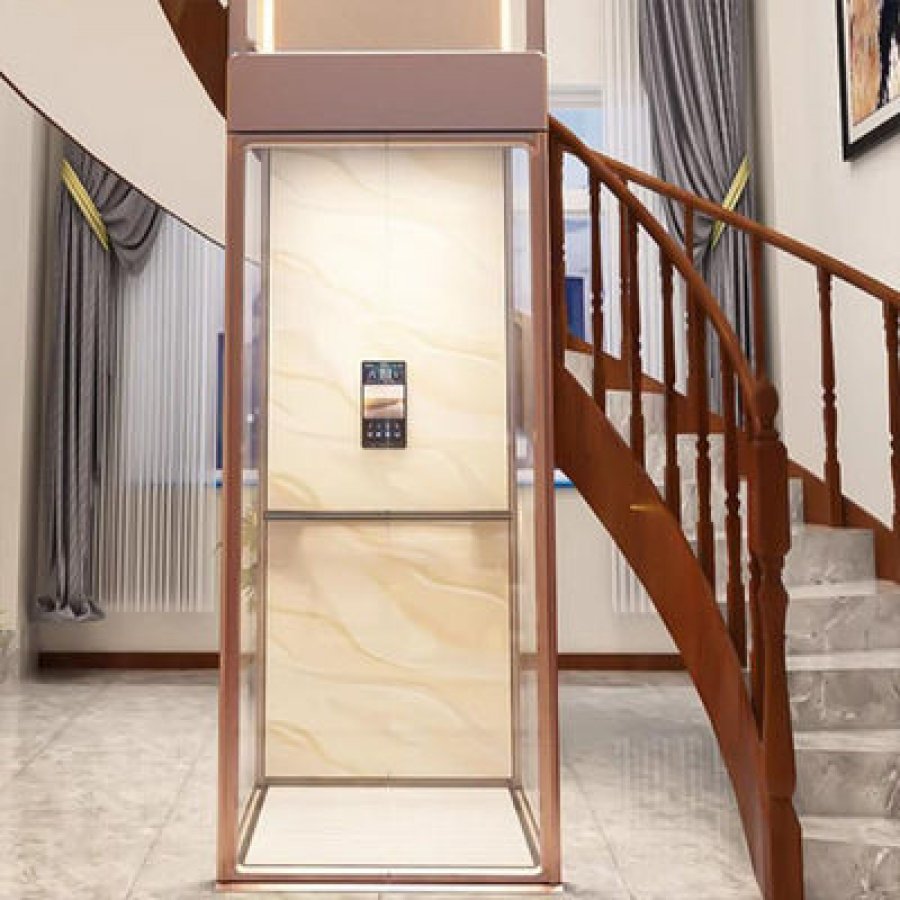
Safe & Reliable Screw-Driven Elevator | Stainless Steel Design with Emergency Stop Button
Product Details:
Brand Name
YIMEISITE
Place of Origin
China
Payment & Shipping Terms:
Minimum Order Quantity
1 set
Payment Terms
T/T,L/C
Supply Ability
5 sets per month.
Delivery Time
50 working days.
Packaging Details
Export non-fumigation wood box.
Price
USD 20,000-30,000 per set
| Drive Type: | Screw | Noise Level: | Less than 60 Db |
| Door Material: | Stainless Steel | Load Capacity: | 400 Kg |
| Power Supply: | AC 220V/380V, 50Hz | Optional Features: | Remote control, key switch, phone dialer |
| Maximum Travel Height: | 100 M | Speed: | 0.5-2.5 m/s |
| Control System: | Microprocessor-based | Cabin Size: | Customizable |
| Safety Features: | Emergency Stop Button, Overload Protection, Safety Sensors | Door Opening Height: | 2000-2200 MM |
| Warranty: | 1 Year | Capacity: | 500-5000 Kg |
| Type: | Elevator | ||
| Highlight: | customizable screw drive home elevator,screw drive home elevator smooth,customizable screw drive elevator | ||
Product Description
Screw-driven elevator · stainless steel door · emergency stop
A lift that holds its own car up
This page is about one drive and one promise: a safe, reliable screw-driven elevator whose car rides on a nut travelling along a fixed threaded screw. Because the nut grips the screw, the car does not depend on a brake to stay where it is. That single fact decides who should buy this machine and who should not.
Most pages about screw lifts explain the principle and stop, or warn you about screw drives without saying what the warning applies to. The question a buyer actually asks is what has to be true about my building before a screw drive is the safe and economical answer? This page answers that first.
The machine this page describes
This model is quoted against the specification table further down the page. It is a direct screw and nut drive with a rated load of 400 kg and a range running from 500 kg to 5,000 kg.
The same table gives a stainless steel door, a noise figure below 60 dB, an emergency stop button, overload protection and safety sensors.
To that add a door opening height of 2,000–2,200 mm, a one-year warranty, and a supply taken from AC 220 V or 380 V, 50 Hz. Cabin size is custom rather than fixed.
Fit check: three questions, three outcomes
A screw drive is not a universal answer, and the buildings where it fails are predictable. Work through the three questions below before you send drawings. They are the same three questions the survey sheet at the bottom of this page is built around.
1 Does the car have to be mechanically incapable of falling — held by the drive itself rather than by a brake alone — if power or the drive fails?
2 Is this a low-rise run — typically two to five stops — where a small shaft and a shallow pit matter more than travel speed?
3 Can the floor at the lowest landing carry the loaded car and the drive unit, and is there a wall or corner beside the shaft for the control panel?
All three answers are yes — this is the right drive
A screw-driven elevator is usually the safest and simplest answer here. The car is carried by the nut on the screw, so a power cut parks it rather than dropping it, and the mechanism needs no pit deep enough for a jack and no plant room above the shaft. The remaining work is dimensional, and the shaft layout comes back as a drawing before anything is manufactured.
Two measurements decide this one
Most buildings land in the middle: the safety requirement is real, but the shaft clear width and the headroom above the top landing are unconfirmed, and those two figures decide whether the guide rails and the travelling nut assembly fit. Photograph the space from the lowest floor upwards, measure the clear width and note the ceiling height above the highest landing, and we can answer without guessing.
This is probably not the right machine — check the other drives
If the run is tall, if the daily traffic is heavy, or if nobody needs the self-locking behaviour, a screw drive asks you to accept a slower car in exchange for a guarantee you did not want. A gearless traction lift covers longer travel at higher speed, and a hydraulic drive carries heavier loads over short rises with a different set of building requirements. Send your floor-to-floor heights and we will point you at the drive that fits.
The outcome changes as you answer; nothing is submitted and no data leaves the page. The same three questions are repeated on the printable sheet at the bottom. If a figure is missing from your drawings, Contact our engineers.
How a direct screw and nut drive actually works
Forget the marketing language for a moment. The machine has three parts that matter: a threaded steel screw, a nut that engages those threads, and a carriage that carries the car. When the nut turns it climbs the screw, and when it stops turning it stays where it is, because the thread angle is chosen so the load cannot push the nut back down on its own.
That last sentence is the whole safety argument, and it is worth reading twice. The car is not held up by a brake that has to release before the car can move; it is held up by the same threads that move it. A brake can wear, stick or be mis-adjusted, while a non-reversible thread has nothing to release. That is why screw drives turn up in private houses and small care properties, where a lift that strands somebody between floors is a serious event rather than an inconvenience.
The exact arrangement — which part turns and where the drive unit is mounted — is fixed on the general arrangement drawing for your project. Tap or focus the numbered points for a plain-language definition. ask our engineers if a term here is new to you.
1. Threaded screw
A long steel shaft with a continuous helical thread, mounted vertically and held at both ends. Its pitch and profile decide how far the car travels per turn and how much load the thread can hold.
2. Travelling nut
The internally threaded block that climbs the screw, turned by the drive unit and bolted to the carriage that carries the car. Its material is chosen for low friction, so it wears in preference to the screw.
3. Self-locking thread
A thread angle shallow enough that the load cannot turn the nut backwards. The car descends only when the drive turns the nut that way, so a power failure leaves the car parked rather than falling.
4. Control panel
The microprocessor controller and drive electronics, mounted in a cabinet at a landing, needing the supply, a dry position and clear space in front for a technician to open it.
What the screw drive changes about the building
Because nothing is suspended from a rope and nothing has to be pushed from below by a jack, the structural demands differ from both of the other drives. No traction machine sits on the roof, so no load is hung over the headroom, and there is no cylinder to bury. What the building does have to provide is a continuous vertical run wide enough for the guide rails, a structure that can carry the loaded car and react the drive torque, and a landing where the door frame can sit.
Where the screw drive sits between the other two drives
Most residential projects come down to three candidates, and they are not interchangeable. The table below is written to make the choice obvious rather than to flatter one column.
| Question | Screw and nut | Hydraulic | Traction |
|---|---|---|---|
| What holds the car up | The nut on the thread — self-locking when the drive stops | A jack under the car, fed by a power unit | A rope over a sheave, held by a brake |
| Behaviour in a power cut | Car parks where it is; the thread does not release | Car lowered to a landing by the manual valve | Brake sets on the sheave |
| Plant room | None; drive unit and panel at the shaft or a landing | Power unit in a cabinet beside the shaft | Machine room, or a compact machine over the shaft |
| Typical building | House, villa, small care home, light commercial | Heavier loads and shorter rises, where a deep pit is possible | Taller travel and heavier daily traffic |
| Speed | Lower, by the nature of the mechanism | Moderate | Highest of the three |
| Main wearing part | The nut, made to be renewed | Seals, oil and the pump unit | Ropes, sheave lining and brake |
Read the first row again if you are comparing quotes: only one of these three keeps the car up without a brake or a valve holding it, and that is the one on this page.
Safety devices, and what each one is for
A screw-driven elevator is often bought on the strength of one sentence: the car cannot drop. That sentence is true of the mechanism, but it is not the whole safety story. An anti-drop screw elevator stops the car falling on its own; the devices around it stop people being caught, crushed or trapped, and stop the drive being overloaded until something gives.
The list below is what is on the machine and what job each item does. If you are comparing quotes, ask every supplier to tick the same items and you will find out who is selling a mechanism and who is selling a lift.
Illustrative section, not a drawing to build from. ask our engineers for the general arrangement and component list for your project.
The device schedule
Work down the list and tick what your project needs. Every item is either on the machine as standard or is confirmed on the drawing before manufacture.
Safety and protection schedule
Checked: 0 of 8 — nothing is submitted anywhere; this list is for your own files and the printable sheet below.
What this page does not claim
Approvals, test certificates and marks are project-level documents, and which of them your installation needs depends on the country, the building type, the rated load and whether the lift carries the public. This page therefore does not claim a certification, a standard number or a conformity mark for the machine; treat a page that does so without showing the paperwork with the same suspicion.
What you can do is ask for the current document set for your market before you order, and check that the certificate names the drive type and the load you are buying rather than the factory in general. Contact our engineers and we will send what applies to your project, and say plainly if something is not available.
Reasons a screw lift is refused
Most refusals are not about the drive; they are about the space around it. A stairwell void is not a shaft, because the landing doors need a solid wall beside them and the guide rails need something to be fixed to. The inner width quoted for a car is not the shaft width either, since the frame, the door track and the rail clearance come out of the same opening. The drive also applies a turning reaction into the structure, and that load path has to be designed rather than assumed.
Key specifications in one table
The figures below are the ones this model is quoted against. They are taken from this page's own specification table, including the two entries that are flagged in the next section because they differ from what screw drives usually publish. Switch between metric and imperial to read them in the units your drawings use.
| Item | Value | What it decides |
|---|---|---|
| Drive type | Direct screw and nut | Self-locking: the car does not depend on a brake |
| Rated load | 400 kg standard880 lb standard | Sizing of the car, door and drive |
| Load range | 500–5,000 kg1,100–11,000 lb | How far the drive family scales |
| Noise level | Under 60 dB | Whether it can share a wall with bedrooms |
| Door material | Stainless steel | Durability, cleaning and appearance |
| Door opening height | 2,000–2,200 mm79–87 in | Head clearance for people and loads |
| Cabin size | Custom, set on the drawing | People, wheelchair access and shaft size |
| Power supply | AC 220 V or 380 V, 50 Hz | Whether a supply upgrade is needed |
| Control system | Microprocessor-based | Overload logic, fault codes and servicing |
| Safety features | Emergency stop, overload protection, safety sensors | The device schedule above |
| Optional features | Remote control, key switch, phone dialer | Who can call the lift, and from where |
| Maximum travel height | As listed: 100 mAs listed: 328 ft | Read the note in the next section first |
| Rated speed | As listed: 0.5–2.5 m/sAs listed: 98–492 ft/min | Read the note in the next section first |
| Warranty | 1 year | Parts cover and the first service year |
Values are quoted from this page's specification table. Where a figure is marked “as listed”, the note below explains what to do before relying on it. ask our engineers for the drawing values that apply to your project.
How to read a screw-lift specification sheet
Two habits separate a specification you can build from a specification you merely like.
First, check that each figure names the condition it was measured under. A noise figure means nothing without the speed and distance it was taken at, and a load figure means nothing unless you know whether it is the rated load of the car or the capacity of the drive.
Second, check that the figures are consistent with the drive. Screw drives are a low-rise, low-speed, self-locking family by construction, so a sheet that pairs one with very long travel and a high speed is either describing a different machine or carrying a number that has not been updated. That is exactly what the next section is about.
A note on two entries in the specification table
Two figures on this model's specification table deserve a straight sentence rather than a sales spin, because you will design around them.
As listed on this page
- Maximum travel height: 100 m
- Rated speed: 0.5–2.5 m/s
Both entries are quoted from the specification table as it stands. Neither is used as a selling point anywhere on this page.
What this drive family normally publishes
- Travel in the region of tens of metres, as a low-rise, self-locking mechanism
- Speeds well below one metre per second
A 100 m travel combined with 2.5 m/s does not fit the mechanism this page describes, and is very unlikely to have been measured on this machine.
What we do about it, and what you should do about it
We do not delete the entries, because a specification table that has been quietly edited is worse than one that carries an awkward figure: you would have no way of knowing which other numbers had been changed.
- For design, treat both figures as unconfirmed for this model until they appear on your project's drawing.
- Use the travel and speed on the approved specification sheet for your order.
- If your project genuinely needs a long rise or a speed above one metre per second, say so at enquiry stage — that is the moment when we can say whether the screw drive is still the right answer.
Numbers on a quotation beat numbers on a web page. Contact our engineers with your floor-to-floor heights and we will send the values that apply to your order.
There is a second reason to care, and it is not about us. Specification tables get copied between products and between suppliers, and a figure that has drifted out of date can travel for years. If you are comparing several screw-lift suppliers, ask where their travel and speed figures were measured and on which model. The supplier who can answer is the one whose other numbers are worth trusting.
Power supply and what it decides
The specification table gives the supply as AC 220 V or 380 V, 50 Hz. Treating that as “either will do” is how projects lose a week. The two options suit different motor sizes and different buildings, and the choice is usually made by what is already at the wall.
220 V single phase fits when
- The house already has a single-phase supply and no three-phase service is coming in.
- The car is a light residential size and the travel is short, so the drive current stays within what the circuit can carry.
- Nobody wants a supply upgrade on the critical path before the shaft work can start.
The common case in a private house, and the reason a screw drive suits retrofits: the lift does not force a three-phase upgrade.
380 V three phase fits when
- The building already has a three-phase supply, as workshops and light commercial premises usually do.
- The car sits at the heavy end of the range and the drive needs a larger motor.
- A long cable run, where three phase keeps the current and the voltage drop in proportion.
Both voltages are within the specification; which is correct for your machine is confirmed with the drive sizing.
What an electrician needs to know
Four figures have to be answered before the supply can be connected, and none of them can be read off a web page.
- The supply actually present at the point of connection — phases, voltage and frequency as measured, not as remembered.
- The route and length of the cable from the distribution board to the controller position.
- Where the controller cabinet will stand, and whether there is clear space in front of it.
- Whether the lift circuit will be on its own protective device, with the earthing arranged by the electrical designer.
Give us those four and the drive, the controller and the cable schedule come back as one package.
What the lift does when the power goes off
If the supply fails while the car is between landings, the drive stops turning and the thread holds the car where it is. Nothing has to release for the car to stay put, and nothing has to be powered for it to remain safe.
What the failure does not do by itself is bring the car to a landing. That is a deliberate operation by a competent person using the release provided for the purpose, and you should have that routine in writing at handover.
Doors, cabin and the parts you actually touch
Everything the mechanism does is invisible once the shaft is closed. What the household lives with is the entrance, the sill, the car interior and the sound, and those are the parts that get damaged first, so they are worth deciding deliberately rather than accepting whatever appears on the first drawing.
The specification table is explicit about two of them. A stainless steel screw elevator door is what this model uses, and the door opening height is 2,000–2,200 mm. The cabin size is a variable rather than a fixed figure, which is unusual in this price band and is why a screw lift can be fitted into a house that was never designed around one.
Stainless steel door
Chosen for the same reasons a kitchen works in stainless: it does not need repainting, does not swell in damp air, and a scuff from a pushed trolley wipes off. On a lift that shares a hallway with wet coats and shopping bags, that matters more than how the finish looks in a brochure.
Door opening 2,000–2,200 mm
Head clearance for anyone walking in upright and for anything carried in by hand. Ask for the figure that will apply to your drawing rather than the range: the opening the installer builds has to match the door the factory sends.
Cabin size is a project variable
Because the car is carried on a nut carriage rather than suspended between ropes, it can be sized to the space and the traffic instead of to a catalogue. Send the internal width and depth you want, plus the largest item that will travel, and the shaft requirement follows.
The sill is a load path
The threshold is where the floor, the car and the door frame meet, and it is where wheels cross. If goods are carried, the sill and the floor opening need a wheel-load figure rather than just a car size. Say at enquiry stage if a pallet truck, drum or heavy trolley will cross it.
Finishes set the maintenance story
Interior finishes decide how often somebody cleans the car and how it looks after a few years. Ask what can be renewed later without dismantling the shaft: a car interior is a wear item whether or not the sheet calls it one.
Sound is a specification too
Under 60 dB is the figure on the table. Whether that is quiet enough depends on what is on the other side of the wall, so include the wall construction in your enquiry if the shaft backs onto a bedroom.
Proportional illustration for orientation only, not a construction drawing. ask our engineers for the door schedule and the shaft opening dimensions for your project.
Three questions to settle before the shaft is built
The door and the car are decided late but built early, which is how projects end up with a lift that works and an entrance nobody likes. Settle three things while the builder is still on site.
- Which way the door opens, and onto what.
- What crosses the sill: foot traffic, a wheelchair and a pallet truck are three different designs.
- Whether the car interior can be reached and refitted with the car parked at a landing.
How the installation runs, in six stages
A screw-driven lift has fewer site activities than a hydraulic or traction installation, because there is no jack to sink and no machine room to build. It has the same number of decisions. The sequence below is the order the work actually has to happen in, and the point in each stage where a missing figure costs a week.
-
Survey and approved drawings
Measure the shaft or the space that will become one: clear width, clear depth, the floor-to-floor heights of every level, and the headroom above the highest landing. Photograph from the lowest floor upwards, including the ceiling. The drive is confirmed here against the load, the number of stops and the supply, and nothing is ordered before the general arrangement is agreed.
-
Preparation of the shaft and openings
Floor openings are formed, shaft walls built or dressed, and the fixing points the guide rails and the drive are anchored to are provided. The load path for the loaded car and for the drive reaction is built here, and if the car will be loaded where it stops, that floor belongs to this stage.
-
Power, earthing and controller position
The electrician brings the supply to the agreed place, installs the protective device, provides the earth and leaves the cable ready for the controller. Cabinet position is fixed here with clear access in front of it, because a controller reachable while the building is empty and blocked once the furniture arrives is a common and avoidable mistake.
-
Delivery and mechanical installation
Screw, carriage, car, guide rails and door set arrive together and are installed as one assembly. The screw is set plumb and the rails aligned to it, because the nut travels on the screw and the car follows the rails: any error between the two shows up as noise and even wear.
-
Setting, testing and handover
The controller is configured for the travel and the stops, then tested through the full cycle: every landing, the emergency stop, the overload, the door sensors and the interlock, with levelling checked at each landing rather than once. Handover is when the recovery routine is demonstrated and written down.
-
First service and the year ahead
This first scheduled visit confirms that the nut, the thread, the guide shoes and the door gear are wearing evenly, and that nothing has settled since installation. The warranty runs for one year, and the parts that consume themselves in that year are the ones to watch. From then on the rhythm is a small number of checks done regularly.
Site readiness before the lift is delivered
Checked: 0 of 7 — your own record. Nothing is sent anywhere.
What usually delays a screw-lift installation
Delays repeat across installations, and almost none of them are about the drive.
- The shaft arrives a different size from the drawing. Walls get built to the builder's convenient dimensions rather than the approved ones. Measure before the lift is packed, not after it lands.
- The supply is present but not sized. The circuit exists, but nobody has checked that it will carry the drive and protect it. This is the most common reason a commissioning visit ends early.
- Finishes and responsibilities are settled late. Floor thickness changes the sill height, and the sill is set when the doors are installed, so choose the finishes first. Agree in writing who does the builder's work and who does the electrical work, because the lift package covers the lift only.
None of these are reasons to avoid a screw lift. They are reasons to send the measurements early and to keep the drawing that everything else is measured against. Send site photographs before you commit and we will mark up what is still open.
Maintenance, spares and the one-year warranty
Maintenance on a screw-driven elevator is short, and short for a structural reason: there is no oil to change, no hydraulic pressure to hold and no rope to inspect. What there is instead is a nut running on a thread, guide shoes running on rails, and door gear that opens and closes every time somebody uses the lift. Those three are where the attention goes.
The nut and the thread
The nut is deliberately the part that wears. It is replaced when the clearance reaches the limit set for the model, and the screw is protected by being the harder of the two surfaces. That is why lubrication and inspection of the thread belong in the schedule: dry running shortens the nut's life and eventually the screw's.
Guide rails and shoes
The rails carry the car and keep it aligned to the screw. Worn or dry guide shoes show up as noise and as a car that does not sit level at a landing. They are inexpensive, and checking them is part of the same visit as the nut inspection.
Door gear and interlock
Door gear moves more than anything else on the lift, because it operates on every trip. Tracks, rollers and the interlock are the parts most likely to need adjustment, and the sensors at the entrance are the ones a household will notice first if they drift.
Controls and safety devices
The controller should be checked for fault history, and the emergency stop, overload and door sensors should be tested rather than assumed. A safety device that has never been tested since installation is a device that has not yet been proved.
The one-year warranty
This model carries a one-year warranty. What that covers, and what is excluded as wear or as work by others, is set out in the terms that come with your order — read them against the maintenance schedule rather than separately.
Spares and support
Consumable parts such as nuts, guide shoes and door rollers should be identified by part number at handover, so a renewal is an order rather than a search. Ask which of them are expected to be replaced within the warranty year.
A maintenance rhythm that actually gets followed
Maintenance plans fail when they are ambitious: a short list that is genuinely carried out beats a long one that is postponed. For a residential screw lift, the rhythm that survives contact with a busy household looks like this.
- Monthly, by the owner: look at the landings and the car interior, listen for new noise, and check that nothing is stored in front of the door or in the headroom.
- Annually, by a technician: inspect the nut and thread, the guide shoes, the door gear and the interlock, test the emergency stop, the overload and the sensors, and read the controller's fault history.
- After any unusual event: if the lift has been overloaded, flooded or has stopped between landings, get it examined rather than simply re-set.
Questions to ask any screw-lift supplier about service
These questions separate a supplier who will still be useful in five years from one who was useful for a quotation. Write the answers into the order documents, because a service promise that exists only in a chat thread has a way of evaporating.
- Which part is designed to wear, and what is its expected replacement interval for your traffic?
- Can you have the part numbers for the consumables at handover, as individual items?
- Can a technician read the controller's fault history without special software?
- Who carries out the annual inspection in your country?
- What is excluded from the one-year warranty, and what is the procedure if a part fails within it?
Contact our engineers for the maintenance schedule for this model before you order.
Questions buyers ask before ordering
These are the questions that arrive by email most often, answered the way we would answer them on the phone. Where an answer depends on your project, it says so instead of guessing.
Is a screw-driven elevator safe if the power fails?
Yes, in the sense that matters most at that moment: the car stops and stays where it is, because the nut is held by the thread and the thread does not release the car when the drive loses power. This is a screw driven elevator with emergency stop, overload protection and door sensors, but none of those is what holds the car up. The lift does not bring itself to a landing, though: recovering the car is a deliberate operation carried out by a competent person using the manual release, and that routine should be written down at handover.
Can a screw-driven elevator drop?
Not by gravity on its own, which is the whole reason this drive exists. A fall would require the nut to travel down the screw without being driven, and the thread is chosen so the load cannot turn the nut backwards. That is a different guarantee from a brake holding a rope, because a brake has to release for the car to move at all and is therefore always in the load path. Here the load path and the safety element are the same part.
How many floors can a screw-driven elevator serve?
Screw drives are a low-rise family. In residential work they are usually used over two to five stops, and the honest limit for a machine is set by the travel and the traffic, not by a number on a web page. This model's specification table lists a travel figure that we flag elsewhere on this page as unconfirmed, so use the figure on your approved drawing. If the building needs more stops than that, a traction lift is the right conversation.
What load can it carry?
The rated load for the standard configuration is 400 kg (880 lb), and the load range for this model runs from 500 kg to 5,000 kg (1,100–11,000 lb). Those two figures describe different things: the rated load of the standard car, and how far the same drive family scales. Tell us what has to travel and the car is sized to it.
Can it be installed outdoors or in an unheated space?
A screw drive has no hydraulic oil to keep at temperature and no rope to protect from damp, so it is a reasonable candidate for an annex, a garage or a covered outdoor position. What still has to be designed is the enclosure, the drainage, the door and the electrical protection for the environment, so say at enquiry stage that the lift will be outside.
Can I run it from a single-phase 220 V supply?
Yes, the specification table gives AC 220 V or 380 V, 50 Hz. Single phase is the common case in a private house and it keeps a three-phase upgrade off the critical path. Which supply your machine needs is confirmed with the drive sizing, together with the cable route and the protective device, as described in the power section above.
Can the cabin be customised, and is it suitable for a wheelchair?
The specification table lists the cabin size as custom, not fixed. Send the internal size you want, the largest item that will travel and the number of people, and the car and shaft requirements follow. For a wheelchair or mobility scooter, what decides it is the clear door width, the internal car size, the sill detail and how somebody turns around inside, so send the scooter or chair dimensions at enquiry stage. What cannot be treated as flexible is the load the drive is sized for.
Is it suitable for a care home or a small commercial building?
It can be: screw drives turn up in small care properties precisely because a car that cannot fall is an attractive property in a building with vulnerable residents. Whether it suits yours depends on how many trips a day the lift makes and whether the local rules let a screw-driven machine carry the public.
What happens after the one-year warranty ends?
The lift keeps running on the same maintenance rhythm: an annual technician visit inspecting the nut and thread, the guide shoes, the door gear and the safety devices, with consumables renewed as the inspection shows. There is no hidden service contract implied by the warranty and no sealed unit that only the factory can open, so ask for the spare-parts list at handover.
What to send for a quotation
A screw-driven elevator is priced against your building, not against a catalogue number, so a useful quotation needs a short list of facts rather than a long list of wishes. Send what you have and mark what you do not; the gaps become questions instead of assumptions.
Enquiry checklist
Collected: 0 of 8 — use this as your own packing list before you write to us.
Convert the units your drawings use
Drawings arrive in whichever units the site works in, and the quotation comes back in metric. Check the figures in both columns before you send them, so the enquiry and the reply are in the same language.
Metric and imperial, both ways
Conversion only, shown to two decimal places. Nothing you type here is stored or sent.
The printable safety and survey sheet
This is the same checklist the surveyor works through, put in a form you can carry to the site and write on. Print it, fill it in at the building, and send the pages with your enquiry. It answers most of the questions a quotation would otherwise raise.
Site safety and survey sheet — screw-driven elevator
Print this sheet and tick each line on site.
Ticked: 0 of 9 — this sheet stays with you. Nothing is submitted from this page.
Send the completed sheet with photographs and you will get an answer about your building rather than a generic price list. If a line cannot be filled in, say so and name what is missing: a marked gap is more useful than a guessed figure, and far cheaper than a lift that has to be altered after delivery.
The short version
A screw-driven elevator earns its place when three things are true at once. Somebody needs a car that cannot fall on its own. The run is a low-rise one, where a compact shaft and a shallow pit matter more than speed. And the structure can carry the loaded car and the drive.
When those hold, the machine gives you a 400 kg standard car and a load range up to 5,000 kg. Add a stainless steel door, sound under 60 dB, an emergency stop with overload protection and safety sensors, a one-year warranty, and a supply from 220 V or 380 V. No machine room, no rope and no jack.
When they do not hold, this page has said so in three separate places, because the cost of the wrong drive is paid on site rather than on the invoice. Two figures on the specification table are flagged rather than quietly repeated. Send what you have measured; where a figure is missing we will say so and name the measurement that closes it. Keep reading: screw-driven elevator range · heavy-duty screw drive, 5,000 kg · compact screw-driven residential lift · all products
Send your shaft measurements
Stops, floor-to-floor heights, clear width and depth, headroom and supply — send those and we can tell you whether this drive fits.
Want to Know more details about this product
Similar Products